


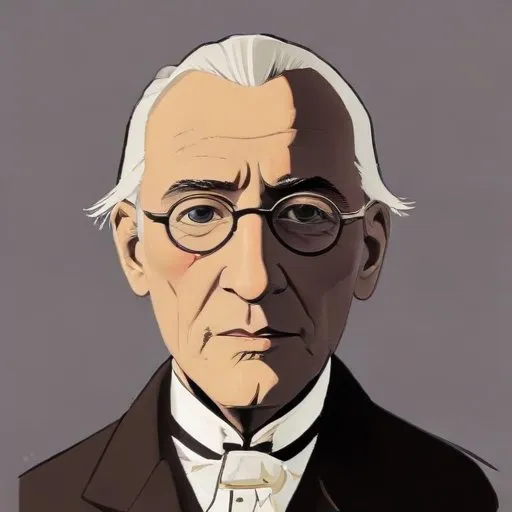
A renowned Sorbian-German composer and theorist, he wrote hymns and chorales, including the melody for "Jesu, Joy of Man's Desiring", and contributed significantly to Lutheran church music.
Johann Crüger, a renowned German composer, is best known for his soul-stirring hymns that continue to echo through Lutheran churches to this day. As the editor of the 17th century's most widely used Lutheran hymnal, Praxis pietatis melica, Crüger's melodic contributions have had a profound impact on the world of sacred music.
Born on April 9, 1598, in Groß Breesen, Germany (now part of Guben), Crüger was the son of an innkeeper, Georg Crüger. As an ethnic Sorb, he was baptized as Jan Krygar. His early education took place at the nearby Lateinschule in Guben, where music and singing were an integral part of the curriculum.
Crüger's passion for music led him to travel to Sorau and Breslau for further education. He eventually made his way to Regensburg, where he received musical training from the esteemed Paulus Homberger (1560-1634).
In 1616, Crüger became a house tutor to the von Blumenthal family, with his pupils including Joachim Friedrich von Blumenthal. During this period, he continued to hone his musical skills through private study.
From 1622 until his passing in 1662, Crüger simultaneously held positions as a teacher at the Berlinisches Gymnasium zum Grauen Kloster and cantor of the Nikolaikirche in Berlin. It was during this 40-year tenure that he composed numerous concert works and wrote extensively on music education.
In 1643, Crüger became acquainted with the celebrated hymn writer Paul Gerhardt, for whom he wrote the music for various hymns, including the beloved "Wie soll ich dich empfangen" (How Shall I Receive You). This collaboration marked the beginning of a long and fruitful partnership between the two artists.
In 1647, Crüger edited the monumental Praxis pietatis melica, a German Lutheran hymnal that would go on to appear in numerous editions. This influential work showcased Crüger's mastery of melody and his deep understanding of the Lutheran hymn tradition.
Crüger's compositions have left an indelible mark on the world of sacred music. His tunes have been used in various hymns, including Johann Franck's "Du, o schönes Weltgebäude" (You, O Beautiful Building of the World). Although this hymn is no longer in practical use, one stanza, "Komm, o Tod, du Schlafes Bruder" (Come, O Death, to Sleep a Brother), was prominently featured in Bach's solo cantata "Ich will den Kreuzstab gerne tragen," BWV 56.
Crüger's music has also been used in other notable hymns, such as "Nun danket alle Gott" (Now Thank We All Our God), which was composed by Johann Rist in 1648. This hymn has become a beloved staple in Lutheran worship services around the world.
Through his remarkable body of work, Johann Crüger has left a lasting legacy in the realm of Lutheran hymnody. His beautiful melodies and harmonies continue to inspire and uplift generations of worshipers, ensuring that his harmonious soul will forever be remembered.
Born in 1585
A renowned Baroque composer and organist, known for his contributions to the development of the oratorio and passion genres, creating over 500 works that showcased his mastery of choral music.
Born in 1587
A renowned Baroque-era musician and teacher, known for his influential compositions and contributions to the development of the organ concerto.
Born in 1586
A renowned Baroque composer, he wrote sacred music, motets, and hymns, and was a prominent figure in the development of the German Protestant church music tradition.
Born in 1660
A renowned Baroque-era organist and composer, known for his innovative and expressive works that bridged the gap between the Renaissance and Baroque styles. His compositions showcased exceptional mastery of counterpoint and harmony.
Born in 1663
A renowned Baroque-era organist and composer, known for his significant contributions to the development of the chorale cantata, a musical form that influenced later masters like Bach.
Born in 1685
A renowned Baroque composer and organist, famous for creating majestic orchestral suites, operas, and oratorios, including the iconic "Messiah" masterpiece.
Born in 1685
A master of Baroque music, he composed over 1,000 works, including orchestral suites, cantatas, and passions, that still inspire and influence musicians today. His innovative use of counterpoint and harmony raised the bar for classical music.
