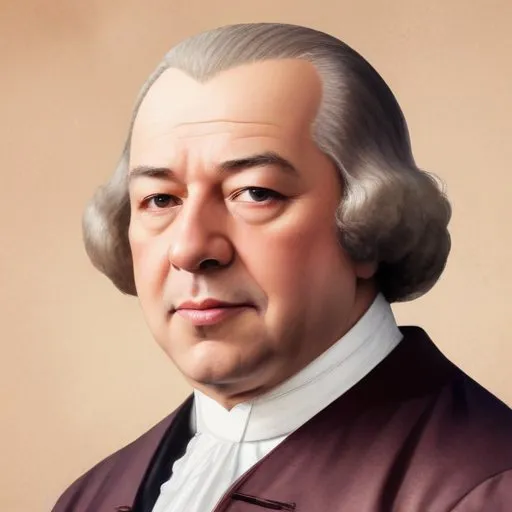
Johann Gottfried Bernhard Bach: The Unsung Son of a Musical Legacy
A Life in the Shadow of Greatness
Johann Gottfried Bernhard Bach, born on May 11, 1715, was a German musician and organist, best known for being the son of the renowned composer
Johann Sebastian Bach. While his life may not have been as illustrious as his father's, it offers a fascinating glimpse into the personal and professional struggles of being part of a musical dynasty.
Early Life and Education
Johann Gottfried was the fourth child of Johann Sebastian Bach and Maria
Barbara Bach to reach adulthood. He was born in Weimar, where his father was employed, and later moved to Köthen with his family in 1717. After his mother's passing in 1720, his father remarried the following year. In 1723, Johann Sebastian Bach was appointed Thomaskantor in Leipzig, a position that offered better educational opportunities for his sons. Johann Gottfried attended the Thomasschule, where his father was responsible for the musical education, which was an integral part of the curriculum. He also received private lessons from his father.
A Musical Career in the Making
Unlike his elder brothers Wilhelm Friedemann and Carl Philipp Emanuel, Johann Gottfried did not have the opportunity to study at Leipzig University after completing school. Instead, he followed in his father's footsteps and auditioned for posts as a musician. In 1735, he became the organist at the Marienkirche, the largest church in Mühlhausen. This was a significant milestone, as his father had previously worked at Divi Blasii, Mühlhausen's other main church, from 1707 to 1708.
A Struggle to Find His Place
Johann Gottfried's time in Mühlhausen was short-lived, and he moved to Sangerhausen in 1737 to take up a new position as organist at the Jakobikirche. This was a post that his father had applied for as a young man. However, Johann Gottfried's struggles continued, and in 1738, he was burdened with debt and eventually abandoned his career in music.
A Legacy Overshadowed
Johann Gottfried Bernhard Bach's life serves as a poignant reminder of the challenges of living in the shadow of greatness. While his father's legacy continues to inspire and influence musicians to this day, Johann Gottfried's own accomplishments have been largely overshadowed. Despite this, his story offers a unique glimpse into the personal and professional struggles of being part of a musical dynasty.
Personal Milestones and Key Life Events
- 1715: Born on May 11th in Weimar, Germany
- 1717: Moved to Köthen with his family
- 1720: His mother Maria Barbara Bach passed away
- 1723: His father became Thomaskantor in Leipzig
- 1735: Became organist at the Marienkirche in Mühlhausen
- 1737: Moved to Sangerhausen to take up a new position as organist at the Jakobikirche
- 1738: Abandoned his career in music due to debt
- 1739: Passed away on May 27th
Legacy and Impact
While Johann Gottfried Bernhard Bach's life may not have been as illustrious as his father's, it offers a unique perspective on the challenges and struggles of being part of a musical dynasty. His story serves as a reminder that even those who are born into greatness must forge their own path and create their own legacy.
FAQ
What was Johann Gottfried Bernhard Bachs relationship to Johann Sebastian Bach?
Johann Gottfried Bernhard Bach was the son of Johann Sebastian Bach, the famous German composer and organist. He followed in his fathers footsteps, becoming an accomplished organist and composer in his own right.
What were Johann Gottfried Bernhard Bachs contributions to music?
Johann Gottfried Bernhard Bach was a talented composer and organist who wrote numerous works for the organ and harpsichord. He was particularly known for his innovative use of counterpoint and his mastery of the fugue.
Where did Johann Gottfried Bernhard Bach work as an organist?
Johann Gottfried Bernhard Bach worked as an organist in several churches in Germany, including the Mißionskirche in Hamburg and the Jacobikirche in Sangerhausen.
What is Johann Gottfried Bernhard Bachs most famous composition?
Johann Gottfried Bernhard Bachs most famous composition is likely his Fugue in C Major, which showcases his technical skill and mastery of counterpoint.
How did Johann Gottfried Bernhard Bachs career compare to his fathers?
While Johann Gottfried Bernhard Bach was a talented composer and organist in his own right, his career was unfortunately cut short by his early death. Despite this, his works demonstrate a strong connection to his fathers style and legacy.