


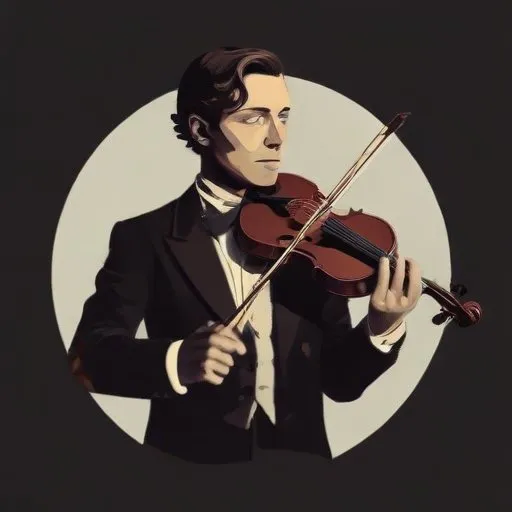
A virtuosic violinist and prolific composer of the Baroque era, known for his innovative and expressive works that blended German and Italian styles. His music was highly regarded by Frederick the Great, who employed him as a court composer.
Johann Gottlieb Graun was a renowned German composer and violinist of the Baroque and Classical eras, celebrated for his innovative instrumental works, operas, and virtuosic performances on the violin. His compositions, spanning over 50 works, continue to inspire and influence musicians to this day, solidifying his legacy as a master of his craft.
Born in 1703 in Wahrenbrück, Germany, Graun was introduced to music at a young age and began his studies with J.G. Pisendel in Dresden. He later traveled to Padua, Italy, to study with the renowned violinist and composer Giuseppe Tartini. These formative years laid the foundation for Graun's exceptional talent and technical mastery of the violin.
In 1726, Graun was appointed Konzertmeister in Merseburg, where he taught the violin to J.S. Bach's son, Wilhelm Friedemann. This esteemed position marked the beginning of his successful career, which would soon take him to the court of the Prussian crown prince, the future Frederick the Great, in 1732. Graun's exceptional skills earned him the title of Konzertmeister of the Berlin Opera in 1740, cementing his reputation as a premier violinist and composer.
Graun's extensive oeuvre includes over 50 works, showcasing his mastery of various genres. He was particularly known for his instrumental compositions, including:
Graun's compositions were highly respected during his lifetime, and their popularity endured long after his passing. The concertmaster, Charles Burney, wrote: "Graun was one of the greatest performers on the violin of his time, and most assuredly, a composer of the first rank."
Despite Graun's significant contributions to the world of music, he was not immune to criticism. Some contemporaries noted that his compositions, particularly in his concertos and church music, were overly lengthy, testing the patience of even the most devoted listeners. Nevertheless, his innovative spirit, technical mastery, and adaptability to various genres solidified his position as a leading figure in the Baroque and Classical eras.
Today, Graun's music continues to be celebrated through various recordings, including:
Graun's remarkable legacy serves as a testament to his dedication, innovative spirit, and mastery of the violin and composition. His contributions to the world of music continue to inspire and delight audiences, ensuring his place among the greatest composers of the Baroque and Classical eras.
Born in 1701
A renowned 18th-century opera composer and tenor, known for his innovative and expressive works that bridged the gap between Baroque and Classical styles. His compositions showcased exceptional vocal writing and dramatic flair.
Born in 1685
A master of Baroque music, he composed over 1,000 works, including orchestral suites, cantatas, and passions, that still inspire and influence musicians today. His innovative use of counterpoint and harmony raised the bar for classical music.
Born in 1714
A renowned 18th-century musician, he was a prolific composer and virtuosic performer, known for his expressive and innovative keyboard music that bridged the Baroque and Classical styles. His compositions, particularly for harpsichord and piano, showcased his mastery of counterpoint and harmony.
Born in 1710
Eldest son of J.S. Bach, a Baroque composer who blended his father's style with emerging Classical elements, creating innovative and expressive works. He was a renowned organist and harpsichordist.
Born in 1714
A pioneering opera composer who revolutionized the art form with his innovative and expressive works, blending music and drama in a way that captivated audiences.
Born in 1714
A prominent composer of the Neapolitan School, he wrote over 80 operas and was a key figure in the transition between the Baroque and Classical periods. His music was known for its dramatic intensity and expressive melodies.
Born in 1699
A renowned Baroque opera composer and accomplished singer, he wrote over 60 operas and numerous sacred works, influencing the development of classical music.
