


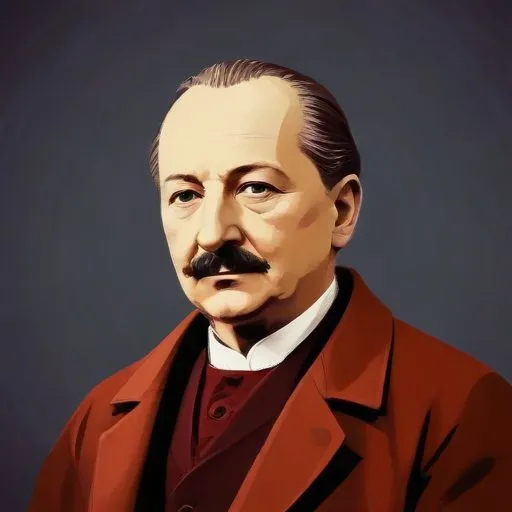
A 17th-century Swiss theologian and author who wrote influential works on biblical interpretation and Christian doctrine, shaping Protestant theology.
Johann Heinrich Heidegger, a renowned Swiss theologian, is best known for his profound contributions to the field of theology, particularly in the 17th century. As the principal author of the Formula Consensus Helvetica in 1675, he aimed to unite the Swiss Reformed churches, leaving an indelible mark on the religious landscape of his time.
Born on July 1, 1633, in Bretswil, Canton of Zürich, Heidegger pursued his academic interests at Marburg and Heidelberg, where he formed a lasting friendship with J.L. Fabricius. This camaraderie would later influence his academic and professional pursuits.
In 1659, Heidegger was appointed professor extraordinarius of Hebrew and later of philosophy, marking the beginning of his illustrious academic career. He went on to become a professor of dogmatics and ecclesiastical history at Steinfurt, and later, a professor of moral philosophy at the University of Zürich.
In 1669, he declined an invitation to succeed Johannes Cocceius at Leiden, as well as a call to Groningen, choosing instead to remain in Zürich, where he occupied the chair of theology until his death.
Heidegger's writings, often controversial, were characterized by their lack of bitterness. Some of his most notable works include:
Heidegger's literary endeavors often sparked controversy, particularly with the Roman Catholic Church. Despite this, his works remain a testament to his unwavering dedication to his faith and his pursuit of theological knowledge.
Wilhelm Gass described Heidegger as the most notable of the Swiss theologians of his time. His contributions to the world of theology continue to influence scholars and religious thinkers to this day. Johann Heinrich Heidegger's life and work serve as a powerful testament to the enduring power of faith, scholarship, and intellectual curiosity.
Through his writings, teachings, and controversies, Heidegger left an indelible mark on the religious landscape of the 17th century, cementing his place as one of the most important Swiss theologians in history.
Born in 1484
Leader of the Swiss Reformation, advocating for church reform and inspiring other Protestant movements.
Born in 1483
A German monk and priest who sparked the Protestant Reformation, challenging Catholic Church authority and shaping Western Christianity. He's famous for nailing 95 theses to a church door, sparking a religious revolution.
Born in 1497
A 16th-century Renaissance scholar who made significant contributions to the development of the Protestant Reformation and education, known for his theological writings and astronomical observations.
Born in 1504
A prominent figure in the Swiss Reformation, he played a key role in shaping Protestant theology and wrote influential works on covenant theology. His writings had a lasting impact on Reformed Christianity.
Born in 1519
A 16th-century French theologian and scholar who played a key role in shaping Protestantism, particularly Calvinism, through his writings and teachings. He's also known for his Greek New Testament translation.
Born in 1768
A pioneering theologian and philosopher who shaped modern Christian thought and hermeneutics, known for his emphasis on individual experience and understanding of religious texts.
