


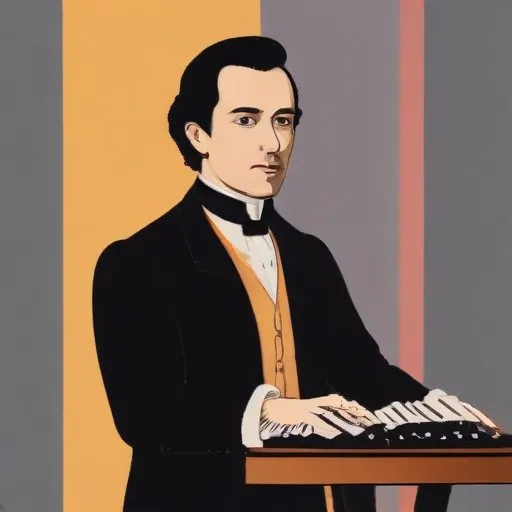
A renowned Baroque composer and organist, known for his expressive and intricate harpsichord suites that blended French and Italian styles. His music remains a staple of the classical keyboard repertoire.
Froberger was baptized on 19 May 1616 in Stuttgart, Germany. His family, originally from Halle, had a rich musical heritage. His father, Basilius, was a tenor in the Württemberg court chapel and later became the court Kapellmeister. Froberger received his early music lessons from his father and was exposed to a diverse range of musical traditions, thanks to the city's thriving musical scene, which was influenced by musicians from across Europe.
Despite the challenges posed by the Thirty Years War, Froberger's talent and dedication earned him recognition in the musical circles of Stuttgart. He became a favored composer among the noble patrons, particularly the Württembergs and Habsburgs, who appreciated his unique style and virtuosity. This patronage allowed him to focus on his craft, and he went on to create some of the most iconic suites of the Baroque era.
Froberger's music is distinguished by its lyricism, contrapuntal complexity, and innovative use of harmony. His suites, often centered around a specific theme or program, showcased his mastery of the harpsichord. By restricting access to his manuscripts, Froberger ensured that his music remained exclusive to his noble patrons, further solidifying his reputation as a master composer.
Froberger's contributions to the development of the suite and his innovative compositional style have had a lasting impact on Western classical music. His influence can be seen in the works of later composers, such as J.S. Bach and George Frideric Handel, and continues to inspire musicians and composers to this day.
Froberger's music has been featured in various film, television, and stage productions, introducing his works to a wider audience. His influence can be seen in the music of contemporary artists, who draw inspiration from his innovative use of harmony and programmatic style.
Froberger's life and works are a testament to the rich cultural heritage of the Baroque era. His music, though often shrouded in mystery due to his restrictive patronage, has left an enduring mark on the world of classical music. As a pioneer of the suite, Froberger's compositions continue to inspire and delight audiences, solidifying his place as one of the most important composers of the 17th century.
Born in 1585
A renowned Baroque composer and organist, known for his contributions to the development of the oratorio and passion genres, creating over 500 works that showcased his mastery of choral music.
Born in 1587
A renowned Baroque-era musician and teacher, known for his influential compositions and contributions to the development of the organ concerto.
Born in 1586
A renowned Baroque composer, he wrote sacred music, motets, and hymns, and was a prominent figure in the development of the German Protestant church music tradition.
Born in 1660
A renowned Baroque-era organist and composer, known for his innovative and expressive works that bridged the gap between the Renaissance and Baroque styles. His compositions showcased exceptional mastery of counterpoint and harmony.
Born in 1685
A renowned Baroque composer and organist, famous for creating majestic orchestral suites, operas, and oratorios, including the iconic "Messiah" masterpiece.
Born in 1685
A master of Baroque music, he composed over 1,000 works, including orchestral suites, cantatas, and passions, that still inspire and influence musicians today. His innovative use of counterpoint and harmony raised the bar for classical music.
Born in 1678
A virtuosic violinist and prolific composer, he crafted over 400 concertos, including "The Four Seasons," which remains a beloved and iconic masterpiece of classical music.
