


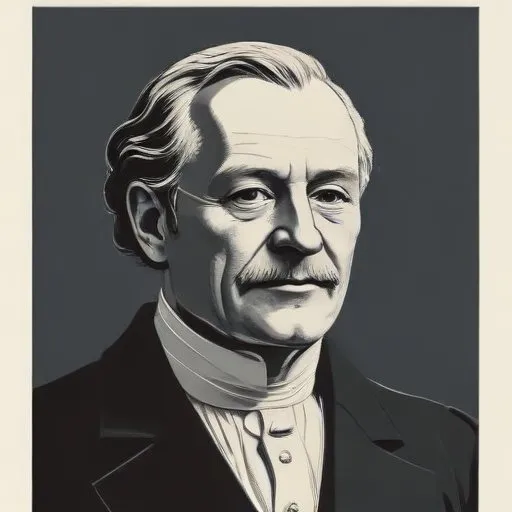
A German Renaissance man who composed music, wrote dictionaries, and served as a diplomat, making significant contributions to the fields of music theory and lexicography. He's most known for his influential music theory writings that shaped the Baroque period.
Johann Mattheson, a German composer, critic, lexicographer, and music theorist, left an indelible mark on the world of music with his influential writings on the late Baroque and early Classical periods. His biographical and theoretical works, widely disseminated during his lifetime, served as the foundation for subsequent lexicographers and historians, cementing his legacy as a pioneer in music theory and history.
Born on September 28, 1681, in Hamburg, Germany, Mattheson was the son of a prosperous tax collector. He received a broad liberal education, which included lessons in keyboard instruments, violin, composition, and singing. By the age of nine, Mattheson was already singing and playing organ in church and was a member of the chorus of the Hamburg opera.
In 1696, Mattheson made his solo debut with the Hamburg opera in female roles, and after his voice changed, he sang tenor at the opera, conducted rehearsals, and composed operas himself. His talent and versatility earned him the position of cantor at St. Mary's Cathedral, Hamburg, which he held from 1718 to 1728, until increasing deafness led to his retirement.
In 1706, Mattheson began his career as a professional diplomat, utilizing his fluency in English, which he had studied in school. He became tutor to the son of the English ambassador, Sir John Wich, and later served as secretary to the ambassador. Mattheson went on to represent the ambassador on diplomatic missions abroad, solidifying his reputation as a skilled diplomat.
In 1709, Mattheson married Catharina Jennings, the daughter of an English clergyman, although the couple remained childless. One of the most significant aspects of Mattheson's personal life was his close friendship with George Frideric Handel, despite a notorious incident in 1704 when Mattheson nearly killed Handel in a sudden quarrel during a performance of Mattheson's opera Die unglückselige Kleopatra, Königin von Ägypten. A large button on Handel's coat saved his life, and the two eventually reconciled, remaining in correspondence until Handel's death. Shortly after, Mattheson translated John Mainwaring's biography of Handel into German and had it published in Hamburg.
Mattheson's contributions to music theory and history are immeasurable. His writings, including Das neu-eröffnete Orchestre (1713), Der vollkommene Capellmeister (1739), and Grundlage einer Ehren-Pforte (1740), remain essential resources for scholars and musicians today. His work not only shaped the understanding of Baroque music but also influenced subsequent generations of composers and music theorists.
Mattheson's remarkable life, marked by his diverse talents, his friendship with Handel, and his significant contributions to music theory and history, continues to inspire and educate music lovers around the world.
Born in 1685
A renowned Baroque composer and organist, famous for creating majestic orchestral suites, operas, and oratorios, including the iconic "Messiah" masterpiece.
Born in 1685
A master of Baroque music, he composed over 1,000 works, including orchestral suites, cantatas, and passions, that still inspire and influence musicians today. His innovative use of counterpoint and harmony raised the bar for classical music.
Born in 1585
A renowned Baroque composer and organist, known for his contributions to the development of the oratorio and passion genres, creating over 500 works that showcased his mastery of choral music.
Born in 1678
A virtuosic violinist and prolific composer, he crafted over 400 concertos, including "The Four Seasons," which remains a beloved and iconic masterpiece of classical music.
Born in 1653
A virtuosic violinist and composer who revolutionized the concerto grosso form, creating a new era of classical music. His influential works elevated the violin to a solo instrument, shaping the course of Western classical music.
Born in 1660
Baroque-era mastermind behind over 600 cantatas, operas, and orchestral works, shaping the course of classical music with his innovative style and harmonic genius.
Born in 1686
A renowned Baroque composer and teacher, known for his operas and vocal music, influencing many famous composers, including Haydn and Mozart.
