


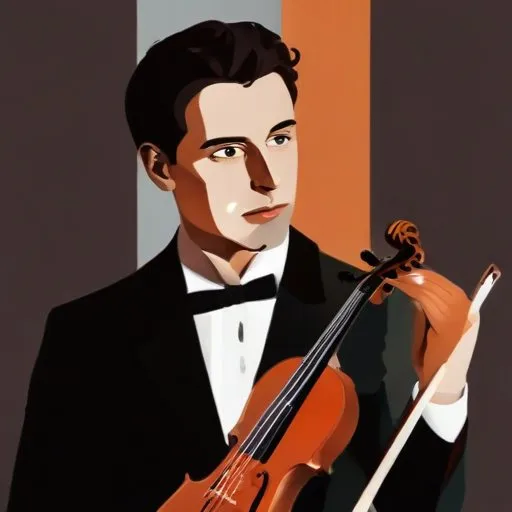
A renowned Baroque composer and virtuosic violinist, he wrote over 150 orchestral suites and concertos, greatly influencing the development of classical music. His works are still performed and admired today.
Johann Melchior Molter, a renowned German composer and violinist, left an indelible mark on the late Baroque period with his immense contributions to the world of classical music. With over 140 symphonies, numerous concertos, and a plethora of chamber music pieces to his credit, Molter's musical legacy continues to inspire and delight audiences to this day.
Born on February 10, 1696, in Tiefenort, near Eisenach, Germany, Molter was educated at the local Gymnasium in Eisenach. His early fascination with music led him to pursue a career as a violinist, which eventually took him to Karlsruhe in 1717.
In Karlsruhe, Molter married Maria Salome Rollwagen, with whom he had eight children. Between 1719 and 1721, he traveled to Italy to study composition, an experience that significantly influenced his musical style. Upon his return, he became the court Kapellmeister at Karlsruhe, a position he held until 1733.
In 1734, Molter became Kapellmeister at the court of Duke Wilhelm Heinrich of Saxe-Eisenach, where he continued to compose and perform music. After his first wife's passing in 1737, he married Maria Christina Wagner in 1742. The same year, he returned to Karlsruhe, where he began teaching at the local gymnasium.
Molter's surviving works include an oratorio, several cantatas, over 140 symphonies, overtures, and other orchestral pieces, as well as numerous concertos, including some of the first clarinet concertos ever written. His chamber music pieces, which add to his extensive oeuvre, showcase his mastery of various genres.
One of Molter's most famous works is his Trumpet Concerto, which has become the signature piece of C-SPAN's Washington Journal. This composition exemplifies the composer's ability to craft music that is both technically impressive and accessible to a broad audience.
Throughout his life, Molter navigated various personal and professional milestones. He experienced the joy of marriage and fatherhood, as well as the sorrow of losing his first wife. Despite these challenges, he remained dedicated to his craft, continuing to compose and perform music until his passing on January 12, 1765, in Karlsruhe.
Molter's legacy extends far beyond his own time. His contributions to classical music have inspired generations of composers, performers, and music enthusiasts. His work continues to be celebrated and performed today, a testament to the enduring power of his art.
In conclusion, Johann Melchior Molter was a remarkable figure in the world of classical music, whose compositions and performances have left an indelible mark on the late Baroque period. His legacy serves as a reminder of the transformative power of music to bring people together and transcend time.
-- A family travel tip: Explore the vibrant city of Karlsruhe, where Molter lived and worked, and discover the rich cultural heritage of this German city.
Born in 1685
A master of Baroque music, he composed over 1,000 works, including orchestral suites, cantatas, and passions, that still inspire and influence musicians today. His innovative use of counterpoint and harmony raised the bar for classical music.
Born in 1685
A renowned Baroque composer and organist, famous for creating majestic orchestral suites, operas, and oratorios, including the iconic "Messiah" masterpiece.
Born in 1685
A virtuosic harpsichordist and composer, renowned for crafting over 550 sonatas that showcased his innovative and expressive style, blending Italian and Portuguese influences. 42
Born in 1678
A virtuosic violinist and prolific composer, he crafted over 400 concertos, including "The Four Seasons," which remains a beloved and iconic masterpiece of classical music.
Born in 1714
A renowned 18th-century musician, he was a prolific composer and virtuosic performer, known for his expressive and innovative keyboard music that bridged the Baroque and Classical styles. His compositions, particularly for harpsichord and piano, showcased his mastery of counterpoint and harmony.
Born in 1735
A renowned Baroque composer and viol player, known for his innovative and expressive works that blended German and Italian styles. He was a prominent figure in London's musical scene during the 18th century.
Born in 1692
A virtuosic violinist and composer who wrote over 150 concertos and sonatas, known for his technically demanding and expressive works that showcased his mastery of the instrument.
Born in 1687
An 18th-century virtuoso violinist and composer who wrote influential treatises on music performance and theory, shaping the classical music landscape.
