


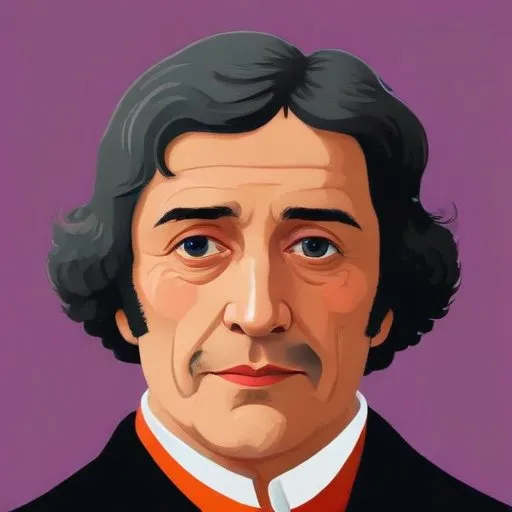
A prominent poet of the Enlightenment era, known for his Anacreontic odes that celebrated the joys of wine, love, and friendship. His works were widely read and admired in 18th-century Germany.
Johann Wilhelm Ludwig Gleim, a renowned German poet, is best known for his association with the Enlightenment and Rococo movements. His literary works, which spanned across various genres, including poetry, drama, and satire, continue to be celebrated for their wit, elegance, and insight into the human condition.
Gleim was born on April 2, 1719, in the small town of Ermsleben, Principality of Halberstadt, Prussia. His father, a tax collector, and mother passed away at a young age, leaving him to navigate the world on his own. Despite these challenges, Gleim persevered and attended school in Wernigerode, later enrolling at the University of Halle to study law.
During his time at the University of Halle, Gleim formed a circle of young poets, including Johann Uz and Johann Nikolaus Götz, with whom he shared his passion for literature and philosophy. This close-knit community played a significant role in shaping his writing style and intellectual pursuits.
Gleim's literary talent and charm earned him the position of secretary to Prince Frederick William of Brandenburg-Schwedt in 1743. He accompanied the prince during the Second Silesian War, where he met the celebrated poet Ewald Christian von Kleist, becoming a devoted friend and admirer.
Following the prince's untimely death, Gleim became secretary to Prince Leopold of Anhalt-Dessau, but his tenure was brief, as he found the old prince's demeanor unbearable. In 1747, he was appointed secretary of the Halberstadt Cathedral chapter, a position that allowed him to focus on his writing and patronize aspiring poets.
Gleim's generosity and kindness towards fellow writers earned him the nickname "Father Gleim" throughout literary Germany. His unwavering support for poetry and poetry enthusiasts helped shape the literary landscape of his time.
Gleim's body of work includes lyrical poetry, dramas, and satirical writings, showcasing his mastery of various genres. His Lieder eines Grenadiers (Songs of a Grenadier) is particularly notable, as it reflects his experiences during the Second Silesian War.
After his passing in 1803, Gleim's collected works were published in seven volumes between 1811 and 1813. A selection of his poetry was also featured in Franz Muncker's Anakreontiker und preussisch-patriotische Lyriker (1894) and Friedrich Wilhelm Krüte's Gleims Leben aus seinen Briefen und Schriften (1811).
Gleim's legacy extends beyond his literary contributions. He played a significant role in promoting German poetry and culture, paving the way for future generations of writers and intellectuals.
Gleim's life, marked by his passions for poetry, literature, and patronage, continues to inspire and captivate readers to this day.
Born in 1729
A prominent Enlightenment thinker, he's known for his influential writings on philosophy, literature, and theology, which helped shape modern German culture. He's also credited with developing the concept of dramatic irony in literature.
Born in 1724
A leading figure of the German Enlightenment, he's credited with creating the first German epic poem, "Der Messias", which revolutionized German literature. His works inspired a new era of poetic expression.
Born in 1749
A German literary giant who penned iconic works like "Faust" and "The Sorrows of Young Werther", shaping the Romantic movement and influencing countless writers.
Born in 1759
A renowned poet and playwright who crafted influential works that explored the human condition, morality, and the struggle for freedom, leaving a lasting impact on German literature.
Born in 1700
A prominent 18th-century literary figure who advocated for Enlightenment values and rationalism in German literature, shaping the country's literary scene with his influential writings and critiques.
Born in 1715
A prominent 18th-century poet and academic who wrote influential works that shaped German literature and education. He's known for his fables, poems, and essays that promoted moral values and Enlightenment ideas.
Born in 1715
A German military officer who wrote poetry in his spare time, known for his lyrical and introspective works that explored themes of love, nature, and mortality.
Born in 1762
A German philosopher and academic who developed the concept of German idealism, emphasizing the role of the individual and the nation in shaping reality. He's known for his influence on German philosophy and the development of existentialism.
