


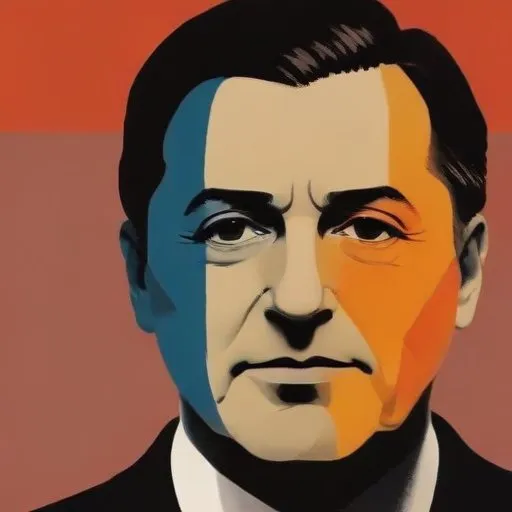
The eighth Federal President of Germany, a journalist-turned-politician who played a key role in shaping the country's post-reunification era, known for his commitment to European integration and social justice.
Johannes Rau, a stalwart of German politics, is best known for his tenure as the President of Germany from 1999 to 2004 and Minister President of North Rhine-Westphalia from 1978 to 1998. Throughout his illustrious career, Rau left an indelible mark on German politics, education, and society.
Born on January 16, 1931, in Wuppertal, Rhine Province, Rau was the third of five children in a Protestant family. His early life was shaped by his involvement in the Confessing Church, a Protestant movement that resisted Nazism. After leaving school in 1949, Rau worked as a publisher, primarily with the Protestant Youth Publishing House.
Rau's foray into politics began with the All-German People's Party (GVP), founded by Gustav Heinemann. When the GVP disbanded in 1957, Rau joined the Social Democratic Party of Germany (SPD) alongside his mentor, Gustav Heinemann. He quickly rose through the ranks, becoming deputy chairman of the SPD party in Wuppertal and later serving as chairman of the SPD Group in the City Council.
In 1958, Rau was elected to the Landtag (state parliament) of North Rhine-Westphalia, marking the beginning of his ascent in state politics. He became chairman of the SPD fraction in the Landtag in 1967 and Minister of Science and Education in the cabinet of Minister President Heinz Kühn in 1970. Rau's reputation as a reformer was cemented during this period, as he founded five universities in North Rhine-Westphalia and initiated Germany's first distance learning university at Hagen, modelled on the British Open University.
In 1978, Rau became Minister President of North Rhine-Westphalia, a position he held until 1998. During his tenure, he also served as President of the Bundesrat (Federal Council) in 1982-83 and 1994-95. Rau's leadership was marked by his commitment to education, social welfare, and economic development, earning him a reputation as a champion of the common man.
In 1999, Rau was elected as the President of Germany, a position he held until 2004. As President, Rau worked to strengthen European integration, foster international cooperation, and promote social cohesion. His presidency was marked by his commitment to human rights, social justice, and environmental protection.
Johannes Rau's contributions to German politics, education, and society are multifaceted and far-reaching. He played a crucial role in shaping modern Germany, promoting European integration, and fostering international cooperation. Through his commitment to education and social welfare, Rau improved the lives of countless Germans. His legacy continues to inspire future generations of politicians, educators, and social reformers.
Johannes Rau's life and legacy serve as a testament to the power of dedication, hard work, and a commitment to the betterment of society. As a politician, educator, and reformer, Rau left an indelible mark on Germany and the world.
96 Years Old
The first unified Germany's leader, who oversaw the country's reunification after the Berlin Wall's fall, and is credited with creating a strong, stable economy.
82 Years Old
The 7th Chancellor of Germany, a lawyer-turned-politician, led the country from 1998 to 2005, implementing significant economic and social reforms. He's known for his efforts to modernize Germany and strengthen the European Union.
71 Years Old
The first female Chancellor of Germany, serving for 16 years, known for her leadership during the European sovereign-debt crisis and her role in shaping the European Union's policy. She's a highly influential figure in modern politics.
Born in 1915
A prominent post-war German politician who served as Minister President of Bavaria and played a key role in shaping the country's conservative politics. He was also a strong advocate for European integration.
99 Years Old
A German statesman who served as Vice-Chancellor and Foreign Minister, playing a key role in reunifying Germany and shaping European politics. He's known for his diplomatic efforts and advocacy for human rights.
96 Years Old
A German academic and politician who served as the President of the German Bundesrat, known for his influential role in shaping Germany's federal policies and education system.
84 Years Old
A German lawyer and politician who served as Minister President of Bavaria, known for his conservative policies and efforts to strengthen regional autonomy. He played a key role in shaping Bavaria's economy and politics.
