


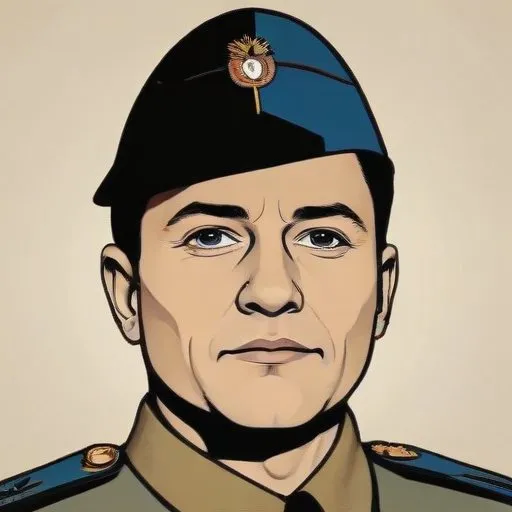
Prime Minister of Estonia in exile, leading the government from 1964 to 1982, and a prominent figure in the Estonian independence movement. Known for his efforts to maintain Estonia's sovereignty during the Soviet occupation.
Johannes Sikkar, the first head of the Estonian government in exile, served as Acting Prime Minister from January 12, 1953, to January 1, 1962, leading his country through turbulent times from afar. Sikkar's unwavering dedication to Estonia's freedom and independence earned him a revered place in the nation's history.
Born on October 15, 1897, in Knnu, Tartu County, Estonia, Sikkar grew up with a strong sense of patriotism and a desire to serve his country. He finished his economic studies at the University of Tartu cum laude in 1936, laying the groundwork for his future roles in politics and government.
Sikkar served in the Estonian War of Independence against Soviet Russia from 1918 to 1920, fighting on an armored train as a voluntary and an officer. His bravery was rewarded with a farm, which he managed until 1944. During this period, he also became a member of the National Assembly, serving from June 15, 1926, to December 31, 1937.
In 1940 and 1944, Sikkar participated in resistance movements against both Soviet and German occupations. He escaped to Sweden on September 12, 1944, where he was appointed Acting Prime Minister and Minister of Interior by August Rei, the 3rd President of Estonia, on January 12, 1953. Due to political restrictions in Sweden, Sikkar's government assumed their offices in Oslo, Norway.
Sikkar's government consisted of:
Johannes Sikkar's leadership in exile played a crucial role in maintaining Estonia's government and identity during the Cold War era. His determination and perseverance inspired Estonians around the world, and his legacy continues to be celebrated today.
Sikkar passed away on August 22, 1960, in Stockholm, Sweden, but his contributions to Estonia's struggle for independence remain unforgettable.
Born in 1890
A prominent Estonian leader who served as the country's Prime Minister during a tumultuous period, guiding Estonia through World War II and the Soviet occupation. He's revered for his bravery and statesmanship during Estonia's struggle for independence.
Born in 1875
Estonia's second Prime Minister, a lawyer and politician, played a crucial role in shaping the country's early years, serving as a key figure in its struggle for independence. He's most known for his efforts in establishing Estonia's sovereignty and democratic government.
Born in 1874
Estonia's first president, a key figure in the country's struggle for independence from Russia, served as a unifying force during tumultuous times. He's remembered for his role in shaping Estonia's early years and its path to sovereignty.
Born in 1884
Estonia's 7th Prime Minister, a lawyer and politician who played a crucial role in shaping the country's early years of independence, known for his diplomatic efforts and national unification.
Born in 1868
Estonia's 2nd Prime Minister, a pioneering journalist, lawyer, and politician who played a crucial role in the country's struggle for independence and development. He's most known for his efforts to establish a democratic government and promote national unity.
Born in 1872
Estonia's 7th State Elder, a prominent lawyer and politician, played a crucial role in shaping the country's early 20th-century government and politics. He's most known for his efforts in establishing Estonia's independence and sovereignty.
Born in 1888
Estonian journalist and politician who served as the 6th Prime Minister of Estonia, known for his leadership during the country's interwar period and his role in shaping the nation's early years of independence.
Born in 1886
Estonia's Head of State during World War II, leading the country's government-in-exile and advocating for independence from Soviet occupation. He played a crucial role in preserving Estonia's sovereignty and identity.
