


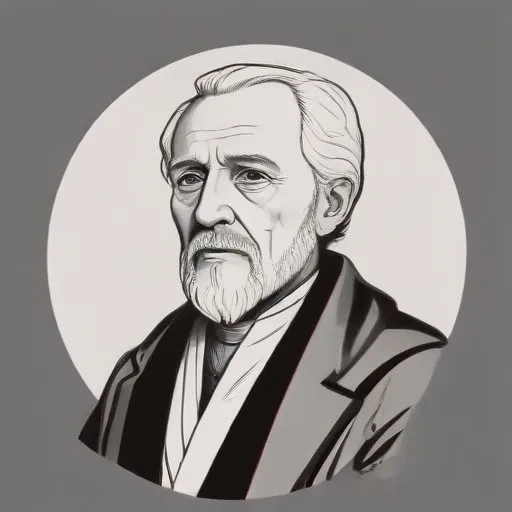
A 19th-century Estonian Renaissance figure, he was a poet who wrote about national identity and freedom, and also served as a physician and politician, playing a key role in Estonia's struggle for independence.
Johannes Vares, also known by his pen name Barbarus or VaresBarbarus, was a multifaceted Estonian figure, renowned for his remarkable contributions as a poet, medical doctor, and politician. Born on December 31, 1889, in Kiisa, near Viljandi, Estonia, Vares left an indelible mark on the country's literary and political landscape.
Vares was born into a farmer's family and received his secondary education at Pärnu Gymnasium. He then went on to study medicine at the University of Kyiv from 1910 to 1914. During World War I, Vares served as a military physician, and later, he served as a military physician for the Estonian Army during the Estonian War of Independence from 1918 to 1920.
In the 1920s, Vares began working as a medical doctor in Pärnu, where he simultaneously developed his passion for poetry. Using the pen name Johannes Barbarus, he became a well-known poet and radical socialist. Vares' literary works showcased his unique perspective on life, politics, and society, earning him recognition in Estonian literary circles.
During World War II, after the Soviet Union invaded and occupied Estonia in June 1940, Vares was forced by Andrei Zhdanov, the leader of the Soviet aggression, to assume the role of prime minister of a communist-dominated puppet government. Following the resignation of Estonian President Konstantin Päts in July 1940, Vares took over most presidential duties. The puppet government subsequently declared Estonia a Soviet Socialist Republic, and Vares remained the nominal head of state for a few weeks more as chairman of the Supreme Soviet of the Estonian SSR.
Vares' decision to head the delegation to Moscow in August 1940, which petitioned Stalin and the Soviet central government to incorporate Estonia into the Soviet Union, has been widely criticized, and he is often regarded as a traitor by the majority of Estonian people. However, it is essential to acknowledge the complex historical context in which Vares made his choices.
Vares' literary works and political actions reflect his strong socialist leanings and radical views. As a poet, he often explored themes of social justice, equality, and the struggles of the working class. His political career was marked by a commitment to socialist ideology, which led to his involvement with the Communist Party of Estonia.
Johannes Vares' life serves as a testament to the power of perseverance and adaptability. From his early days as a medical doctor to his later years as a poet and politician, Vares embodied the spirit of determination and conviction. Despite the controversies surrounding his political choices, Vares' legacy remains a complex and multifaceted one, deserving of exploration and introspection.
Born in 1798
Estonian physician, philologist, and academic who contributed to the development of the Estonian language and literature, and was a key figure in the Estonian national awakening
Born in 1801
Estonia's national poet, known for his romantic and patriotic verses that inspired a national awakening, and is considered the founder of Estonian literature.
Born in 1843
Estonian poet and playwright who wrote about love, nature, and social issues, and is considered the founder of Estonian theatre.
Born in 1841
Estonian journalist and politician who advocated for Estonian independence from Russia and was a key figure in the country's struggle for self-governance. He's known for his passionate writings and speeches that inspired a nation.
Born in 1868
Estonia's 2nd Prime Minister, a pioneering journalist, lawyer, and politician who played a crucial role in the country's struggle for independence and development. He's most known for his efforts to establish a democratic government and promote national unity.
Born in 1890
A celebrated Estonian literary figure, known for his poignant poetry and novels that explored the human condition, love, and the Estonian identity.
