


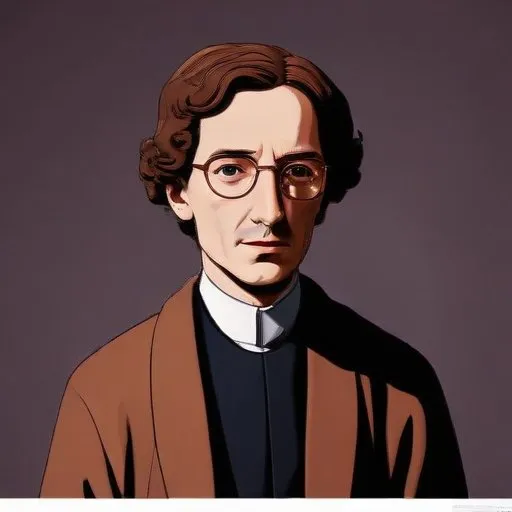
Developed the Tonic Sol-fa system, a method of teaching music that uses syllables to represent musical notes, making it easier for people to learn and sing in harmony.
John Curwen, an English Congregationalist minister, is renowned for popularizing the tonic sol-fa system of music education, a revolutionary method that transformed the way people learned music. This innovative approach, adapted from Sarah Ann Glover's Norwich Solfa method, enabled individuals to read music with ease, making it accessible to the masses.
Born on November 14, 1816, in Heckmondwike, West Riding of Yorkshire, Curwen was the son of Spedding Curwen and Mary Jubb. His father, a Nonconformist minister, instilled in him a strong sense of spirituality and a passion for education. Curwen's educational background was marked by attendance at Wymondley College in Hertfordshire, Coward College (later known as University College London), and finally, University College London.
Curwen's most significant contribution lies in his adaptation of the tonic sol-fa system, which simplifies music notation by replacing traditional staff notation with a more intuitive and phonetic approach. This system, based on the ancient gamut, assigns specific sounds to each note, making it easier for individuals to learn and sight-read music. By eliminating the need for extensive music theory knowledge, Curwen's method democratized music education, rendering it accessible to people from all walks of life.
Curwen's tonic sol-fa system has had a profound impact on music education, extending beyond the realm of classical music to influence popular and folk music. His method has been widely adopted in schools, churches, and community choirs, fostering a sense of community and shared musical expression. Moreover, his approach has inspired subsequent music education innovations, solidifying his legacy as a pioneer in the field.
Curwen married Mary Thompson in 1845, and they had four children together. His son, John Spencer Curwen, married Annie Jessy Gregg, who later developed the influential "Mrs. Curwen's Pianoforte Method" based on her father-in-law's technique. John Curwen passed away on May 26, 1880, at Heaton Mersey, Stockport, leaving behind a lasting impact on music education and a testament to the power of innovation.
Curwen's work embodied a strong philosophical undercurrent, emphasizing the importance of music education as a tool for social improvement and community building. He believed that music, when made accessible to all, could foster a sense of unity and shared cultural heritage. This conviction underpinned his tireless efforts to promote the tonic sol-fa system, democratizing music education and empowering individuals from diverse backgrounds.
John Curwen's life and work must be understood within the context of the Industrial Revolution, a period marked by rapid social change and urbanization. His innovative approach to music education helped bridge the gap between traditional musical elites and the increasingly urbanized working class, democratizing access to music and fostering a sense of community.
Today, Curwen's legacy extends far beyond his own lifetime, with his tonic sol-fa system remaining an integral part of music education around the world. As a testament to his vision and perseverance, John Curwen's contributions continue to inspire generations of music educators, students, and enthusiasts alike.
Born in 1674
A renowned hymnwriter and theologian who penned over 750 hymns, including "Joy to the World" and "When I Survey the Wondrous Cross", shaping Christian worship and literature.
Born in 1891
A pioneering historian and author who shed light on African American history and culture through his extensive research and writings. His works helped to preserve and promote the contributions of African Americans to the country's development.
Born in 1703
A prominent figure in the 18th-century Methodist movement, he founded the Methodist Church and emphasized personal faith, social justice, and education. His teachings and legacy continue to shape Protestantism today.
Born in 1714
A charismatic Anglican priest who led a spiritual revival in 18th-century England and America, preaching to massive crowds and influencing the development of evangelical Christianity.
Born in 1725
A former slave trader who later became a prominent abolitionist and wrote the iconic hymn "Amazing Grace". He's a symbol of redemption and a powerful voice against slavery.
Born in 1731
A renowned poet and hymnwriter, known for his evocative and expressive works that explored themes of nature, faith, and the human experience. His hymns, such as "Light Shining Out of Darkness", remain popular to this day.
Born in 1740
A prominent cleric and hymn writer, he penned the iconic hymn "Rock of Ages" and advocated for Calvinist theology. His works remain influential in Christian worship and literature.
Born in 1834
A renowned Baptist preacher and prolific writer, known for his powerful sermons and numerous published works that still inspire and influence Christians today.
