


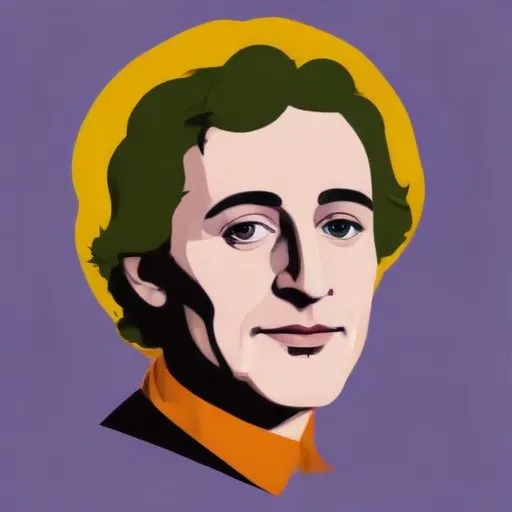
Wrote influential satirical plays and poems that critiqued 18th-century British society, particularly with his famous work "The Beggar's Opera".
John Gay, an English poet and dramatist, is best remembered for his iconic ballad opera, The Beggars Opera, which premiered in 1728 and catapulted him to fame. This groundbreaking work not only immortalized characters like Captain Macheath and Polly Peachum but also solidified Gay's position as a prominent figure in the literary circle of his time.
John Gay was born on June 30, 1685, in Barnstaple, England, as the youngest of five children to William and Katherine Gay. His family, though not wealthy, maintained a comfortable lifestyle, residing in a large house called the Red Cross. Gay's ancestry was rooted in North Devon, with his great-grandfather, Anthony Gay, having served as Mayor of Barnstaple.
Gay received his education at the town's grammar school, and upon leaving, he was apprenticed to a silk mercer in London. However, he soon grew tired of the occupation and returned to Barnstaple, where he was educated by his uncle, the Rev. John Hanmer, a nonconformist minister.
Gay's literary career began to take shape with his first play, The Mohocks, in 1712, despite facing censorship issues. The following year, he wrote a comedy, The Wife of Bath, which debuted at the Drury Lane Theatre. His dedication of Rural Sports to Alexander Pope in 1713 marked the beginning of a lasting friendship with the prominent poet.
In 1714, Gay wrote The Shepherds Week, a series of six pastorals that showcased his skill in satire and social commentary. This work solidified his position as a prominent satirist and poet of his time.
The Beggars Opera, Gay's magnum opus, premiered on January 29, 1728, at the Lincoln's Inn Fields Theatre. The operetta's success was unprecedented, with its characters becoming household names and its music remaining popular for generations. The work's biting satire and commentary on the social ills of the time resonated with audiences, cementing Gay's status as a master of the satirical genre.
The opera's influence extended beyond the literary circle, with its themes and characters permeating popular culture. The work's impact on the development of English opera and musical theatre is still felt today, with many regarding it as a milestone in the history of the performing arts.
John Gay's literary contributions earned him a place among the prominent writers of his time, including Alexander Pope and Jonathan Swift, with whom he was part of the Scriblerus Club. His poetry and plays continued to be performed and published throughout his life, with his last work, Achilles, being published posthumously in 1733.
Gay passed away on December 4, 1732, leaving behind a legacy that has endured for centuries. His works continue to be studied, performed, and admired, a testament to his mastery of satire, poetry, and drama.
John Gay's life and works serve as a testament to his innovative spirit, satirical wit, and poetic genius, cementing his place in the annals of English literature.
Born in 1667
A witty wordsmith who penned scathing social commentaries, including the iconic "Gulliver's Travels", which continue to delight and provoke readers to this day.
Born in 1707
Wrote influential and satirical novels of manners, such as "Tom Jones", that explored the social and moral issues of 18th-century England.
Born in 1846
A Nigerian priest and historian who wrote the first comprehensive history of the Yoruba people, providing valuable insights into their culture and traditions.
Born in 1717
A renowned 18th-century theater personality who dominated London's stages with his captivating performances and penned numerous plays, shaping the English theater scene.
Born in 1728
A celebrated 18th-century writer, known for his witty plays and novels of manners that satirized the social class system, leaving a lasting impact on English literature.
Born in 1751
A witty and influential 18th-century playwright and politician who penned iconic comedies like "The School for Scandal" and "The Rivals", shaping English literature and theatre.
Born in 1631
A dominant literary figure of the Restoration era, known for his influential poetry, plays, and critical essays that shaped the English literary landscape. He's often credited with creating a new style of heroic drama and satire.
