


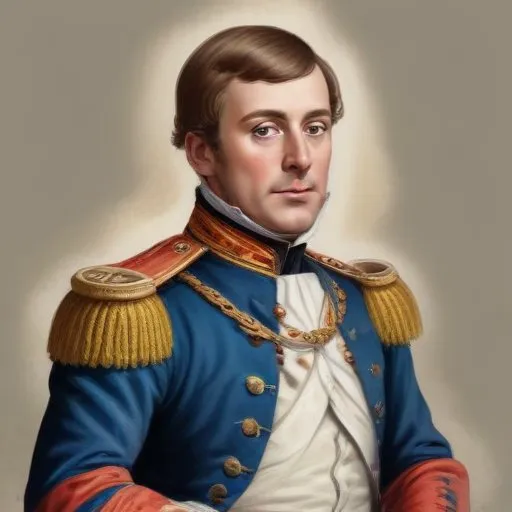
A British military leader and politician who played a key role in shaping Canada's government and constitution, and is remembered for his Report on the Affairs of British North America.
Known for his instrumental role in the passage of the Reform Bill of 1832, John Lambton, 1st Earl of Durham, was a British Whig statesman, colonial administrator, and Governor General of British North America. He was also a founding member and chairman of the New Zealand Company, playing a key role in the colonization of New Zealand.
Born on April 12, 1792, in London, Lambton was the son of William Henry Lambton and Lady Anne Barbara Frances Villiers. He was christened with the names of his grandfathers, John Lambton and George Villiers. After attending Eton, he joined the army in 1809 as a cornet in the 10th Hussars, but resigned in 1811.
Following his father's death in 1797, Lambton inherited an immense fortune, derived largely from mining on lands surrounding Lambton Castle, the ancestral family home in County Durham. This formed the basis of Lambton Collieries, which became a significant source of wealth for him. Other properties in County Durham included Dinsdale Park and Low Dinsdale Manor.
Lambton was a leading reformer and played a crucial role in the passage of the Reform Bill of 1832. He was a strong advocate for electoral reform, which aimed to redistribute parliamentary seats and extend voting rights to the middle class. His efforts led to the bill's passage, which significantly reformed the British electoral system.
In 1835, Lambton was appointed as the Governor General and high commissioner of British North America. During his tenure, he advocated for responsible government and greater autonomy for the colonies. He was also a founding member and chairman of the New Zealand Company, which played a key role in the colonization of New Zealand.
In 1835, Lambton was appointed as the British ambassador to Russia, where he served for three years. He died on July 28, 1840, at the age of 48.
Lambton's legacy as a reformer and colonial administrator has had a lasting impact on British and Canadian history. His efforts in promoting electoral reform and responsible government have shaped the course of democracy in both countries. Additionally, his role in the colonization of New Zealand has left a lasting legacy in the country's history.
Lambton's life and legacy serve as a testament to his commitment to reform and his impact on British and Canadian history.
Born in 1769
A renowned military leader who defeated Napoleon at the Battle of Waterloo, and later served as Prime Minister of the United Kingdom, shaping the country's politics and history.
Born in 1770
Prime Minister of the United Kingdom during the Napoleonic Wars, leading Britain to victory and establishing the country as a dominant world power. He also reformed the British government and economy.
Born in 1770
A skilled lawyer and politician who served as Prime Minister of the United Kingdom, known for his strong oratory skills and brief but influential tenure in office.
Born in 1764
The Prime Minister who oversaw the passage of the Reform Act of 1832, a landmark legislation that reformed the British electoral system, and is also famous for Earl Grey tea, named after him.
Born in 1779
Prime Minister of the United Kingdom during the reign of Queen Victoria, known for his Whig politics and mentorship of the young queen. He played a significant role in shaping the British monarchy and government during a time of great change.
Born in 1788
A British politician who served as Prime Minister and is credited with establishing the modern police force and repealing the Corn Laws, a major trade restriction. He's also known for his role in shaping the Conservative Party.
Born in 1784
A British prime minister who dominated the country's foreign policy in the 19th century, known for his liberal reforms and aggressive imperialism. He played a key role in shaping Britain's relations with Europe and its colonial empire.
