


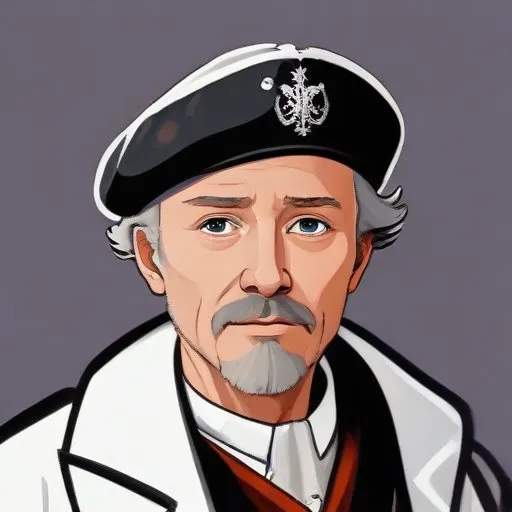
A Scottish physician and explorer who mapped much of the Canadian Arctic and discovered the fate of Sir John Franklin's ill-fated expedition. He's also known for his advocacy of indigenous peoples' rights.
John Rae, a Scottish surgeon and explorer, is best known for his groundbreaking expeditions to the unforgiving Arctic regions of northern Canada, where he charted the elusive Northwest Passage and unraveled the mystery of the ill-fated Franklin Expedition. His remarkable journeys, marked by incredible physical stamina and innovative use of native methods, left an indelible mark on the history of Arctic exploration.
Born on September 30, 1813, at the Hall of Clestrain in Orkney, Scotland, Rae hailed from a family with strong ties to Clan MacRae. He pursued his passion for medicine at the University of Edinburgh, graduating with a degree and obtaining his license from the Royal College of Surgeons of Edinburgh.
Rae's medical expertise soon took him to the Hudson's Bay Company, where he worked as a surgeon at Moose Factory, Ontario. During his ten-year tenure, he developed a unique rapport with the indigenous population, learning to live off the land and adopting native techniques that would later prove crucial to his expeditions. His remarkable adaptability and physical prowess earned him recognition, and he was soon entrusted with leading expeditions into the uncharted territories of the Arctic.
Rae's most notable expeditions took him to the Gulf of Boothia, northwest of Hudson Bay, between 1846 and 1847, and to the Arctic coast near Victoria Island from 1848 to 1851. It was during his 1854 expedition to the Gulf of Boothia that he obtained crucial information from local Inuit peoples about the fate of the Franklin Expedition, which had vanished in the area six years prior.
Rae's remarkable achievements were not limited to his geographic discoveries. He was a pioneer in the use of native methods, and his innovative approach to Arctic travel allowed him to traverse vast distances with minimal equipment and a small number of followers. His expeditions were marked by a deep respect for the indigenous population and a willingness to learn from their expertise.
John Rae's contributions to Arctic exploration and his groundbreaking discoveries have left a lasting legacy in the world of geography and anthropology. His remarkable physical stamina, innovative use of native methods, and groundbreaking expeditions have inspired generations of explorers, scientists, and historians. Today, Rae's name is synonymous with courage, resilience, and a passion for discovery in the harsh and unforgiving Arctic environment.
John Rae's remarkable life and achievements serve as a testament to the power of human exploration and the importance of respecting and learning from indigenous cultures. His legacy continues to inspire and captivate scholars, explorers, and historians to this day.
Born in 1868
Led a British expedition to the South Pole, racing against a Norwegian team, and tragically perished on the return journey. He is remembered for his bravery and sacrifice in the pursuit of scientific discovery.
Born in 1872
First person to reach the South Pole, leading a Norwegian expedition in 1911, and a pioneer in Arctic and Antarctic exploration.
Born in 1800
Led British expeditions to the Arctic, discovering the North Magnetic Pole and the Ross Sea in Antarctica. He mapped much of the region, expanding knowledge of the polar regions.
Born in 1786
A British naval officer and politician who governed Van Diemen's Land (now Tasmania) and led Arctic expeditions, known for his ill-fated quest to find the Northwest Passage.
Born in 1813
A Scottish missionary and explorer who traversed Africa, mapping its rivers and discovering Victoria Falls, while fighting against the slave trade. He embodied courage, compassion, and curiosity.
Born in 1681
Led a series of expeditions that mapped much of the Arctic coast of Siberia and discovered several islands, including the Bering Islands. He also led the first European expedition to sight mainland Alaska.
