


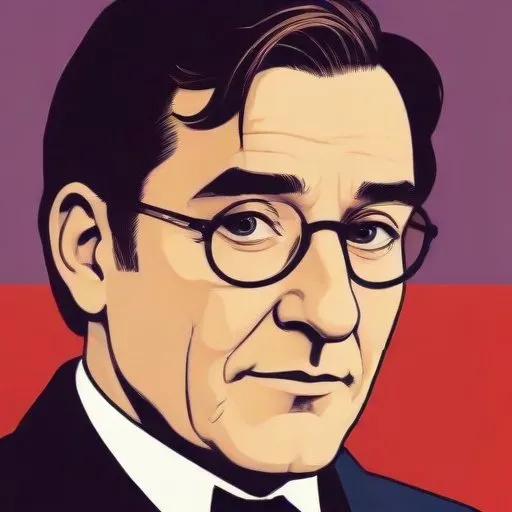
Pioneering linguist and historian who documented American English dialects and slang, creating influential dictionaries that shaped the understanding of American language and culture.
John Russell Bartlett is renowned for his contributions to American history and linguistics, particularly his pioneering work on the exploration of the American West and his seminal dictionary, Dictionary of Americanisms; a comprehensive compilation of American words and phrases.
Born on October 23, 1805, in Providence, Rhode Island, Bartlett was the son of Smith Bartlett and Nancy Russell Bartlett. He spent his formative years in Kingston, Canada, where he developed a strong foundation in languages and history. Later, he attended the Lowville Academy in Lowville, New York, and worked in various capacities in Providence, including as a clerk, bookkeeper, and cashier.
In 1831, Bartlett was one of the founders of the Providence Athenaeum, a pioneering cultural institution, and was elected its first treasurer. He was also elected to the Rhode Island Historical Society, demonstrating his passion for history and linguistics. Throughout his life, Bartlett was involved with various organizations, including the New England Historic Genealogical Society and the American Antiquarian Society, solidifying his reputation as a polymath.
One of his most significant contributions was the establishment of the bookselling and publishing firm, Bartlett and Welford, in partnership with Charles Welford. The firm, located in the Astor House hotel, catered to the growing demand for foreign books and issued five catalogs between 1840 and 1848.
Bartlett's intellectual circle included prominent figures such as Albert Gallatin, an ethnologist and public servant. In 1842, he collaborated with Gallatin to found the American Ethnological Society, an organization dedicated to the study of human cultures. Bartlett served as the Foreign Corresponding Secretary of the organization, underscoring his commitment to interdisciplinary research.
John Russell Bartlett's contributions to American history, linguistics, and cultural institutions have left an indelible mark on the academic community. His dictionary, Dictionary of Americanisms, remains a seminal work in the field of linguistics, while his involvement with the American Ethnological Society has inspired generations of scholars.
Through his work, Bartlett has inspired a deeper understanding of American culture and its evolution, cementing his place as a pioneer in the field of American studies.
Born in 1758
Creator of the first American dictionary, standardizing English language spellings and vocabulary, shaping the way Americans communicate and understand words.
Born in 1796
A renowned historian and scholar who wrote comprehensive and engaging histories of the Spanish Empire, particularly the conquests of Mexico and Peru. His works are still widely read and respected today.
Born in 1823
Pioneering historian and author who chronicled the European colonization of North America, shedding light on the intricate relationships between Native Americans and early settlers. His works remain a cornerstone of American historical literature.
Born in 1817
A 19th-century thinker who advocated for simple living, civil disobedience, and individualism, inspiring generations to reevaluate their relationship with nature and society.
Born in 1803
A leading figure in the Transcendentalist movement, he advocated for individualism, self-reliance, and nature-inspired spirituality through his essays and poetry. His ideas continue to influence American thought and culture.
Born in 1807
A celebrated poet and educator, known for his lyrical and narrative poems that often explored American history and culture, including the iconic "Paul Revere's Ride".
Born in 1819
A prominent poet and critic of the 19th century, known for his satirical and abolitionist writings that influenced American literature and politics. His poetry often explored themes of social justice and morality.
Born in 1794
A prominent 19th-century poet and journalist, known for his romantic and nature-inspired poetry, as well as his influential editorship of the New York Evening Post.
