


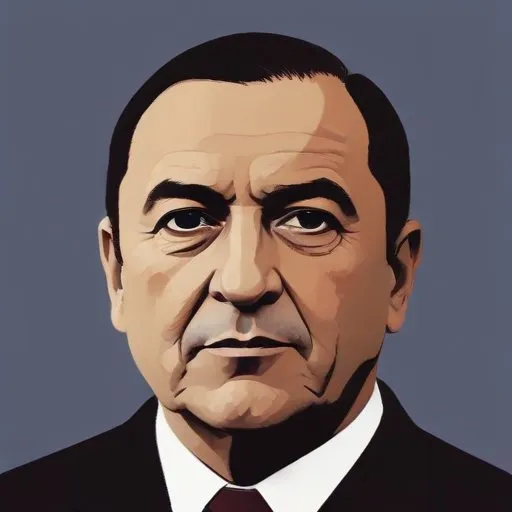
The 10th Premier of Western Australia, serving from 1911 to 1916, known for his progressive reforms and infrastructure development. He implemented policies to improve working conditions, education, and healthcare.
John Scaddan, affectionately known as "Happy Jack," is renowned for being the Premier of Western Australia from 1911 to 1916, leaving an indelible mark on the state's history and development.
Scaddan was born on August 4, 1876, in Moonta, South Australia, to a Cornish Australian family. He was educated at state schools in Woodside and Eaglehawk, Victoria, Australia, and later worked in the mines at Eaglehawk while continuing his schooling part-time at the Bendigo School of Mines and Industries.
In 1896, Scaddan moved to Western Australia, likely as part of the gold rush to the Kalgoorlie goldfields. He began his career as a miner, but after obtaining his engine driver's certificate, he operated a stationary engine at the pit head.
Scaddan's entry into politics was sparked by his unionist leanings and difficulties in securing continuous employment. In 1904, he contested the Western Australian Legislative Assembly seat of Ivanhoe and won it for the Labor Party.
Although he wasn't initially invited to be a minister in Henry Daglish's government, this proved to be an advantage, as many of his rivals suffered from their association with the unsuccessful Daglish ministry.
Scaddan was re-elected unopposed in 1905 and served as party secretary for the next four years. Upon Thomas Bath's retirement in 1910, Scaddan became the leader of the Labor Party and Leader of the Opposition.
In the 1911 election, Labor campaigned on a wide-ranging and radical platform, which Scaddan successfully rode to victory, becoming the Premier of Western Australia.
During his premiership, Scaddan implemented several key reforms, including the establishment of the Western Australian Government Railways, the State Electricity Commission, and the State Housing Commission.
Scaddan's government also introduced progressive labor laws, such as the 8-hour workday, and improved workers' compensation and industrial arbitration systems.
Scaddan married twice, first to Elizabeth Fauckner in 1900, who tragically died of Bright's disease in 1902, and then to Henrietta Edwards in 1904.
After leaving politics, Scaddan lived a quiet life, passing away on November 21, 1934.
John Scaddan's contributions to Western Australia's development are still felt today, with his reforms and initiatives shaping the state's social, economic, and industrial landscape.
As a champion of workers' rights and a visionary leader, Scaddan's legacy continues to inspire generations, earning him a revered place in Western Australian history.
Born in 1847
First Premier of Western Australia, instrumental in the state's early development and exploration, known for his pioneering spirit and leadership.
Born in 1845
The 4th Prime Minister of Australia, a Scottish-Australian lawyer and politician who served from 1904 to 1905, known for his role in shaping the country's early years and contributing to its growth.
Born in 1862
The 5th Prime Minister of Australia, a key figure in the country's early 20th-century politics, known for his role in shaping Australia's social and economic landscape. He played a crucial part in establishing the country's old-age pension and maternity allowance systems.
Born in 1860
The 6th Prime Minister of Australia, a key figure in the country's early 20th-century politics, known for his role in shaping Australia's economy and foreign policy. He played a crucial part in Australia's transition from a British colony to an independent nation.
Born in 1862
A carpenter-turned-politician who served as Australia's 7th Prime Minister, known for his strong leadership during World War I and his role in shaping the country's post-war development.
Born in 1883
Led Australia through the 1920s, implementing significant economic and social reforms, and played a key role in the country's transition from a British dominion to an independent nation.
Born in 1876
The 9th Prime Minister of Australia, serving from 1929 to 1932, is known for leading the country through the Great Depression and implementing significant economic reforms. He was a strong advocate for workers' rights and social justice.
Born in 1894
The 13th Prime Minister of Australia, serving from 1941, known for his brief but significant term during World War II, and his role in shaping the country's economy.
