


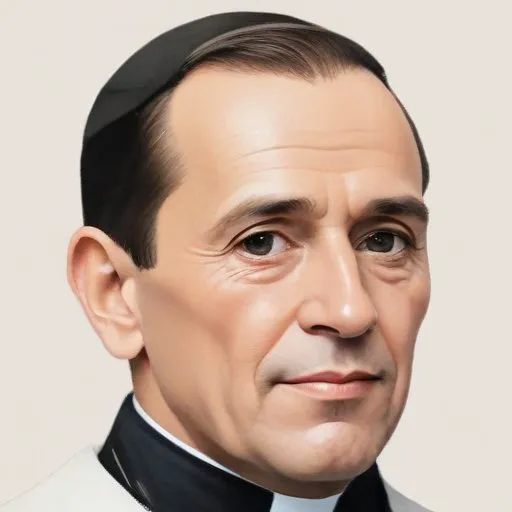
Argentine statesman and priest who played a key role in the country's early independence and served as a regent, known for his diplomatic skills and moderate approach. He helped shape Argentina's government and constitution.
Jos Andrs Pacheco de Melo is renowned for his instrumental role in Argentina's struggle for independence, serving as a representative to the Congress of Tucumn, where he played a crucial part in the Declaration of Independence on July 9, 1816.
Born on October 17, 1779, in Salta, Argentina, Pacheco de Melo studied alongside Martn Gemes in his hometown before entering the seminary of Our Lady of Loreto in Crdoba. He was ordained as a priest in 1801 by Bishop Moscoso of Tucumn.
Pacheco de Melo's priestly duties took him to the Chichas, an indigenous people residing in present-day southern Bolivia and northern Argentina. During his time among the Chichas, he leveraged his position to support the revolutionary forces in Upper Peru, furthering the cause of independence.
In 1816, Pacheco de Melo was elected by the Chichas to the Tucumn Congress, where he participated in the monumental Declaration of Independence. Although his election was debated, his involvement in the Congress was undeniable.
In 1818, Pacheco de Melo chaired the Congress, which had relocated to Buenos Aires. He later served as a government minister in Mendoza, continuing to contribute to the development of the young nation.
The exact date of Pacheco de Melo's death remains unclear, with estimates suggesting it occurred around 1820. Despite the uncertainty surrounding his passing, his legacy as a champion of Argentine independence endures.
Pacheco de Melo's dedication to the independence movement reflected his strong conviction in the importance of self-governance and national sovereignty. His actions embodied the spirit of the Enlightenment, emphasizing the value of liberty and the power of collective action.
Jos Andrs Pacheco de Melo's contributions to Argentina's independence have had a lasting impact on the country's development and national identity. His story serves as a testament to the power of individual dedication and collective action in shaping the course of history.
Born in 1793
A dominant figure in 19th-century Argentina, he ruled with an iron fist, modernizing the economy and military while suppressing opposition, earning a reputation as a strong but brutal leader.
Born in 1821
A 19th-century leader who modernized Argentina's economy and infrastructure, and is also revered for his literary and journalistic contributions.
Born in 1811
A pioneering journalist and politician who modernized Argentina's education system and infrastructure, earning him the nickname "Father of Education" in Argentina.
Born in 1770
A key figure in Argentina's struggle for independence, he created the country's flag and played a crucial role in its early development.
Born in 1778
Led the successful fight for independence in Argentina, Chile, and Peru, and is revered as a national hero in these countries. He's also credited with creating the Army of the Andes, a crucial force in the Latin American wars of independence.
Born in 1794
A charismatic and cunning leader who dominated Mexican politics for decades, known for his role in the Texas Revolution and multiple presidential terms.
Born in 1778
A key figure in Argentina's independence movement, he played a crucial role in shaping the country's early government and politics. He's also revered for his journalistic contributions and advocacy for social reform.
