


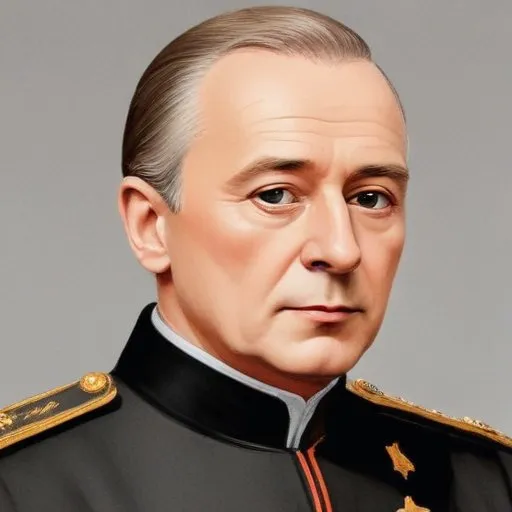
A Czech composer and conductor of military bands, renowned for his marches and polkas that still resonate with modern audiences today. His music evokes a sense of nostalgia and national pride.
When the sounds of marching bands fill the air, few can resist the infectious energy of Julius Fuk's iconic compositions. With over 400 marches, polkas, and waltzes to his name, Fuk earned the reputation as one of the most prolific and beloved military band composers of his time.
Born on July 18, 1872, in Prague, Bohemia (then part of the Austro-Hungarian Empire), Fuk was destined for a life of music. He began his musical journey by learning to play the bassoon with Ludwig Milde, violin with Antonín Bennewitz, and various percussion instruments. Later, he studied composition under the guidance of Antonín Dvořák, a renowned Czech composer.
In 1891, Fuk joined the 49th Austro-Hungarian Regiment as a military musician, playing in Krems by the Danube under Josef Wagner. After a brief stint, he left the army to take up a position as second bassoonist at the German Theatre in Prague. A year later, he became the conductor of the Danica Choir in the Croatian city of Sisak, where he penned a number of chamber music pieces.
In 1897, Fuk rejoined the army as the bandmaster for the 86th Infantry Regiment based in Sarajevo. It was during this time that he wrote his most famous piece, the "Entrance of the Gladiators" (originally titled "Grande Marche Chromatique"), which would later become synonymous with circus performances worldwide.
Fuk's marches, polkas, and waltzes continue to be performed and cherished in the Czech Republic and beyond. His music has transcended generations, evoking national pride and nostalgia. The "Florentiner March" remains a beloved piece throughout Europe, while "Entrance of the Gladiators" (often referred to as "Thunder and Blazes") has become an integral part of circus culture.
Fuk was the brother of opera singer and bass player Karel Fuk and uncle of journalist Julius Fuk, who was tragically executed by the Nazis. Despite his own success, Fuk's life was cut short when he passed away on September 25, 1916.
Julius Fuk's contributions to military band music and his legacy continue to inspire new generations of composers and musicians. His music has become an integral part of Czech cultural heritage, and his iconic compositions remain an essential part of our collective cultural consciousness.
Born in 1824
A Czech pianist and composer who is often referred to as the father of Czech national music, known for his operas and symphonic poems that evoke a strong sense of national identity.
Born in 1841
A Czech composer and academic who blended folk influences with classical music, creating iconic works like the "New World Symphony".
Born in 1854
A Czech composer and theorist who created innovative, folk-inspired operas and orchestral works that explored the human experience, often with a focus on social justice and morality.
Born in 1850
A Czech Romantic-era composer and poet, known for his operas and symphonic poems that showcased his country's folklore and literature. His music is still widely performed in the Czech Republic today.
Born in 1874
A Czech virtuoso violinist and composer, known for his romantic and expressive works, including his iconic Asrael Symphony, which showcases his mastery of orchestration and emotional depth.
