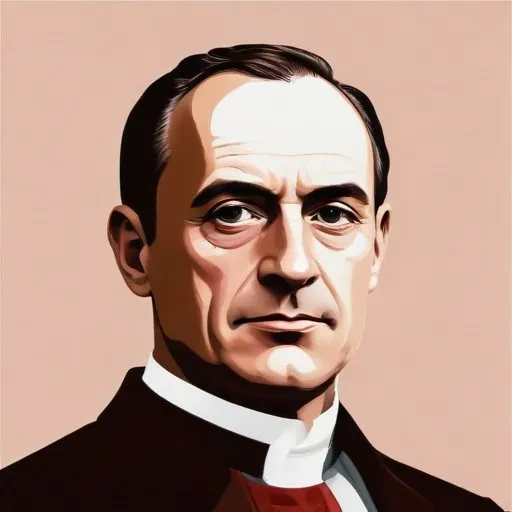
Julius Raab: The Architect of Austrian Independence
A Conservative Icon
Julius Raab, the 15th Federal Chancellor of Austria, is remembered as the mastermind behind Austria's independence from Allied occupation. His pragmatic approach to politics and unwavering commitment to social partnership earned him a revered place in Austrian history.
Rise to Prominence
Born on November 29, 1891, in Sankt Pölten, Lower Austria, Raab hailed from a middle-class Catholic family. His early life took an unexpected turn when he was drafted into the Austro-Hungarian Army as a pioneer officer before completing his studies in civil engineering at the Vienna University of Technology. The experiences during World War I on the Russian and Italian fronts shaped his worldview and prepared him for the challenges that lay ahead.
Early Political Career
After the war, Raab returned to university but soon became involved in politics, dropping out in 1925 to focus on his political career. He joined the Christian Social Party and became a member of the National Council parliament as a Lower Austrian deputy from 1927 to 1934. During this period, he was also active in the Heimwehr paramilitary arm of right-wing political forces, eventually becoming chief for Lower Austria in 1928.
The Austrian State Treaty
Raab's crowning achievement came in 1955 when he negotiated and signed the Austrian State Treaty, ending the Allied occupation of Austria and restoring the country's sovereignty. This milestone marked a new era of independence and prosperity for Austria, cementing Raab's legacy as one of the most important Austrian politicians of the 20th century.
Social Partnership and Grand Coalition
Raab believed in the importance of collaboration between Austrian Conservatives and Social Democrats. He advocated for a pragmatic social partnership, which led to the formation of the Grand Coalition government. This unique experiment in consensus-based politics brought stability and growth to Austria, earning Raab the respect of his peers and the admiration of the Austrian people.
Personal Life and Milestones
On January 14, 1923, Raab married Harmine Haumer, and the couple remained together until his passing on January 8, 1964. During his lifetime, Raab received numerous honors, including the Grand Decoration of Honour in Gold with Sash for Services to the Republic of Austria.
Legacy and Impact
Julius Raab's legacy extends far beyond his political achievements. He played a crucial role in shaping Austria's post-war identity and paved the way for the country's entry into the European Economic Community. His commitment to social partnership and pragmatic politics continues to inspire generations of Austrian politicians and policymakers.
Trivia and Fun Facts
- Julius Raab was a skilled engineer and held a pilot's license.
- He was an avid sportsman and enjoyed skiing, hiking, and hunting.
- Raab was known for his strong leadership and negotiating skills, earning him the nickname "The Bull of St. Pölten."
Remembering Raab
As Austria celebrates its independence and looks back on its rich history, Julius Raab's contributions cannot be overstated. His unwavering dedication to his country and its people serve as a beacon of inspiration for future generations of leaders.
FAQ
What was Julius Raabs role in Austrian politics?
Julius Raab was an Austrian engineer and politician who served as the 19th Chancellor of Austria from 1953 to 1961. During his tenure, he played a key role in shaping Austrias post-war reconstruction and economic development.
What were Julius Raabs achievements as Chancellor of Austria?
As Chancellor, Julius Raab oversaw the countrys reconstruction efforts, promoted economic growth, and strengthened Austrias international relationships. He also played a key role in the countrys accession to the European Free Trade Association (EFTA).
How did Julius Raabs engineering background influence his political career?
Julius Raabs engineering background gave him a practical, problem-solving approach to politics. He applied his technical expertise to develop innovative solutions to Austrias post-war challenges, earning him a reputation as a effective and pragmatic leader.
What was Julius Raabs stance on European integration?
Julius Raab was a strong supporter of European integration, recognizing the benefits of economic cooperation and collective security. He played a key role in Austrias integration into European institutions, including the European Free Trade Association (EFTA).
What is Julius Raabs legacy in Austrian politics?
Julius Raabs legacy in Austrian politics is that of a pragmatic and effective leader who played a crucial role in shaping the countrys post-war development. He is remembered for his commitment to European integration and his efforts to promote economic growth and stability.