


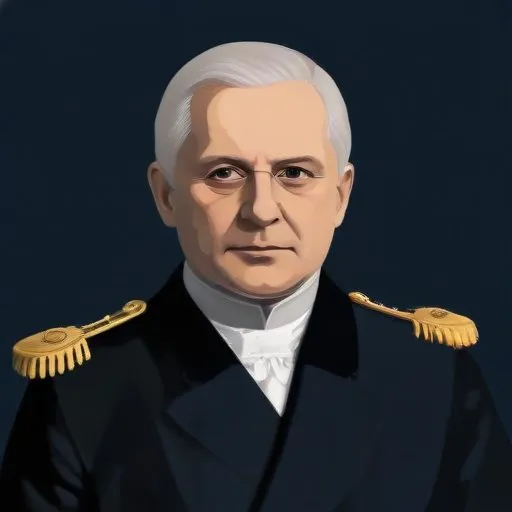
Prussian minister of education who introduced significant reforms to the education system, making it more accessible and modernizing the curriculum.
Karl Abraham Zedlitz was a trailblazing Prussian minister of education who revolutionized the education landscape in Prussia, setting a precedent for the public education system in the United States. He is renowned for introducing mandatory education in Prussia, a pioneering move that paved the way for a more enlightened and educated society.
Born on January 4, 1731, in Schwarzwaldau, Silesia (now Czarny Bór, Poland), Zedlitz embarked on a career in civil service, joining the Chamber Court in 1755 as a clerk. He steadily rose through the ranks, assuming prominent roles in the Oberamt Government in Breslau (1759) and the Government of Silesia (1764). His exceptional leadership skills and dedication earned him the position of Secretary of State and Minister of Justice in 1770.
As Minister of Education, Zedlitz's unwavering commitment to education led to the introduction of mandatory education in Prussia. He believed in the transformative power of education, advocating for a free spiritual direction for people in higher schools. His vision was deeply influenced by the philosophical principles of Immanuel Kant, to whom he was deeply indebted. In fact, Kant's seminal work, Critique of Pure Reason (1781), is dedicated to Zedlitz, a testament to their shared passion for education and enlightenment.
Zedlitz's tenure was not without controversy. His involvement in the Miller Arnold case (1779) sparked heated debates, and his eventual departure from government service in 1788 marked a tumultuous period in his life. However, he rebounded by taking on the directorship of the Knights Academy in Liegnitz (1788-1789), a role that allowed him to continue shaping young minds.
Zedlitz's pioneering work in education left an indelible mark on Prussian society, influencing education systems far beyond its borders. His commitment to education and enlightenment earned him a revered place in the annals of history. Today, he is celebrated as a visionary who recognized the importance of education in shaping a more informed, enlightened, and progressive society.
Zedlitz's remarkable journey serves as a testament to the transformative power of education, and his legacy continues to inspire generations to strive for a more enlightened and educated world.
Born in 1871
First President of Germany, leading the country through its early years of democracy and turmoil, known for his efforts to stabilize the government and economy.
Born in 1847
A German field marshal and politician who served as the 2nd President of Germany during the Weimar Republic, playing a crucial role in the rise of the Nazi Party. He's infamous for appointing Adolf Hitler as Chancellor of Germany in 1933.
Born in 1815
Unified Germany's founder, a master strategist who forged a nation through diplomacy and war, leaving a lasting legacy in European politics.
Born in 1849
A German naval strategist who transformed the German Navy into a major world power, and is credited with building the German U-boat fleet that threatened Britain's naval supremacy during World War I.
Born in 1879
A German nobleman who served as Chancellor of Germany in 1932, known for his role in appointing Adolf Hitler as Chancellor, paving the way for the Nazi regime.
Born in 1882
A German general and politician who briefly served as Chancellor of Germany in 1933, known for his failed attempts to stabilize the Weimar Republic and his role in Hitler's rise to power.
