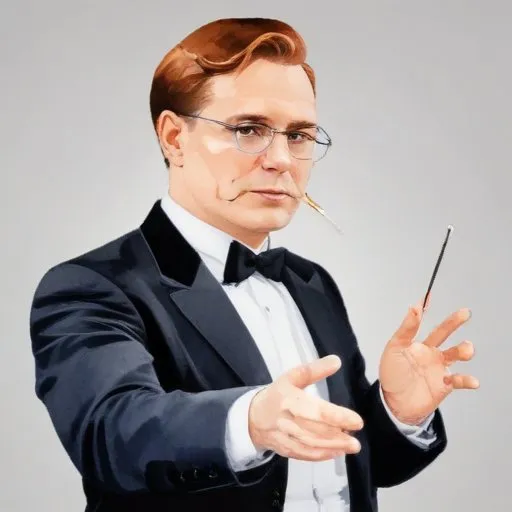
Karl Münchinger: The Maestro Behind the Revival of Classical Music
Renowned Conductor and Revivalist of Classical Gems
Karl Münchinger, a German conductor, is best known for reviving the timeless beauty of European classical music, particularly the iconic Canon in D by
Johann Pachelbel. His stunning recording of the piece with the Stuttgart Chamber Orchestra in 1960 catapulted the once-obscure work into the mainstream, making it a staple of classical music repertoire.
Early Life and Career
Born on May 29, 1915, in Stuttgart, Germany, Münchinger began his musical journey at the Hochschule für Musik in his hometown. He honed his skills as an organist and church choir director, guest-conducting frequently to support himself. This diverse experience laid the foundation for his future success as a conductor.
The Stuttgart Chamber Orchestra: A Legacy Born
In 1945, Münchinger founded the Stuttgart Chamber Orchestra, which would become his life's work. He built the ensemble into a world-renowned touring orchestra, making its Paris debut in 1949 and American debut in San Francisco in 1953. Under his leadership, the orchestra recorded numerous works for the Decca label, primarily focusing on the music of Johann Sebastian Bach.
Bach's Oeuvre and Beyond
Münchinger's passion for Bach's music led to iconic recordings of the Brandenburg Concertos, orchestral suites, St. Matthew Passion, St. John Passion, The Musical Offering, and the Christmas Oratorio. His interpretations were characterized by moderate-sized forces, judicious ornamentation, and rhythmic sprightliness, without the use of period instruments. His orchestra's rendition of Haydn's The Creation is also highly acclaimed.
A Pioneer in International Collaboration
In 1977, the Stuttgart Chamber Orchestra became the first German ensemble to visit the People's Republic of China, marking a historic moment in cultural exchange. This milestone showcases Münchinger's dedication to spreading classical music's universal language across borders.
Legacy and Retirement
Münchinger retired in 1988, after a remarkable career spanning over four decades. He passed away on March 13, 1990, but his legacy continues to inspire generations of classical music enthusiasts. His contributions to the revival of classical music, particularly Bach's oeuvre, have left an indelible mark on the world of music.
Quotes and Memorable Sayings
- "Music is the divine way to tell beautiful, poetic things to the heart." — Karl Münchinger
Awards and Honors
Throughout his career, Münchinger received numerous accolades for his exceptional work, including the Grand Prix du Disque and the Deutsche Schallplattenpreis.
Personal Milestones and Key Life Events
- Born: May 29, 1915, in Stuttgart, Germany
- Founded the Stuttgart Chamber Orchestra: 1945
- Paris debut with the Stuttgart Chamber Orchestra: 1949
- American debut with the Stuttgart Chamber Orchestra: 1953
- First German ensemble to visit the People's Republic of China: 1977
- Retirement: 1988
- Passed away: March 13, 1990
FAQ
What was Karl Münchingers musical style?
Karl Münchinger was known for his interpretive style, which was characterized by warmth, lyricism, and attention to detail. He was particularly renowned for his performances of Bach, Mozart, and Beethoven.
How did Karl Münchinger establish the Stuttgart Chamber Orchestra?
Karl Münchinger founded the Stuttgart Chamber Orchestra in 1945, after World War II. He established the orchestra as a way to promote chamber music and provide a platform for young musicians.
What were Karl Münchingers most notable recordings?
Karl Münchinger made numerous recordings throughout his career, but his most notable ones were his interpretations of Bachs orchestral suites, Mozarts symphonies, and Beethovens piano concertos.
How did Karl Münchingers conducting style influence other musicians?
Karl Münchingers conducting style influenced many other musicians, including conductors and chamber musicians. His emphasis on lyricism and attention to detail inspired a generation of musicians.
What was Karl Münchingers legacy in the world of classical music?
Karl Münchingers legacy in the world of classical music is that of a visionary conductor and chamber musician. He left behind a rich legacy of recordings and inspired countless musicians to follow in his footsteps.