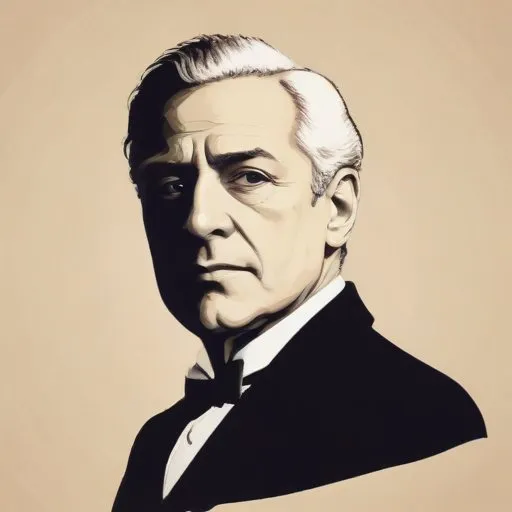
Ferdinand Leitner: A Maestro of Opera and Orchestral Conduction
A Legendary Conductor of Opera and Classical Music
Ferdinand Leitner, a renowned German conductor, is celebrated for his exceptional interpretations of opera and classical music, particularly the works of
Richard Wagner,
Richard Strauss, and
Wolfgang Amadeus Mozart. With a career spanning over four decades, Leitner left an indelible mark on the world of classical music, earning him a place among the most esteemed conductors of the 20th century.
Early Life and Education
Born on March 4, 1912, in Berlin, Germany, Leitner pursued his passion for music from an early age. He studied under the tutelage of distinguished musicians, including
Franz Schreker, Julius Prüwer,
Artur Schnabel, and Karl Muck. Additionally, he was a composition student of Robert Kahn, further honing his skills as a musician.
Rise to Prominence
Leitner's transition from a pianist to a conductor was facilitated by
Fritz Busch, a prominent conductor of the time. He began his conducting career in the 1930s, which eventually led to his appointment as the conductor of the Nollendorfplatz Theater in Berlin from 1943 to 1945. Following the war, Leitner held conducting positions in Hanover (1945-1946) and Munich (1946-1947), before becoming the General Music Director of the Württemberg State Opera house in Stuttgart from 1947 to 1969.
Operatic Legacy
Leitner's reputation as a masterful conductor of opera was cemented through his interpretations of Wagner's operas, as well as those of Richard Strauss and Mozart. He was particularly known for his performances of
Carl Orff's and
Karl Amadeus Hartmann's operas, showcasing his affinity for 20th-century classical music. Leitner succeeded
Erich Kleiber as the conductor of the Teatro Colón in Buenos Aires in 1956, further solidifying his international reputation.
Discography and Notable Recordings
Leitner's extensive discography consists of over 300 recordings, including a celebrated rendition of
Ferruccio Busoni's
Doktor Faust. He also collaborated with the Berlin Philharmonic on
Wilhelm Kempff's 1961 cycle of Beethoven's piano concertos.
Late Career and Honors
From 1976 to 1980, Leitner served as the principal conductor of Het Residentie Orkest in The Hague. In recognition of his contributions to the world of classical music, the city of Stuttgart named a pedestrian bridge after him, the Ferdinand-Leitner-Steg, which connects the Upper part of the Schlossgarten castle park to the State Theater.
Legacy and Historical Context
Ferdinand Leitner's legacy extends beyond his impressive conducting career, as he played a significant role in shaping the musical landscape of post-war Germany. His commitment to promoting 20th-century classical music and his interpretations of operatic masterpieces continue to inspire future generations of musicians and music enthusiasts alike.
Ferdinand Leitner passed away on June 3, 1996, in Zurich, Switzerland, leaving behind a rich cultural heritage that continues to resonate with audiences worldwide.
FAQ
What was Ferdinand Leitners profession?
Ferdinand Leitner was a German conductor and composer, known for his work with various orchestras and opera companies.
What were Ferdinand Leitners notable conducting engagements?
Ferdinand Leitner held prominent conducting positions with the Deutsche Oper Berlin, the Hamburg State Opera, and the Munich Philharmonic Orchestra, among others.
What was Ferdinand Leitners compositional style?
Ferdinand Leitners compositional style was characterized by a blend of modernism and romanticism, with a focus on orchestral and choral works.
What awards did Ferdinand Leitner receive?
Ferdinand Leitner received numerous awards for his work, including the Bundesverdienstkreuz, the highest civilian honor in Germany.
What is Ferdinand Leitners legacy?
Ferdinand Leitners legacy is that of a renowned conductor and composer who made significant contributions to the world of classical music.