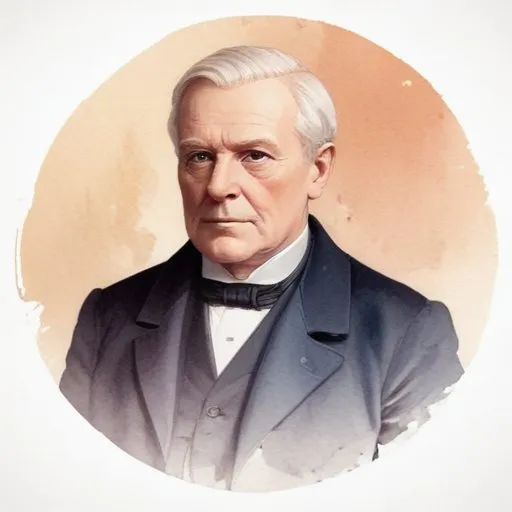
Karl von Vierordt: A Pioneer in Physiology and Psychology
A Legacy in Blood Circulation and Time Perception
Karl von Vierordt is widely recognized for his groundbreaking contributions to the fields of physiology and psychology, particularly in the areas of blood circulation and time perception. As a German physiologist, Vierordt developed innovative techniques and tools that continue to influence modern medicine and science.
Early Life and Education
Born on July 1, 1818, in Lahr, Baden, Vierordt pursued his higher education at the universities of Berlin, Göttingen, Vienna, and Heidelberg. He began his medical practice in Karlsruhe in 1842 and later became a professor of theoretical medicine at the University of Tübingen in 1849.
Contributions to Physiology
Vierordt's most notable contribution to physiology is the development of the hemotachometer, an apparatus used to measure the velocity of blood flow. This invention paved the way for the creation of the sphygmograph, a device that estimates blood pressure. The sphygmograph is considered a forerunner of the modern sphygmomanometer, a crucial tool in medical diagnoses.
Time Perception and Vierordt's Law
Vierordt's work in psychology is equally impressive, particularly in the area of time perception. His book,
Der Zeitsinn nach Versuchen, published in 1868, presents a comprehensive study of time perception through a series of experiments. This work introduced Vierordt's Law, which states that short durations tend to be overestimated, while long durations tend to be underestimated. The law has since been widely cited and remains a fundamental concept in the field of psychology.
Major Works and Publications
- Die Lehre vom Arterienpuls in gesunden und kranken Zuständen (1854) - a treatise on the arterial pulse
- Der Zeitsinn nach Versuchen (1868) - a comprehensive study of time perception
Career Highlights and Legacy
Throughout his career, Vierordt held prominent positions at various universities, including the University of Tübingen, where he served as a professor of physiology. His groundbreaking work in physiology and psychology has left a lasting impact on modern science, earning him a permanent place in the annals of scientific history.
Comparative Analysis with Contemporaries
Vierordt's work in physiology and psychology was pioneering, and his contributions rivaled those of his contemporaries. His innovative approach to blood circulation and time perception placed him at the forefront of scientific discovery in the 19th century.
Personal Milestones and Key Life Events
- Born on July 1, 1818, in Lahr, Baden
- Began medical practice in Karlsruhe in 1842
- Became a professor of theoretical medicine at the University of Tübingen in 1849
- Died on November 22, 1884
Historical Context and Legacy
Vierordt's work in physiology and psychology has had a lasting impact on modern science. His inventions and theories continue to influence medical research and practice, solidifying his position as a pioneer in his field.
FAQ
What was Karl von Vierordts contribution to the field of medicine?
Karl von Vierordt was a German physician and psychologist who made significant contributions to the field of medicine, particularly in the areas of cardiology and psychology.
How did Karl von Vierordts work influence the development of psychology?
Karl von Vierordts work on psychology was instrumental in shaping the field. He was one of the first psychologists to study the human mind and behavior, and his ideas on the nature of consciousness and perception are still studied today.
What was Karl von Vierordts role in the development of modern cardiology?
Karl von Vierordt was a pioneer in the field of cardiology, and his work on the diagnosis and treatment of heart conditions laid the foundation for modern cardiology.
How did Karl von Vierordts experiences as a physician shape his views on healthcare?
Karl von Vierordts experiences as a physician deeply influenced his views on healthcare. He believed in the importance of compassion, empathy, and patient-centered care, and advocated for reform in the medical profession.
What is Karl von Vierordts legacy in the history of medicine?
Karl von Vierordts legacy in the history of medicine is that of a pioneering figure who shaped the development of cardiology and psychology. He is remembered for his contributions to our understanding of the human body and mind.