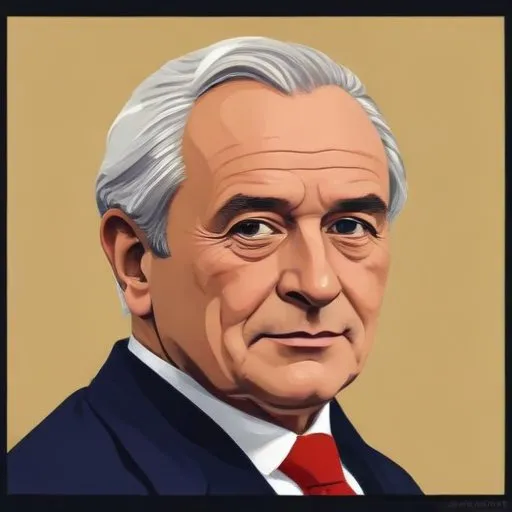
Leopold Figl: The Visionary Leader of Austria's Reconstruction
The Rise of a Statesman
Leopold Figl, the first Federal Chancellor of Austria after World War II, is renowned for his pivotal role in rebuilding the war-torn nation and steering it towards economic prosperity. As a stalwart of the Austrian People's Party (ÖVP), Figl's statesmanship and commitment to democracy earned him the respect of his contemporaries and cemented his place in Austrian history.
Early Life and Career
Born on October 2, 1902, in Rust im Tullnerfeld, Lower Austria, Figl was raised in a farming family and pursued higher education in agriculture at the University of Natural Resources and Applied Life Sciences Vienna. His academic achievements earned him the title of Dipl.Ing. of Agriculture, and he soon rose through the ranks of the Lower Austrian Bauernbund (Farmers' League). By 1933, Figl became the chairman of the organization, utilizing his leadership skills to advocate for the interests of Austrian farmers.
Navigating Turbulent Times
The tumultuous period of Austrian history, marked by the Anschluss and subsequent Nazi occupation, posed significant challenges to Figl's career and personal life. In 1938, he was deported to Dachau concentration camp, where he spent five years. Following his release in 1943, Figl worked as an oil engineer but was rearrested in 1944 and sent to Mauthausen concentration camp. His experiences during World War II tempered his character and reinforced his commitment to democracy and human rights.
Rebuilding Austria
After Austria's liberation, Figl's leadership skills and experience made him an ideal candidate to spearhead the country's reconstruction. In April 1945, he refounded the Bauernbund and integrated it into the ÖVP, which was founded three days later. As the first Federal Chancellor of Austria after World War II, Figl worked tirelessly to restore economic stability, promote democratic values, and rebuild infrastructure. His efforts earned Austria international recognition, and the country became a symbol of post-war reconstruction.
Personal Milestones and Key Life Events
- In 1930, Figl married Hilde Hemala, with whom he had two children.
- Figl was released from Mauthausen concentration camp on April 6, 1945, marking a turning point in his life and career.
- On April 14, 1945, he refounded the Bauernbund, paving the way for his future role in Austrian politics.
Philosophical Contributions and Beliefs
Figl's political ideology was rooted in Christian Democratic values, emphasizing social welfare, economic prosperity, and human rights. He believed in the importance of democratic governance, social justice, and international cooperation. His leadership style was characterized by pragmatism, integrity, and a commitment to the well-being of the Austrian people.
Legacy and Impact
Leopold Figl's remarkable life and career serve as a testament to his dedication to his country and its people. As a visionary leader, he navigated the complexities of post-war Austria and established a foundation for the country's future growth and prosperity. Today, Figl is remembered as a champion of democracy, a defender of human rights, and a symbol of Austrian resilience in the face of adversity.
FAQ
What were Leopold Figls contributions to Austrian politics?
Leopold Figl was a prominent Austrian politician who served as Chancellor of Austria from 1945 to 1953, playing a key role in the countrys post-war reconstruction and economic development.
What was Leopold Figls stance on Austrian neutrality?
Leopold Figl was a strong advocate for Austrian neutrality, believing that it was essential for the countrys independence and sovereignty in the face of rising Cold War tensions.
How did Leopold Figl navigate Austrias relationships with the Allies?
Leopold Figl skillfully navigated Austrias relationships with the Allies, securing vital economic aid and promoting diplomatic relations to ensure Austrias independence and sovereignty.
What were Leopold Figls achievements as Chancellor of Austria?
Leopold Figls achievements as Chancellor included promoting economic growth, rebuilding infrastructure, and strengthening Austrias international relations, earning him widespread respect and admiration.
How is Leopold Figl remembered in Austrian history?
Leopold Figl is remembered as a statesman and leader who guided Austria through a tumultuous period, promoting stability, prosperity, and independence for the Austrian people.