


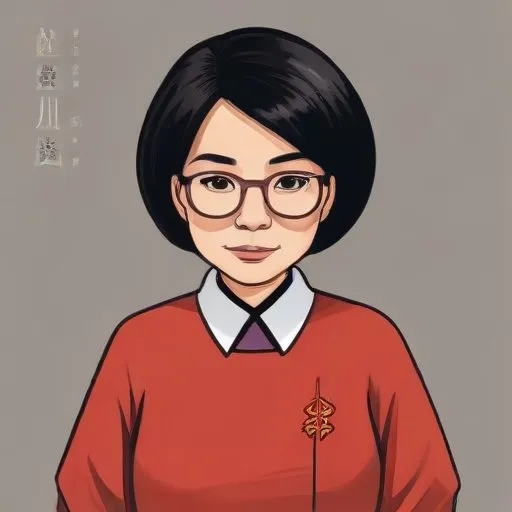
A pioneering educator and diplomat who played a crucial role in modernizing China's education system and fostering international relations, particularly with the United States.
Li Linsi, a renowned Chinese educator, diplomat, and scholar, is celebrated for his pivotal role in modern Chinese cultural and diplomatic history. He is revered as "China's Mahatma Gandhi" for leading the country's non-violent resistance against Japanese aggression and facilitating the China-Germany relationship during the 1930s.
Born in February 1896 in Hangzhou, China, Li Linsi came from a distinguished literary family. His father, Li Liangyu, was a Qing dynasty official, educator, and artist who co-founded the Xiling Society of Seal Arts, one of China's most important traditional arts associations. Li's paternal fourth great-grandfather, Li E, was a great poet and scholar during the Qing dynasty, recognized as a leader of Qing dynasty poetry.
Li Linsi's diplomatic career was marked by his involvement in the China-Germany relationship, which flourished during the 1930s. He played a crucial role in facilitating diplomatic relations between the two nations, earning him recognition as a key figure in modern Chinese diplomacy. Additionally, Li was a consultant to Chiang Kai-shek, the leader of the Nationalist Government of China, and actively participated in China's League of Nations diplomacy.
One of Li Linsi's most noteworthy achievements is his humanitarian work during World War II. He risked his life to save hundreds of Jews fleeing persecution in Europe, providing them with refuge in Shanghai. This selfless act has earned him lasting recognition and admiration.
Li Linsi's contributions to modern Chinese cultural and diplomatic history are multifaceted. He co-founded influential organizations such as the China branch of the United Nations and the China Institute of World Cultural Cooperation at the League of Nations. Moreover, he is credited with introducing ancient Chinese philosophies to the Western world and promoting Western progressive thoughts in China, earning him the reputation of being a "human bridge" connecting Chinese and European cultures.
Li Linsi's eldest son, Li Shengjiao, is a noted Chinese diplomat and jurist. Li's family has a rich cultural heritage, with his ancestor, Jiang Ziya, being the legendary founding prime minister during the Zhou dynasty.
Li Linsi passed away in Shanghai during the Cultural Revolution in 1970. Despite the turmoil surrounding his later years, his remarkable contributions to Chinese history remain as a testament to his unwavering dedication to his country and humanity.
In conclusion, Li Linsi's extraordinary life and accomplishments have left an enduring legacy in modern Chinese cultural and diplomatic history. His tireless efforts to promote cultural understanding, facilitate diplomatic relations, and help those in need have cemented his place as one of the most respected figures in Chinese history.
Born in 1887
Led the Nationalist Party in China, fighting against the Communist Party and later establishing the government of Taiwan. He's known for his role in shaping modern Chinese history.
Born in 1866
A Chinese revolutionary who led the overthrow of the Qing dynasty and founded the Republic of China, known for his role in shaping modern China's government and politics.
Born in 1893
Leader of the Chinese Communist Party who implemented radical social and economic reforms, including the Great Leap Forward and the Cultural Revolution, shaping modern China's politics and economy.
Born in 1898
The first Premier of the People's Republic of China, serving from 1949 until his death in 1976, is most known for his key role in the Chinese Communist Party and his diplomatic efforts to improve relations with the West. He played a crucial part in shaping China's foreign policy and economy during a pivotal period in the country's history.
Born in 1904
A Chinese revolutionary and statesman who led the country's economic reforms, transforming it into a global superpower. He's credited with opening up China to the world and introducing capitalist principles.
Born in 1888
A Chinese diplomat who played a key role in the country's early 20th-century international relations, advocating for China's sovereignty and participating in the Paris Peace Conference. He was a pioneer in modern Chinese diplomacy.
73 Years Old
A renowned Chinese violinist and composer, blending Eastern and Western musical styles, creating a unique sound that showcases cultural fusion.
