


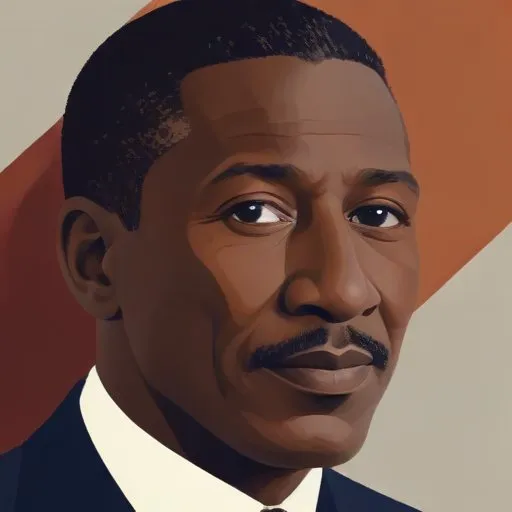
A pioneering blues musician, known for his unique style that blended country blues with urban sophistication, and his influence on many famous blues and rock musicians.
Lonnie Johnson, born Alonzo Johnson on February 8, 1899, was an American blues and jazz singer, guitarist, violinist, and songwriter who left an indelible mark on the music world. He is widely recognized as the first musician to play an electrically amplified violin, revolutionizing the sound of jazz and paving the way for future generations of musicians.
Johnson was born in New Orleans, Louisiana, into a family of musicians where music was an integral part of daily life. He began studying violin, piano, and guitar from a young age and went on to master several other instruments, including the mandolin. However, it was the guitar that became his primary instrument throughout his professional career.
In 1917, Johnson joined a revue that toured England, but his time abroad was cut short when he returned home in 1919 to find that his family, except for his brother James, had fallen victim to the 1918 influenza epidemic. The two brothers settled in St. Louis in 1921, where they performed as a duo and worked on riverboats and in the orchestra of Charlie Creath.
In 1925, Johnson married Mary, who would later become a blues singer in her own right, performing as Mary Johnson. The couple had six children before divorcing in 1932. During this period, Johnson's music career was on the rise, winning a blues contest at the Booker T. Washington Theatre in St. Louis in 1925.
Johnson's most significant contribution to music was his pioneering work with the electrically amplified violin. This innovation opened up new possibilities for jazz music, allowing for greater volume and expressiveness. His virtuosic playing style, which blended blues, jazz, and vaudeville, influenced a wide range of musicians, from Charlie Christian to Django Reinhardt.
Lonnie Johnson's impact on jazz and blues music is immeasurable. He recorded extensively throughout his career, leaving behind a rich legacy of music that continues to inspire musicians today. His pioneering work with the electrically amplified violin paved the way for future innovations in jazz and rock music.
Lonnie Johnson's contributions to jazz and blues music have had a lasting impact on modern society. His innovative playing style and pioneering work with the electrically amplified violin paved the way for future generations of musicians, influencing the development of rock, funk, and R&B music.
Johnson's most notable recordings include "Blue Ghost Blues" (1926), "Wild GEese Blues" (1927), and "To Do This, You Got to Know How" (1941). These recordings showcase his mastery of the guitar and violin, as well as his unique blend of blues and jazz.
Lonnie Johnson's contributions to music have been recognized with several awards and honors, including his induction into the Louisiana Blues Hall of Fame and the New Orleans Jazz and Heritage Festival's Hall of Fame.
Born in 1882
Pioneering rocket scientist who developed and launched the world's first liquid-fueled rocket, paving the way for modern space exploration.
Born in 1912
Developed the V-2 rocket for Nazi Germany and later led the team that created the Saturn V rocket that took humans to the moon.
Born in 1907
A pioneering rocket engineer and designer who played a crucial role in the Soviet space program, developing the R-7 rocket that launched Sputnik and sent humans into space.
96 Years Old
First person to walk on the Moon during the Apollo 11 mission, marking a historic milestone in space exploration.
96 Years Old
Second man to walk on the Moon during the Apollo 11 mission, a pioneering astronaut and advocate for space exploration.
96 Years Old
Led the third manned mission to land on the Moon, Apollo 12, and became the third person to walk on its surface. Known for his bold and fearless approach to space exploration.
94 Years Old
One of the 12 humans to walk on the Moon during NASA's Apollo program, known for his moonwalk during Apollo 12 and later becoming a painter, capturing the beauty of space through art.
92 Years Old
The last person to walk on the Moon, a naval aviator, and astronaut who commanded the Apollo 17 mission, leaving behind a legacy in space exploration.
