


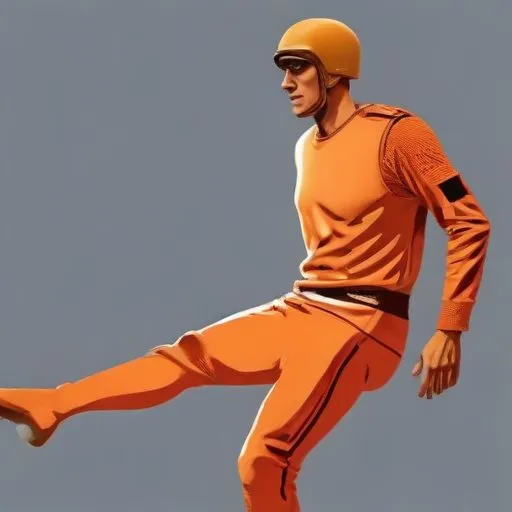
A German athlete who won silver in the 1936 Olympics, famously helping Jesse Owens despite being competitors, and a soldier who died in World War II.
Luz Long, a German Olympic long jumper, etched his name in history by winning the silver medal at the 1936 Summer Olympics in Berlin. But it was his extraordinary friendship with Jesse Owens, the American world-record holder, that truly made him a legend.
Long was born on April 27, 1913, and went on to study law at the University of Leipzig. During his university days, he joined the Leipziger Sport Club in 1936, where he honed his athletic skills. After graduating, he practiced law in Hamburg while continuing to pursue his passion for sports.
The 1936 Summer Olympics in Berlin marked a turning point in Long's career. At 21 years old, he was determined to make a mark against Jesse Owens, the world-record holder in the long jump. Long held the European record in the long jump, and his Olympic record during the preliminary round set the tone for an epic battle.
In a thrilling sequence of events, Owens fouled on his first two jumps, leaving him dejected. Long, however, came to the rescue, offering Owens advice on how to overcome his struggles. The exact nature of their conversation remains disputed, but it's undeniable that Long's Sportsmanship played a crucial role in Owens' eventual gold medal win.
Long's life was cut short when he was killed while serving in the German Army during World War II. His bravery and sacrifice are a testament to his character, and his legacy continues to inspire athletes and individuals alike.
Long's remarkable friendship with Jesse Owens transcended national boundaries and racial divides, serving as a beacon of hope during a tumultuous period in world history. Their bond continues to inspire generations, highlighting the power of sports to bring people together.
Long's Sportsmanship and camaraderie with Owens embody the spirit of fair play and respect that define the true essence of sports. His actions demonstrated that even in the face of fierce competition, individuals can come together and support one another, elevating the human experience.
Luz Long's remarkable story is a testament to the enduring power of sports to bridge gaps and inspire greatness. His legacy continues to inspire athletes, coaches, and individuals around the world, serving as a powerful reminder of the importance of Sportsmanship, friendship, and mutual respect.
Born in 1913
A legendary athlete who shattered records and racial barriers at the 1936 Berlin Olympics, winning four gold medals in the 100m, 200m, 4x100m relay, and long jump events.
Born in 1889
The dictator of Nazi Germany, responsible for the genocide of six million Jews and millions of other people during World War II, and infamous for his extreme nationalist and anti-Semitic ideology.
Born in 1897
A mastermind of Nazi propaganda, he crafted a persuasive narrative that fueled the Third Reich's rise to power, leaving a lasting impact on the world.
Born in 1893
A high-ranking Nazi official, he was a decorated World War I fighter pilot and later became a prominent politician, serving as Minister President of Prussia. He's infamous for his role in the Nazi regime and war crimes trials.
Born in 1894
A high-ranking Nazi official who flew to Scotland on a solo mission to negotiate peace with the UK, but was instead arrested and imprisoned.
Born in 1893
A German diplomat who served as the Nazi regime's Foreign Minister, orchestrating key alliances and treaties that led to World War II. He was a close associate of Adolf Hitler and played a crucial role in shaping Nazi foreign policy.
Born in 1891
A German naval commander who led the U-boat fleet during World War II and briefly served as President of Germany after Hitler's death, known for his role in the war and its aftermath.
Born in 1903
Austrian-German lawyer and general who served as the highest-ranking leader of the Nazi police forces, responsible for overseeing the Gestapo, SS, and concentration camps during World War II. He was a key figure in the Holocaust and other atrocities committed by the Nazi regime.
