


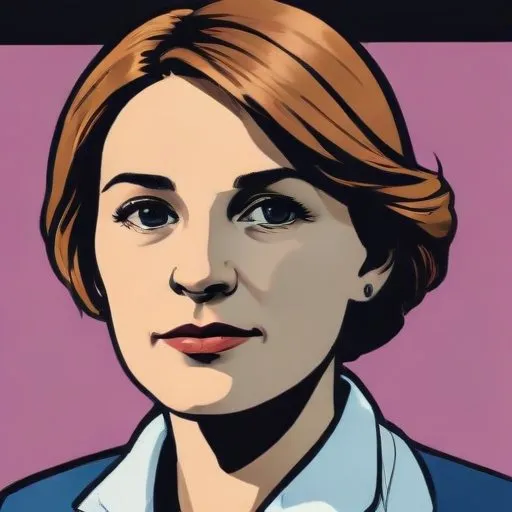
A pioneering female physician and academic who made significant contributions to the field of respiratory medicine, particularly in the understanding and treatment of lung diseases.
Margaret TurnerWarwick, a renowned British medical doctor and thoracic specialist, is best known for being the first woman to hold the presidency of the Royal College of Physicians (1989-1992) and later, the chairmanship of the Royal Devon and Exeter Health Care NHS Trust (1992-1995).
Margaret TurnerWarwick was born on November 19, 1924, to William Harvey Moore, Q.C., and his wife, Maud Kirkdale Baden-Powell. She was the granddaughter of Sir George Baden-Powell and Frances Wilson. TurnerWarwick's interest in science and medicine was sparked at a young age, and she pursued her passion by studying at the City of London School for Girls, Walthamstow Hall, and later, The Maynard School in Exeter.
During her time at Maynard, she befriended Audrey Jane Pinsent, who would later become a notable scientist. TurnerWarwick recalled how they would volunteer to set up chemistry apparatus before classes, which allowed them to learn chemistry and avoid school prayers – until they were caught by their teacher!
After completing her schooling at St Paul's Girls School, TurnerWarwick gained admission to study medicine at Lady Margaret Hall, Oxford, in 1943. She continued her medical studies at University College Hospital, associated with University College London.
TurnerWarwick specialized in thoracic medicine, a field that was experiencing significant advancements during her time. She practiced medicine at University College London and Royal Brompton Hospital, where she developed her expertise in the field.
Her accomplishments in thoracic medicine led to her election as the first woman president of the Royal College of Physicians, a position she held from 1989 to 1992. Later, she became the chairman of the Royal Devon and Exeter Health Care NHS Trust from 1992 to 1995.
TurnerWarwick's contributions to medicine and her trailblazing career were recognized with several honors, including her appointment as Dame Commander of the Order of the British Empire (DBE) in 1991.
Margaret TurnerWarwick married urologist Richard TurnerWarwick in 1950, and they had two daughters, Lynne and Gillian. Her personal life was marked by resilience and determination, as she overcame a diagnosis of tuberculosis during her final university exams and spent months recovering in a sanatorium in Switzerland.
Margaret TurnerWarwick's pioneering spirit and dedication to medicine have left a lasting impact on the field of thoracic medicine. Her groundbreaking achievements have paved the way for future generations of women in medicine, inspiring them to pursue careers in this field.
Through her remarkable career, TurnerWarwick has demonstrated that with hard work, determination, and a passion for medicine, one can overcome obstacles and achieve greatness.
Born in 1922
Performed the world's first human-to-human heart transplant, revolutionizing cardiac surgery and paving the way for modern organ transplants.
Born in 1919
Performed the first successful human kidney transplant, paving the way for modern organ transplantation.
Born in 1908
Pioneering cardiovascular surgeon and educator who developed numerous surgical procedures and medical devices, revolutionizing the field of cardiovascular medicine.
Born in 1920
Performed the first human heart transplant in the United States and developed numerous cardiothoracic surgical techniques. Known for his pioneering work in cardiac surgery.
Born in 1911
Pioneering transplant surgeon who performed the first kidney transplant in the UK and made significant contributions to organ transplantation and immunology.
Born in 1915
A Nobel Prize-winning biologist and immunologist who made groundbreaking discoveries in tissue transplantation and immunology, leading to significant advancements in organ transplants and our understanding of the immune system.
Born in 1881
Discovered penicillin, a revolutionary antibiotic, and pioneered its use in medicine. This breakthrough has saved countless lives and transformed the field of healthcare.
