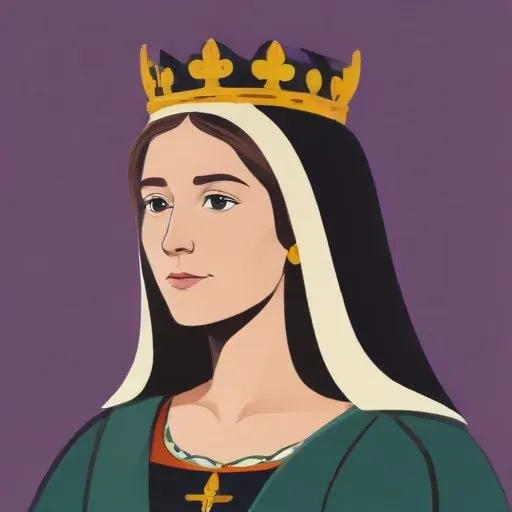
Margaret of Brabant: A Queen of Germany and a Duchess of Brabant
A Royal Legacy
Margaret of Brabant, a prominent figure in medieval European history, is remembered for her influential role as the wife of Henry, Count of Luxembourg, and her subsequent ascension to Queen of Germany in 1308. As the daughter of John I, Duke of Brabant, and Margaret of Flanders, she was born into a life of nobility and politics.
Early Life and Marriage
Born on October 4, 1276, Margaret's life was marked by a strategic marriage to Henry, Count of Luxembourg, on July 9, 1292. This union was arranged to settle a longstanding dispute over the Duchy of Limburg, which the Duke of Brabant relinquished at the time of Margaret's marriage. The marriage proved to be a happy one, with the couple producing three children: John the Blind, Maria, and Beatrix.
Queen of Germany and Royal Duties
Following Henry's election as King of Germany in 1308, Margaret became Queen of Germany, a position she held until her death in 1311. As queen, she accompanied her husband on his Italy campaign, where she fell ill during the siege of Brescia. Her subsequent death in Genoa was recorded in the Gesta Baldewini Luczenburch in December 1311.
Legacy and Commemoration
The famous sculptor Giovanni Pisano was commissioned by the Emperor to create a monument in Margaret's memory in 1313. Parts of this monument are still preserved in Genoa, at the Museo di Sant'Agostino and Galleria Nazionale della Liguria in Palazzo Spinola.
Children and Descendants
Margaret's children went on to play significant roles in European history:
- John the Blind (1296-1346): Count of Luxembourg, King of Bohemia, and father of Charles IV, Holy Roman Emperor, and Bonne of Bohemia.
- Maria (1304-1324): Married Charles IV of France and died in childbirth.
- Beatrix (1305-1319): Married Charles I of Hungary and died in childbirth.
Historical Significance
Margaret of Brabant's life and legacy served as a testament to the complex web of alliances and dynastic marriages that shaped medieval European politics. Her marriage to Henry, Count of Luxembourg, solidified the alliance between their respective houses, while her role as Queen of Germany further strengthened the bond between the Luxembourg and Brabant dynasties.
Personal Qualities and Anecdotes
While historical records of Margaret's personal qualities are scarce, accounts suggest that she was a devoted wife and mother, accompanying her husband on his military campaigns and supporting his political ambitions. Her happy marriage to Henry, despite being arranged for political convenience, speaks to her ability to adapt and navigate the complexities of royal life.
FAQ
What was the role of Margaret of Brabant in medieval politics?
Margaret of Brabant played a significant role in medieval politics, serving as the Countess of Luxembourg and the Duchess of Limburg from 1247 to 1275. She was a skilled diplomat and strategist, often mediating disputes between rival factions.
How did Margaret of Brabant acquire her titles?
Margaret acquired her titles through her marriage to Henry V, Count of Luxembourg, and her subsequent inheritance of the County of Luxembourg and the Duchy of Limburg.
What were the key achievements of Margaret of Brabant?
During her reign, Margaret of Brabant successfully navigated the complex web of medieval politics, securing alliances and defending her territories against rival claims. She also promoted trade and commerce in her regions.
How did Margaret of Brabant contribute to the development of her regions?
Margarets efforts to promote trade and commerce led to significant economic growth in Luxembourg and Limburg, while her diplomatic skills helped to maintain peace and stability in the region.
What is Margaret of Brabant remembered for?
Margaret of Brabant is remembered for her shrewd diplomacy, her strategic marriages, and her effective governance of Luxembourg and Limburg. She is often regarded as one of the most influential women of the medieval period.