


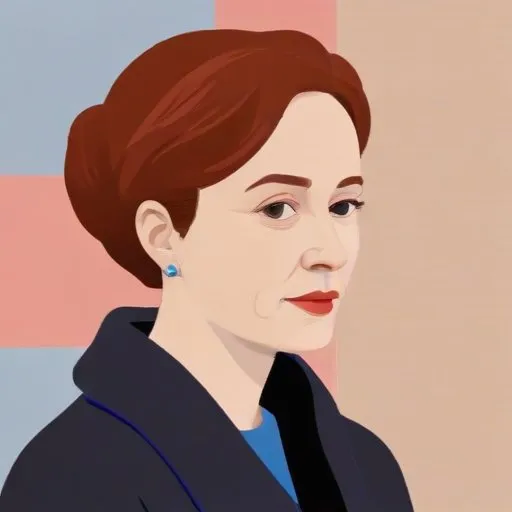
A precocious and talented young writer, known for her remarkable poetry and journals written between the ages of 8 and 14, offering a unique glimpse into the mind of a child prodigy.
Marjorie Fleming, a Scottish child writer and poet, left an indelible mark on the literary world with her remarkable diary and poems, earning admiration from literary giants like Robert Louis Stevenson, Leslie Stephen, and possibly even Walter Scott.
Born on January 15, 1803, in Kirkcaldy, Fife, Scotland, Marjorie was the third child of James Fleming, an accountant, and his wife Isabella. Her uncle, Thomas Fleming, was the minister of Kirkcaldy parish church, and her mother's relations were acquainted with the young Walter Scott in Edinburgh.
Marjorie's writing talent emerged at an early age. Under the tutelage of her cousin, Isabella Keith, she began writing in copybooks, showcasing her wit, sensibility, and keen observations of life. Her diary, which she kept for the last 18 months of her life, is a treasure trove of insights into the mind of a child prodigy.
Marjorie's life was tragically cut short when she contracted measles in November 1811. After a brief recovery, she succumbed to what was described as "water on the head" (now considered to be meningitis) on December 19, 1811, just a month shy of her ninth birthday.
Despite her short life, Marjorie's writing left a lasting impact on literary circles. Her diary and poems were admired by many, including Robert Louis Stevenson, who considered her a kindred spirit.
In 1930, a monument marking Marjorie's grave was erected south of the old parish church in Kirkcaldy, designed by Pilkington Jackson. This belated recognition of her talent and contribution to Scottish literature is a fitting tribute to a child prodigy who left us too soon.
Marjorie Fleming's remarkable story serves as a reminder that talent knows no age, and that even the briefest of lives can leave a lasting impact on the world.
Born in 1759
Celebrated for his poignant and lyrical poetry, he penned iconic works that capture the essence of Scottish culture and identity. His contributions to literature continue to inspire and delight readers worldwide.
Born in 1771
A renowned author of historical novels, plays, and poetry, credited with creating the genre of historical fiction and influencing the development of the novel as a literary form.
Born in 1850
A Scottish novelist, poet, and essayist who wrote iconic adventure novels, including "Treasure Island" and "Dr. Jekyll and Mr. Hyde", that have captivated readers for generations.
Born in 1860
Creator of the beloved character Peter Pan, known for whimsical and imaginative storytelling that has captivated audiences for generations.
Born in 1795
Romantic poet celebrated for sensual language and vivid imagery, capturing the beauty of nature and human experience in odes like "To Autumn" and "Ode to a Nightingale".
Born in 1792
Romantic-era writer of lyrical poetry and Gothic dramas that explored the human condition, freedom, and the beauty of nature.
Born in 1750
A Scottish poet and novelist who wrote in Scots language, exploring themes of Scottish identity and culture, and is often regarded as a key figure in the Scottish Renaissance.
Born in 1713
A prominent 18th-century portrait painter, capturing the likenesses of British aristocracy and intellectuals with remarkable sensitivity and realism. His works continue to adorn galleries and stately homes today.
