


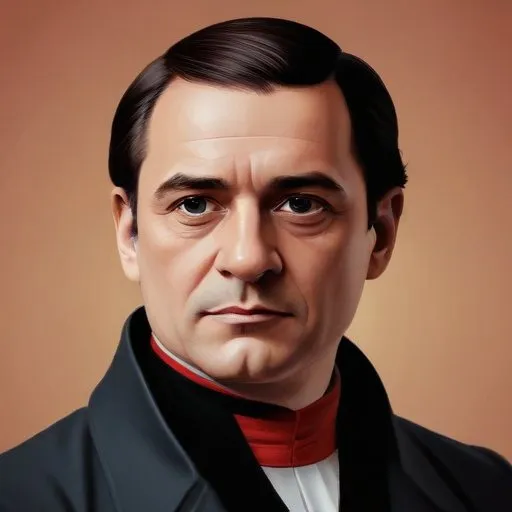
A German historian specializing in modern and contemporary history, particularly the history of Germany and Europe during the 19th and 20th centuries. He's known for his research on the German Empire and the Weimar Republic.
Michael Stürmer, born on September 29, 1938, is a renowned German historian and public intellectual known for his provocative views on German history, particularly his geographical interpretation of the German Empire (1871-1918). He is also famous for his role in the Historikerstreit of the 1980s, as well as his acclaimed 2008 biography of Russian politician Vladimir Putin.
Stürmer was born in Kassel, Germany, and pursued higher education in history, philosophy, and languages at the University of Marburg, the Free University of Berlin, and the London School of Economics. He later held a professorship at the University of Erlangen-Nürnberg from 1973 to 2003 and served as a guest lecturer at prestigious institutions like the Sorbonne, Harvard University, and the Institute for Advanced Study.
Stürmer's academic career has been marked by controversy, particularly during the Historikerstreit of the 1980s, a heated debate among German historians about the country's Nazi past. He has been criticized for his views on German exceptionalism and his perceived downplaying of the country's responsibility for World War II.
In addition, Stürmer's biography of Vladimir Putin has sparked debate among historians and political analysts, with some accusing him of being overly sympathetic to the Russian leader.
Stürmer has played a significant role in German politics, serving as an advisor and speechwriter to Chancellor Helmut Kohl in the 1980s. He has also contributed to prominent German newspapers, including the Frankfurter Allgemeine Zeitung, and has edited several popular book series, including "The Germans and their Nation."
At the heart of Stürmer's philosophical convictions is the idea that "the future is won by those who coin concepts and interpret the past." He believes that historians have a responsibility to shape public discourse and influence policy decisions.
Stürmer's work has had a profound impact on modern German society, shaping public perceptions of the country's history and identity. His disagreements with other historians have sparked lively debates about the role of history in shaping national identity and informing political decisions.
Michael Stürmer's legacy is complex and multifaceted, reflecting both his academic achievements and his controversial views on German history. As a prominent public intellectual, he has played a significant role in shaping Germany's historical narrative, often sparking heated debates and discussions.
Despite the controversies surrounding his work, Stürmer remains a respected figure in German academia, known for his passion for history and his commitment to shaping public discourse.
96 Years Old
The first unified Germany's leader, who oversaw the country's reunification after the Berlin Wall's fall, and is credited with creating a strong, stable economy.
Born in 1925
The first female Prime Minister of the United Kingdom, serving from 1979 to 1990, known for her conservative policies and leadership during the Falklands War.
Born in 1911
The charismatic leader who championed conservative policies, helped end the Cold War, and is often credited with restoring American pride and optimism. He's also remembered for his folksy, actor-honed communication style.
95 Years Old
The last leader of the Soviet Union, who introduced reforms that led to the end of the Cold War and the collapse of communism, earning a Nobel Peace Prize. He's known for his policies of glasnost and perestroika, which transformed the Soviet Union and the world.
Born in 1916
A French lawyer and politician who served as the 21st President of France, known for his socialist policies and role in shaping the European Union. He's also remembered for his controversial past and complex personality.
Born in 1924
The 41st President of the United States, a decorated war hero and skilled diplomat, led the country through the end of the Cold War and Gulf War. He's known for his foreign policy expertise and "kinder, gentler nation" vision.
82 Years Old
The 7th Chancellor of Germany, a lawyer-turned-politician, led the country from 1998 to 2005, implementing significant economic and social reforms. He's known for his efforts to modernize Germany and strengthen the European Union.
99 Years Old
A German statesman who served as Vice-Chancellor and Foreign Minister, playing a key role in reunifying Germany and shaping European politics. He's known for his diplomatic efforts and advocacy for human rights.
