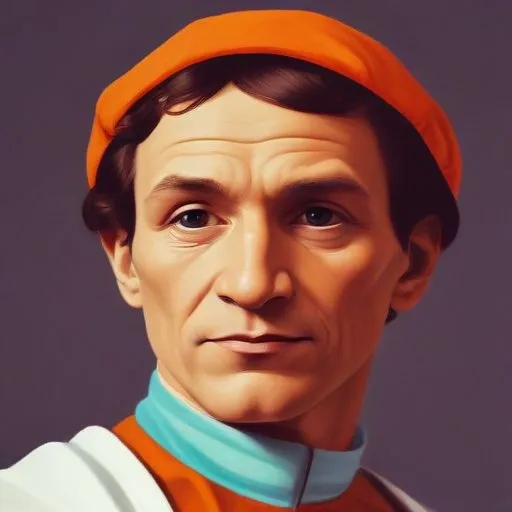
Michelangelo Cerquozzi

Michelangelo Cerquozzi

Michelangelo Cerquozzi was born on February 18th, 1602

Full Name: Michelangelo Cerquozzi
Nationality: Italian
Profession: Painter
Notable Work: Baroque Painting
Birth Year: 1602
Death Year: 1660
Place of Birth: Rome, Italy
Known For: Baroque Painting

A 17th-century painter of still-life and genre scenes, known for his vivid and detailed depictions of everyday life in Rome.

Timeline
1602
Birth in Rome
Michelangelo Cerquozzi was born in Rome, Italy, and would go on to become a prominent painter.
1620
Artistic Training
Cerquozzi trained as an artist in Rome, studying under several prominent masters.
1630
Established Career
Cerquozzi established himself as a respected painter in Rome, known for his landscapes and battle scenes.
1660
Continued Success
Cerquozzi continued to paint and receive commissions throughout his life, earning a reputation as one of the leading artists of his generation.
1668
Death
Michelangelo Cerquozzi passed away in Rome at the age of 66.
Michelangelo Cerquozzi

Michelangelo Cerquozzi Quiz

What type of scenes did Michelangelo Cerquozzi primarily paint?

Score: 0/5
FAQ
Who was Michelangelo Cerquozzi and what was his role in Italian art?
Michelangelo Cerquozzi was an Italian painter who was active during the early 17th century. He was a member of the Caravaggisti movement and was known for his dramatic and emotionally charged paintings.
What were Michelangelo Cerquozzis contributions to Italian art?
Michelangelo Cerquozzi made significant contributions to the development of Italian art during the early 17th century, including his innovative use of chiaroscuro and tenebrism.
What was Michelangelo Cerquozzis relationship like with Caravaggio?
Michelangelo Cerquozzi was heavily influenced by the work of Caravaggio, and was one of the leading figures of the Caravaggisti movement. He was also a friend and contemporaneous of Caravaggio.
How did Michelangelo Cerquozzi die?
Michelangelo Cerquozzi died in 1660, after a long and distinguished career as a painter. He was buried in Rome, where he is remembered as one of the greatest Italian artists of his time.
What is Michelangelo Cerquozzis legacy in Italian art?
Michelangelo Cerquozzis legacy is that of a brilliant and innovative painter who helped to shape the course of Italian art during the early 17th century. His dramatic and emotionally charged paintings remain highly influential in the art world to this day.

Related People:

Gian Lorenzo Bernini

Born in 1598

A renowned Baroque master who crafted exquisite sculptures and paintings that captivated 17th-century Rome, leaving an indelible mark on the art world.

Pietro da Cortona

Born in 1596

A prominent Baroque painter who created elaborate, dramatic, and emotive works that adorned the ceilings of Roman palaces and churches, influencing the development of 17th-century art.

Andrea Pozzo

Born in 1642

A 17th-century Jesuit Brother who excelled as an architect and painter, creating stunning Baroque trompe l'oeil ceilings that seemed to defy gravity. His works continue to inspire artists and architects today.

Domenichino

Born in 1581

A prominent painter of the Baroque period, known for his vivid and emotive depictions of mythological and biblical scenes, which greatly influenced the development of 17th-century art.

Guido Reni

Born in 1575

A prominent Baroque painter and illustrator, renowned for his vivid and emotive depictions of mythological and religious scenes. His works are celebrated for their dramatic lighting and intense emotional power.

Francesco Borromini

Born in 1599

A Baroque mastermind who crafted iconic Roman churches, blending dramatic curves and geometric precision to create awe-inspiring spaces.

Santiago Calatrava

75 Years Old

A renowned architect and engineer, he designed iconic structures like the Athens Olympic Sports Complex, blending functionality with artistic flair. His creations often feature sweeping curves and futuristic elements.

Annibale Carracci

Born in 1560

A pioneering figure in the Baroque style, known for dramatic lighting, intense emotions, and classical influences in his works, which revitalized Italian art in the late 16th century.