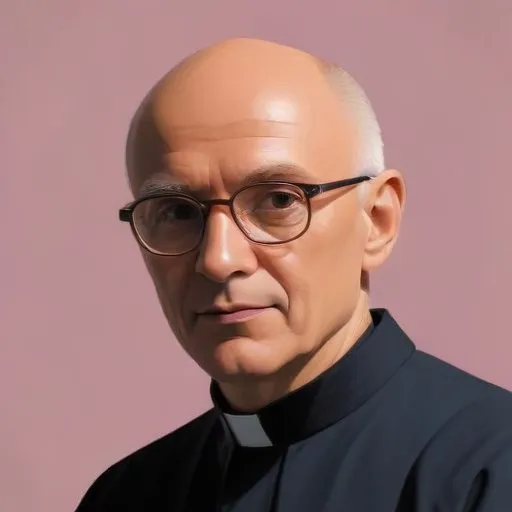
Miroslav Volf

Miroslav Volf

Miroslav Volf was born on September 25th, 1956

Full Name: Miroslav Volf
Nationality: Croatian-American
Occupation: Theologian, Public Intellectual
Education: Fuller Theological Seminary
Religion: Christianity
Known For: The End of Memory
Current Role: Yale University Professor
Field of Study: Theology

A renowned theologian and public intellectual, he is known for his influential writings on faith, identity, and social justice, and his efforts to bridge the gap between Christianity and culture.

Timeline
1956
Born in Osijek, Croatia
Miroslav Volf was born on September 25, 1956, in Osijek, Croatia. He would go on to become a renowned Croatian Protestant theologian and public intellectual.
1976
Started Studying Theology
Volf started studying theology at the University of Zagreb, where he earned his degree in theology.
1988
Earned PhD from University of Tübingen
Volf earned his PhD from the University of Tübingen in Germany, solidifying his expertise in theology and Christian ethics.
1995
Became Professor at Yale Divinity School
Volf became a professor at Yale Divinity School, where he taught theology and Christian ethics.
2005
Published Free of Charge
Volf published the book Free of Charge: Giving and Forgiving in a Culture Stripped of Grace, exploring the concept of gift and generosity in modern society.
Miroslav Volf

Miroslav Volf Quiz

Miroslav Volf is known for his influential writings on which of the following topics?

Score: 0/5
FAQ
What is Miroslav Volfs area of expertise?
Miroslav Volf is a Croatian Protestant theologian and public intellectual, specializing in systematic theology, ethics, and biblical interpretation. He is known for his work on the intersection of faith and politics.
What is Miroslav Volfs most influential book?
Miroslav Volfs most influential book is Exclusion and Embrace: A Theological Exploration of Identity, Otherness, and Reconciliation, which explores the concept of exclusion and its impact on human relationships and social structures.
What is Miroslav Volfs view on faith and politics?
Miroslav Volf believes that faith should inform politics, but not dictate it. He advocates for a nuanced approach to faith and politics, recognizing the complexity of human relationships and the need for reconciliation.
What awards has Miroslav Volf received?
Miroslav Volf has received several awards for his work, including the Louisville Grawemeyer Award in Religion and the Croatian National Award for Science.
What is Miroslav Volfs role in shaping theological thought?
Miroslav Volf has played a significant role in shaping theological thought, particularly in the areas of systematic theology, ethics, and biblical interpretation. His work has influenced a generation of theologians and scholars.

Related People:

Jürgen Moltmann

Born in 1926

A German theologian and academic who developed a unique blend of Christian theology and social activism, advocating for a more inclusive and just society. He's known for his work on the theology of hope and the concept of "the crucified God".

Wolfhart Pannenberg

97 Years Old

A prominent Christian theologian and academic who developed a comprehensive and influential theological system, known for his work on the intersection of Christianity and modern science.

Karl Barth

Born in 1886

A 20th-century theologian who redefined Christian doctrine with his emphasis on God's revelation and humanity's sinful nature, influencing modern Christian thought.

Dietrich Bonhoeffer

Born in 1906

A German pastor and theologian who resisted the Nazi regime, writing influential books on faith and ethics, and ultimately giving his life for his convictions.

Reinhold Niebuhr

Born in 1892

A prominent mid-20th-century theologian and academic who developed the concept of "Christian realism," which emphasizes the role of sin and self-interest in human nature, influencing modern political and social thought.

Paul Tillich

Born in 1886

A renowned philosopher and theologian who explored the intersection of faith and modern culture, developing a unique Christian existentialist perspective that continues to influence contemporary theology and philosophy.

Karl Rahner

Born in 1904

A German priest and theologian who sought to reconcile Catholicism with modern philosophy, exploring the intersection of faith and reason. His work greatly influenced 20th-century Catholic theology.

Hans Küng

98 Years Old

A prominent Catholic theologian and prolific author, known for his progressive views on Christianity and criticism of the Catholic Church's authority. He wrote extensively on theology, ethics, and politics.