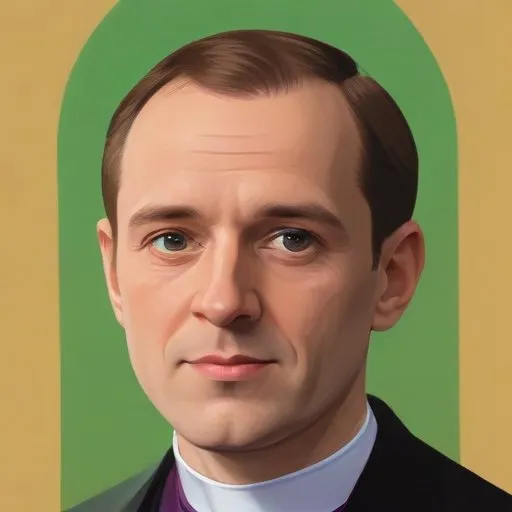
Nicholas Callan

Nicholas Callan

Nicholas Callan was born on December 22nd, 1799

Full Name: Nicholas Joseph Callan
Birthplace: County Louth, Ireland
Profession: Priest, Physicist
Nationality: Irish
Known For: Induction Coil
Birth Year: 1799
Death Year: 1864
Alma Mater: Maynooth College

An Irish priest who made significant contributions to the development of the induction coil, a precursor to the modern transformer, and is considered a pioneer in the field of electrical engineering.

Timeline
1799
Born in County Louth, Ireland
Nicholas Callan was born in County Louth, Ireland, where he would later become a prominent priest and physicist.
1826
Earns Doctorate
Callan earned his doctorate in theology from Maynooth College, Ireland.
1830
Becomes Professor
Callan became a professor of natural philosophy at Maynooth College, where he taught and conducted research on electricity and electromagnetism.
1836
Invents Induction Coil
Callan invented the induction coil, a precursor to the modern transformer, which revolutionized the field of electrical engineering.
1864
Dies in Maynooth, Ireland
Nicholas Callan passed away in Maynooth, Ireland, leaving behind a legacy of scientific innovation and discovery.
Nicholas Callan

Nicholas Callan Quiz

What was Nicholas Callan's occupation?

Score: 0/5
FAQ
What were Nicholas Callans contributions to physics?
Nicholas Callan was an Irish priest and physicist who made significant contributions to physics. He worked on the development of electromagnetic induction and the improvement of electrical batteries.
What were Nicholas Callans notable scientific achievements?
Nicholas Callan made several notable contributions to physics, including the invention of the induction coil and the discovery of the Callan effect. He was also a pioneer in the field of electrical engineering.
What was Nicholas Callans role in the development of electromagnetic theory?
Nicholas Callan played a key role in the development of electromagnetic theory, influencing later physicists such as James Clerk Maxwell and Heinrich Hertz. He helped establish the importance of electromagnetic induction in understanding electrical phenomena.
What was Nicholas Callans approach to scientific research?
Nicholas Callans approach to scientific research was characterized by a focus on experimentation and empirical observation. He was known for his ability to design innovative experiments and interpret their results.
How did Nicholas Callans work influence later physicists?
Nicholas Callans work had a lasting impact on later physicists, including Guglielmo Marconi and Nikola Tesla. His contributions to electromagnetic theory and electrical engineering paved the way for future developments in physics and technology.

Related People:

Michael Faraday

Born in 1791

Pioneering scientist who discovered electromagnetic induction, formulated the laws of electrolysis, and invented the first electrical generator, revolutionizing our understanding of electricity and its applications.

André-Marie Ampère

Born in 1775

A pioneer in the field of electromagnetism, he formulated fundamental laws that describe the relationship between electric currents and magnetic fields. His work laid the foundation for many modern technologies, including electric motors and generators.

Born in 1777

Danish physicist and chemist who discovered the principle of electromagnetism and founded the field of electromagnetism, making significant contributions to our understanding of electricity and magnetism.

Antonio Cesti

Born in 1623

A renowned 17th-century composer and organist, known for his innovative operas and sacred music that showcased his mastery of harmony and melody. His works remain a significant part of the Italian Baroque repertoire.

John Tyndall

Born in 1820

A pioneering physicist who made significant contributions to the discovery of the greenhouse effect and the behavior of gases, and an accomplished mountaineer who conquered several Alpine peaks.

James Clerk Maxwell

Born in 1831

Developed groundbreaking theories that unified electricity and magnetism, and predicted the existence of radio waves, revolutionizing our understanding of the physical world.

William Rowan Hamilton

Born in 1805

Developed groundbreaking theories in optics, algebra, and geometry, and is credited with discovering quaternions, a mathematical concept that paved the way for modern vector analysis.