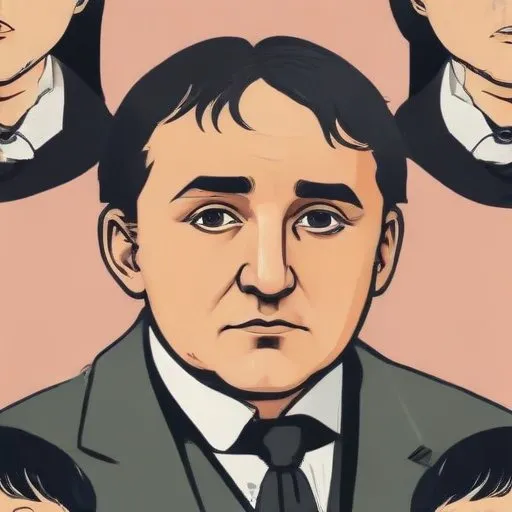
Paul Claudel

Paul Claudel

Paul Claudel was born on August 6th, 1868

Full Name: Paul Louis Charles Claudel
Place of Birth: Villeneuve-sur-Fère, France
Zodiac Sign: Virgo
Profession: Poet and Playwright
Nationality: French
Born: August 6, 1868
Died: February 23, 1955
Notable Works: The Tidings Brought to Mary

A renowned French poet and playwright, known for his lyrical and symbolic works that explored themes of faith, love, and the human condition. His writing often blended mysticism with modernist techniques.

Timeline
1868
Birth in Villeneuve-sur-Fère
Paul Claudel was born on August 6, 1868, in Villeneuve-sur-Fère, France. He would go on to become a prominent French poet and playwright.
1886
Converted to Catholicism
Claudel converted to Catholicism, which had a profound impact on his writing.
1890
Published Tête dor
Claudel published his first play, Tête dor, which was met with critical acclaim.
1905
Diplomatic Career Began
Claudel began his diplomatic career, serving in various roles around the world.
1955
Death in Paris
Claudel died on February 23, 1955, in Paris, leaving behind a legacy as a prominent French poet and playwright.
Paul Claudel

Paul Claudel Quiz

What is a characteristic of Paul Claudel's writing style?

Score: 0/5
FAQ
What themes did Paul Claudel explore in his poetry?
Paul Claudel explored themes of faith, love, and the human condition in his poetry, often drawing on his Catholic faith and his experiences as a diplomat. His poetry is known for its lyricism, depth, and emotional intensity.
How did Paul Claudels diplomatic career influence his writing?
Paul Claudels diplomatic career influenced his writing by providing him with a unique perspective on international relations and global politics. His experiences in China, Japan, and Brazil inspired many of his plays and poems.
What role did music play in Paul Claudels work?
Music played a significant role in Paul Claudels work, as he often incorporated musical elements into his plays and poems. He was particularly drawn to the works of Bach and Debussy, whose music he saw as reflecting the rhythms and harmonies of the universe.
How did Paul Claudels Catholic faith shape his writing?
Paul Claudels Catholic faith shaped his writing by providing a framework for exploring themes of morality, ethics, and redemption. His faith also influenced his use of symbolism and imagery, which often drew on Catholic traditions and mythology.
What impact did Paul Claudel have on French literature?
Paul Claudel had a significant impact on French literature, helping to shape the development of modernist poetry and drama. His innovative use of language, form, and imagery inspired many other writers, including T.S. Eliot and W.H. Auden.

Related People:

André Gide

Born in 1869

A French literary giant, renowned for his novels and essays that explored the human condition, morality, and the search for authenticity. His works often blurred the lines between fiction and autobiography.

Jean Cocteau

Born in 1889

A renowned French creative force, celebrated for his innovative and surreal works that blurred the lines between literature, art, and cinema, leaving an indelible mark on 20th-century culture.

Louis-Ferdinand Céline

Born in 1894

A French physician and writer, known for his novels that explored the human condition, often with dark humor and satire, influencing 20th-century literature. His works are considered classics of modernist fiction.

Guillaume Apollinaire

Born in 1880

An Italian-French literary genius who pioneered Cubist poetry, blending fragmented images and multiple narratives to create a new kind of lyrical expression. His work influenced the development of Surrealism and modern art.

Blaise Pascal

Born in 1623

A 17th-century genius who made major contributions to mathematics, physics, and philosophy, inventing the mechanical calculator and developing the theory of probability. His writings also explored the human condition and faith.

Voltaire

Born in 1694

A witty and insightful 18th-century writer and philosopher who used satire to critique societal norms and advocate for reason, tolerance, and human rights.

Molière

Born in 1622

A 17th-century master of comedy, he penned witty plays that satirized the French aristocracy, leaving a lasting impact on Western theater. His works remain widely performed and adapted today.

Victor Hugo

Born in 1802