


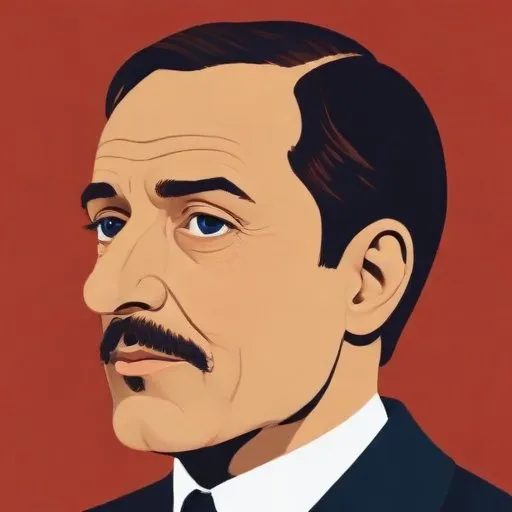
Paul Pellisson was a renowned French author, historian, and key figure in the Baroque Precieuses movement, a literary and artistic phenomenon that swept 17th-century France. He is best known for his affiliation with the Académie française and his role as secretary to the powerful minister of finance, Nicolas Fouquet, as well as his subsequent imprisonment and defense of his patron.
Born on October 30, 1624, in Béziers, France, Pellisson hailed from a distinguished Calvinist family. He studied law at Toulouse and practiced at the bar of Castres before making his way to Paris, where he was introduced to the Académie française through letters of introduction to Valentin Conrart, a fellow Calvinist.
In 1653, Pellisson published a Relation contenant l'histoire de l'Académie française, which earned him a promise of the next vacant place in the academy and permission to attend their meetings. This marked the beginning of his association with the academy, which would shape his literary and historical endeavors.
In 1657, Pellisson became secretary to Nicolas Fouquet, the powerful minister of finance. However, when Fouquet was arrested in 1661, Pellisson was imprisoned in the Bastille. Undeterred, he wrote two pamphlets in defense of his patron: Discours au roi, par un de ses fidèles sujets sur le procès de M. de Fouquet (1661) and Seconde défense de M. Fouquet.
Released from prison in 1666, Pellisson sought to regain royal favor. He was appointed official historian to the king and wrote a fragmentary Histoire de Louis XIV, covering the years 1660 to 1670. In 1670, he converted to Catholicism and received rich ecclesiastical preferment.
Pellisson was acquainted with many notable figures, including Madeleine de Scudéry, in whose novels he appears as Herminius and Acante. His literary contributions and historical works left an indelible mark on 17th-century French literature. As Bussy-Rabutin aptly described him, Pellisson was "encore plus honnête homme que bel esprit."
Pellisson's contributions to French literature and history have endured long after his time. His affiliation with the Académie française and his role in shaping the Baroque Precieuses movement have left a lasting impact on French cultural heritage.
Born in 1619
A 17th-century mastermind who centralized France's economy, creating a powerful and efficient financial system that fueled the country's growth and prosperity. He's renowned for his innovative economic policies and reforms.
Born in 1641
A mastermind behind French military victories and reforms, credited with modernizing the French army and establishing the Palace of Versailles as a royal residence.
Born in 1627
A 17th-century French bishop and theologian who wrote influential works on theology, politics, and history, shaping the Catholic Church's stance on various issues. He's also known for his eloquent sermons and funeral orations.
Born in 1646
A prominent French architect of the 17th century, renowned for designing grandiose Baroque buildings, including the Palace of Versailles. His work epitomized the opulence and extravagance of the French monarchy.
Born in 1613
Designed majestic gardens and palaces for French monarchs, revolutionizing landscape architecture with his innovative and harmonious style.
Born in 1619
A dominant figure in 17th-century French art, he was a painter, art theorist, and director of the Gobelins Manufactory, creating grandiose and dramatic works that epitomized the French Baroque style. He wrote extensively on art theory, influencing generations of artists.
