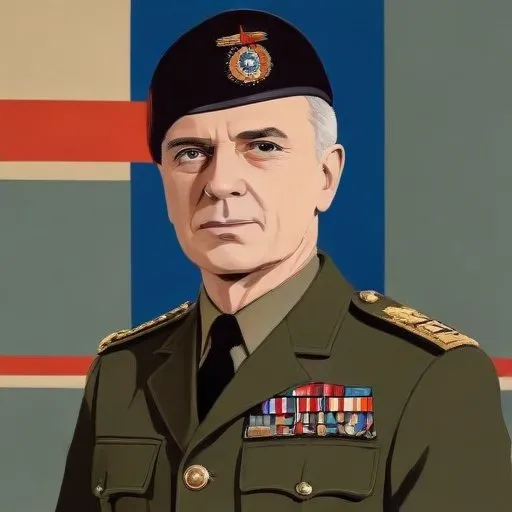
Peter Carington, 6th Baron Carrington: The Statesman Who Shaped the Course of History
A Life of Public Service and Diplomacy
Peter Carington, 6th Baron Carrington, was a British politician and hereditary peer who left an indelible mark on the world of international politics and diplomacy. He is best known for his pivotal roles as Defence Secretary, Foreign Secretary, and Secretary General of NATO, during which he navigated some of the most critical events of the 20th century, including the Falklands War and the Lancaster House Agreement.
Early Life and Background
Born on June 6, 1919, in Chelsea, London, Peter Carington was the only son of the 5th Baron Carrington and the Hon. Sybil Marion Colville. His family's noble lineage dated back to 1796, when his ancestor,
Robert Smith, was created Baron Carrington. The family's surname was originally Smith, but was changed to Carrington in 1797, and later to Carington with one "r" in 1880.
Rise to Prominence
Carington's entry into politics was marked by his election as a Conservative Member of Parliament (MP) for Winchester in 1951. He quickly established himself as a rising star in the party, serving as Parliamentary Secretary to the Minister of Defence from 1954 to 1956 and as Minister of State for Foreign Affairs from 1956 to 1959.
Defence Secretary and Foreign Secretary
In 1970, Carington was appointed Defence Secretary by Prime Minister
Edward Heath, a position he held until 1974. During this period, he played a crucial role in shaping Britain's defence policy, including the country's withdrawal from East of Suez. In 1979, he became Foreign Secretary, serving until 1982, when Argentina invaded the Falkland Islands. Taking full responsibility for the failure to foresee the invasion, Carington resigned from his post.
Secretary General of NATO
In 1984, Carington was appointed Secretary General of NATO, a position he held until 1988. During his tenure, he worked tirelessly to prevent a war between Greece and Turkey during the 1987 Aegean crisis. His diplomatic efforts earned him widespread recognition and respect.
Later Life and Legacy
Following the House of Lords Act 1999, which removed the automatic right of hereditary peers to sit in the House of Lords, Carington was created a life peer as Baron Carington of Upton. He continued to serve in the House of Lords until his death on July 9, 2018, at the age of 99.
Awards and Honors
Throughout his distinguished career, Carington received numerous awards and honors, including the Order of the Garter, the Order of the Bath, and the Royal Victorian Order.
Personal Life
Carington married Iona McClean in 1942, and the couple had three children together. He was known for his love of country pursuits, including hunting and shooting, and was a member of the MCC and the Turf Club.
Philosophical Contributions and Beliefs
Carington's life and work were guided by a strong sense of duty, loyalty, and responsibility. He believed in the importance of public service and the need for effective diplomacy in maintaining international peace and security.
Impact on Modern Society
Peter Carington's legacy extends far beyond his own lifetime. His contributions to international diplomacy, defence policy, and politics have shaped the course of history, inspiring generations of politicians, diplomats, and public servants. His commitment to public service and his unwavering dedication to the principles of democracy continue to inspire and motivate people around the world.
FAQ
What was Peter Caringtons role in British politics?
Peter Carington, 6th Baron Carrington, had a distinguished career in British politics, serving as a member of Parliament, a government minister, and eventually as Secretary General of NATO.
What was Peter Caringtons role in the Falklands War?
Peter Carington, as Foreign Secretary, played a key role in the British governments response to the Falklands War in 1982. He was criticized for his handling of the crisis and subsequently resigned from office.
What was Peter Caringtons relationship with Margaret Thatcher?
Peter Carington had a close relationship with Prime Minister Margaret Thatcher, serving as her Foreign Secretary from 1979 to 1982. He was a member of her inner circle and played a key role in shaping her foreign policy.
What was Peter Caringtons role as Secretary General of NATO?
Peter Carington served as Secretary General of NATO from 1984 to 1988, playing a key role in shaping the alliances response to the end of the Cold War and the collapse of the Soviet Union.
What is Peter Caringtons legacy?
Peter Caringtons legacy is that of a dedicated public servant who played a significant role in shaping British and international politics. He is remembered for his diplomatic skills, his commitment to public service, and his leadership during times of crisis.