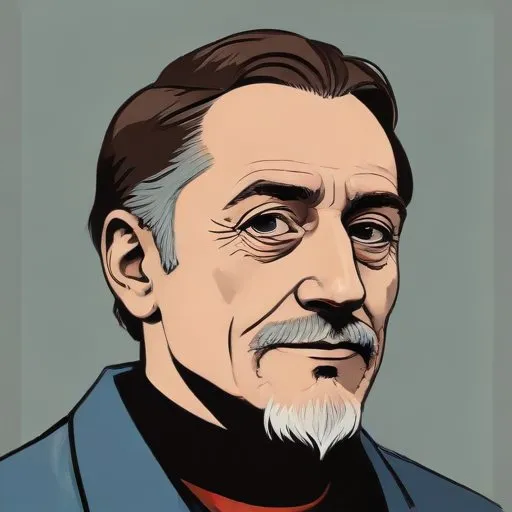
Philipp Mainlnder: The Pessimistic Philosopher of Redemption
A Life of Influential Ideas and Turmoil
Philipp Mainlnder, a German philosopher and poet, is best known for his radical system of pessimism, proclaiming that life has negative value and that the will to non-being is the supreme principle of morality. His central work, "Die Philosophie der Erlösung" (The Philosophy of Redemption), is considered one of the most influential philosophical texts of the 19th century.
Early Life and Career
Born Philipp Batz on October 5, 1841, in Offenbach am Main, Germany, Mainlnder grew up in a tumultuous household. His father's instructions led him to attend the commercial school in Dresden in 1856, where he began to develop his interest in philosophy. A year later, his older brother, Daniel Batz, committed suicide, a tragedy that would later influence Mainlnder's views on life and morality.
Influences and Inspirations
Mainlnder's philosophical foundation was largely shaped by his encounter with
Arthur Schopenhauer's "The World as Will and Representation" in 1860. Schopenhauer's ideas had a profound impact on Mainlnder, who would later describe the experience as a "penetrating revelation." During his time in Naples, Italy, Mainlnder was also deeply influenced by the works of Dante, Petrarca, Boccaccio, and Leopardi.
The Philosophy of Redemption
Mainlnder's magnum opus, "Die Philosophie der Erlösung", is a comprehensive philosophical system that argues that life is of negative value and that the will to non-being is the supreme principle of morality. This radical pessimism is rooted in Mainlnder's belief that existence is characterized by suffering, and that the only way to achieve redemption is through the negation of the will.
Career Highlights and Major Works
- Die Philosophie der Erlösung (The Philosophy of Redemption) - 1876
- Gedichte (Poems) - 1868
- Über die Freiheit des Willens (On the Freedom of the Will) - 1869
Influence on Modern Society
Mainlnder's ideas have had a significant impact on modern thought, influencing philosophers such as
Friedrich Nietzsche and Theodor Lessing. His radical pessimism has also inspired literary figures like
Thomas Mann and
Hermann Hesse.
Personal Milestones and Key Life Events
- 1841: Born in Offenbach am Main, Germany
- 1856: Attended commercial school in Dresden
- 1858: Employed in a trading house in Naples, Italy
- 1860: Discovered Schopenhauer's "The World as Will and Representation"
- 1868: Published his first collection of poems, "Gedichte"
- 1876: Passed away on April 1st, at the age of 34
Legacy and Impact on Philosophy
Philipp Mainlnder's ideas have left an indelible mark on philosophical thought, influencing generations of thinkers and writers. His radical pessimism continues to inspire debate and discussion, cementing his place as one of the most important philosophers of the 19th century.
FAQ
What were Philipp Mainländers philosophical ideas?
Philipp Mainländer was a German philosopher who developed a unique philosophical system that emphasized the importance of individualism, pessimism, and the rejection of traditional morality. His ideas were influenced by Friedrich Nietzsche and Arthur Schopenhauer, among others.
How did Philipp Mainländers philosophy influence modern thought?
Philipp Mainländers philosophy had a significant influence on modern thought, particularly in the areas of existentialism and nihilism. His ideas about the meaninglessness of life and the importance of individual freedom have been cited by philosophers such as Martin Heidegger and Jean-Paul Sartre.
What was Philipp Mainländers life like?
Philipp Mainländers life was marked by his struggles with poverty, illness, and personal tragedy. Despite these challenges, he managed to produce a significant body of philosophical work that has had a lasting impact on modern thought.
How did Philipp Mainländers philosophy relate to aesthetics?
Philipp Mainländers philosophy had a significant impact on aesthetics, particularly in the area of literature. His ideas about the importance of individual expression and the rejection of traditional forms have influenced many writers and artists.
What were Philipp Mainländers views on morality?
Philipp Mainländers views on morality were highly critical of traditional moral systems, which he saw as oppressive and stifling to individual freedom. He believed that individuals should be free to create their own moral systems and live according to their own values.