


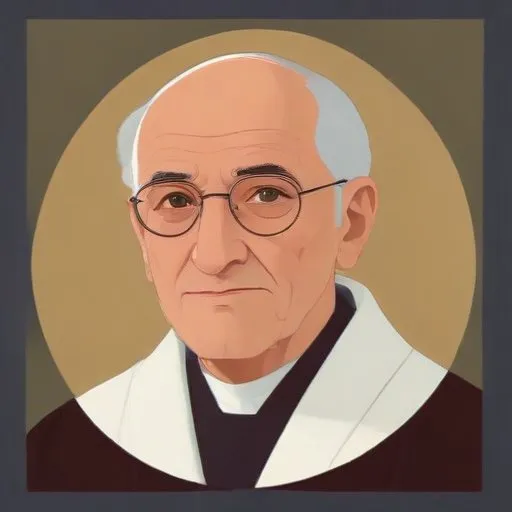
A 17th-century theologian and author who wrote extensively on ecclesiastical history and advocated for religious tolerance, leaving a lasting impact on the Enlightenment era.
Pierre Franois le Courayer was a renowned French Catholic theological writer, best known for his groundbreaking work, "Dissertation sur la validit des ordinations des Anglais et sur la succession des vques de l'Eglise anglicane" (Dissertation on the validity of the Englishmens ordinations and on the episcopal succession in the Anglican Church). This monumental publication, released in 1723, aimed to prove the uninterrupted line of ordination from the apostles to the clergy of the Church of England.
Born on November 17, 1681, in Rouen, France, le Courayer was raised in a family deeply rooted in Catholicism. He became a canon regular and librarian of the Abby of St. Genevieve in Paris, where he conducted extensive research and developed his theological expertise.
Le Courayer's most notable work sparked intense debate among theologians, as he boldly countered the prevailing view that the Church of England's episcopal succession was invalid. His dissertation, though initially published anonymously, was later attributed to him in the Journal des savants, exposing him to criticism and even heresy charges.
The backlash against le Courayer was severe. Louis Antoine de Noailles, Archbishop of Paris, rebuked him, and Jean XI Polinier, Abbot of Sainte-Genevieve, excommunicated him. Undeterred, le Courayer sought refuge in England, where he found support from prominent figures like Francis Atterbury. The University of Oxford subsequently awarded him a doctorate degree.
In 1732, le Courayer accepted that reconciliation with his French opponents was impossible and settled in London, where he was granted a canonry in Oxford. He continued to contribute to theological discourse, publishing a French translation of Paolo Sarpi's "History of the Council of Trent" in 1736, dedicated to Queen Caroline, who granted him a pension of 200 pounds per year. Additionally, he translated Johann Sleidan's works.
Le Courayer's work had a profound influence on Anglican theology, shaping the Church of England's understanding of its episcopal succession. His courage in the face of persecution and his commitment to his convictions earned him a place among the prominent theologians of his time. Today, his contributions remain essential to the study of Anglican history and theology.
Le Courayer's remarkable life serves as a testament to the power of conviction and dedication to one's beliefs. His legacy continues to inspire and inform theological discourse, ensuring his place in the annals of Anglican history.
Born in 1694
A witty and insightful 18th-century writer and philosopher who used satire to critique societal norms and advocate for reason, tolerance, and human rights.
Born in 1712
A pioneering thinker who shaped modern democracy and education with his ideas on social contracts, general will, and the importance of early childhood education. His writings influenced the French Revolution and modern political thought.
Born in 1689
A French lawyer and philosopher who developed the concept of separation of powers, which divides a government into legislative, executive, and judicial branches to prevent abuse of power. His ideas greatly influenced modern democracy.
Born in 1717
A French Enlightenment thinker who made significant contributions to mathematics, physics, and philosophy, particularly in the fields of fluid dynamics and the study of vibrating strings. He's also known for his work on the Encyclopedia, a comprehensive reference work that aimed to compile all knowledge of the time.
Born in 1647
A 17th-century philosopher and writer who critiqued religious intolerance and advocated for reason, skepticism, and intellectual freedom. His works influenced the Enlightenment and modern critical thinking.
Born in 1651
A 17th-century French archbishop and poet who wrote influential works on spirituality and morality, including the famous novel "Telemachus".
Born in 1623
A 17th-century genius who made major contributions to mathematics, physics, and philosophy, inventing the mechanical calculator and developing the theory of probability. His writings also explored the human condition and faith.
