


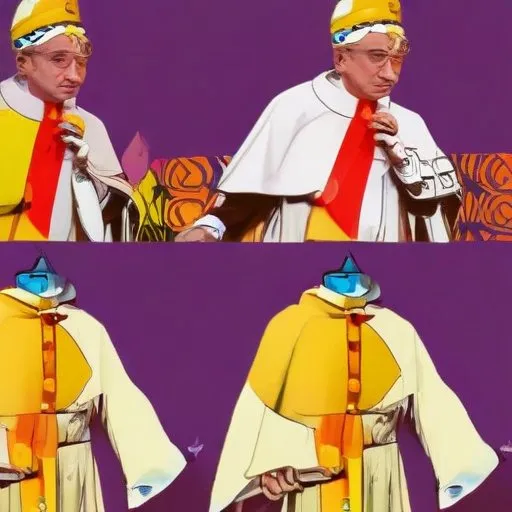
Reigned from 1823 to 1829, this pope was a strong advocate for Catholic education and reformed the Pontifical Academy of Sciences. He also condemned Freemasonry and secret societies.
Pope Leo XII, born Annibale Francesco Clemente Melchiorre Girolamo Nicola della Genga, is remembered as the head of the Catholic Church and ruler of the Papal States from 1823 to 1829, known for his deeply conservative reforms and controversial laws, including the prohibition of Jews from owning property.
Born on August 2, 1760, in the Castello della Genga, Italy, Pope Leo XII hailed from an old noble family. He was the sixth of ten children to Count Ilario della Genga and Maria Luisa Periberti di Fabriano. His early education took place at the Collegio Campana in Osimo (1773-1778) and later at the Collegio Piceno in Rome (until 1783). He then attended the Pontifical Academy of Ecclesiastical Nobles, where he developed his theological foundation.
In 1790, Pope Leo XII's eloquent oration commemorating the late Joseph II, Holy Roman Emperor, caught the attention of Pope Pius VI, who made him a canon of Saint Peter's Basilica in 1794. This appointment marked the beginning of his illustrious career, with him being consecrated as the Titular Archbishop of Tyre in the same year. He served as the Apostolic Nuncio to Switzerland in Lucerne (1794) and later to Cologne (1794-1804), demonstrating his diplomatic prowess.
On September 28, 1823, Pope Leo XII was elected as the head of the Catholic Church, despite being in poor health. During his papacy, he enforced various conservative laws, including the prohibition of Jews from owning property, sparking controversy among the Jewish community. He also raised taxes, but the Papal States remained financially poor. Despite his health struggles, Pope Leo XII persevered, demonstrating his strong will and commitment to his duties.
Pope Leo XII's papacy, although marked by controversy, left an indelible mark on the Catholic Church. His reforms aimed to strengthen the Church's authority, even if they were met with resistance. His commitment to his duties, despite poor health, is a testament to his dedication to the Church. As a deeply conservative ruler, Pope Leo XII's legacy continues to influence the Catholic Church, serving as a reminder of the complexities of religious leadership.
Born in 1876
The leader of the Catholic Church from 1939 to 1958, known for his controversial role during World War II, particularly in regards to the Holocaust. He is also remembered for his encyclicals on social justice and liturgical reforms.
Born in 1554
Established the Congregation for the Propagation of the Faith, a missionary organization that aimed to spread Catholicism globally, and standardized the papal conclave process.
Born in 1742
The head of the Catholic Church from 1800 to 1823, known for his opposition to Napoleon Bonaparte and his restoration of the Papal States.
Born in 1554
Established the Congregation for the Propagation of the Faith, a missionary organization that aimed to spread Catholicism globally, and standardized the papal conclave process.
Born in 1568
The 17th-century Catholic leader who reigned for 21 years, known for his strong stance against Galileo Galilei and his scientific discoveries, as well as his extensive patronage of the arts.
Born in 1652
The 18th-century Pope who banned Freemasonry and reformed the Roman Curia, leaving a lasting impact on the Catholic Church's governance and relations with secret societies.
Born in 1675
A 18th-century pope who reformed the Catholic Church, promoting tolerance and scholarship, and is known for his encyclicals on topics like usury and the sacraments.
Born in 1652
The 18th-century Pope who banned Freemasonry and reformed the Roman Curia, leaving a lasting impact on the Catholic Church's governance and relations with secret societies.
