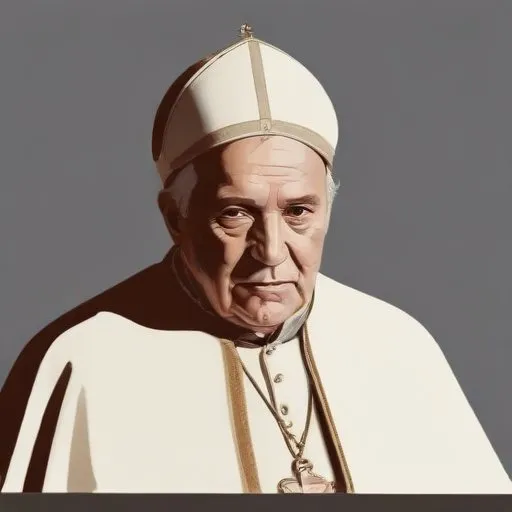
Pope Pius VIII: A Champion of Catholic Unity
A Brief but Impactful Pontificate
Pope Pius VIII is perhaps best known for his concise yet significant papacy, which lasted from 31 March 1829 to his death on 30 November 1830. During this brief period, he played a crucial role in shaping the Catholic Church's stance on key issues, including interfaith marriages and the recognition of Catholic Emancipation in the United Kingdom.
Early Life and Education
Born Francesco Saverio Maria Felice Castiglioni on 20 November 1761, in Cingoli, Marche, Pope Pius VIII came from a noble family with a rich history in the Catholic Church. He was the third of eight children to Count Ottavio Castiglioni and his wife Sanzia Ghislieri, and an ancestor of Pope Celestine IV.
Castiglioni pursued his studies at the Collegio Campana, run by the Society of Jesus, and later at the University of Bologna, where he earned a doctorate in canon and civil law (utroque iure) in 1785. He was ordained to the priesthood in Rome on 17 December 1785.
Rise to Prominence
Castiglioni's dedication to the Catholic Church led him to serve as the Vicar General of Anagni (1788-1790), Fano (1790-1797), and Ascoli Piceno (1797-1800). On 11 August 1800, he was appointed Bishop of Montalto and received episcopal consecration on 17 August in Rome.
His refusal to swear allegiance to Napoleon or the Kingdom of Italy in 1808 led to his arrest and imprisonment. Despite this ordeal, Castiglioni continued to serve the Church, earning the respect and admiration of his peers.
Papacy and Key Decrees
On 31 March 1829, Castiglioni was elected as Pope Pius VIII, succeeding
Pope Leo XII. During his brief papacy, he issued several significant decrees, including the brief Litteris altero abhinc in 1830, which declared that marriages between Catholics and Protestants required proper provisions to ensure the upbringing of children in the Catholic faith.
Pius VIII also welcomed the Catholic Emancipation in the United Kingdom in 1829, a significant milestone in the history of the Catholic Church.
Legacy and Speculation
Pope Pius VIII's sudden death on 30 November 1830, less than two years after his election, sparked speculation about a possible murder. Despite the brevity of his papacy, Pope Pius VIII left an indelible mark on the Catholic Church, championing unity and defending its principles in the face of adversity.
His legacy serves as a testament to the enduring power of faith and conviction, inspiring generations to come.
FAQ
What were Pope Pius VIIIs reforms to the Catholic Church?
Pope Pius VIII implemented several reforms to the Catholic Church, including the re-establishment of the Jesuit order and the reform of the Roman Curia.
What was Pope Pius VIIIs relationship like with Napoleon?
Pope Pius VIII had a complicated relationship with Napoleon, who had occupied Rome and imprisoned several high-ranking church officials. Despite this, Pius VIII managed to maintain good relations with Napoleon and even crowned him Emperor.
What was Pope Pius VIIIs theological stance?
Pope Pius VIII was a conservative theologian who opposed liberal and progressive ideas within the Church. He emphasized the importance of tradition and orthodoxy.
What was Pope Pius VIIIs role in the Congress of Vienna?
Pope Pius VIII played a key role in the Congress of Vienna, where he advocated for the restoration of the Papal States and the protection of Catholic interests.
What was Pope Pius VIIIs legacy in the Catholic Church?
Pope Pius VIII is remembered as a strong advocate for Catholic orthodoxy and tradition. He is also recognized for his diplomatic skills and his ability to navigate complex political situations.