


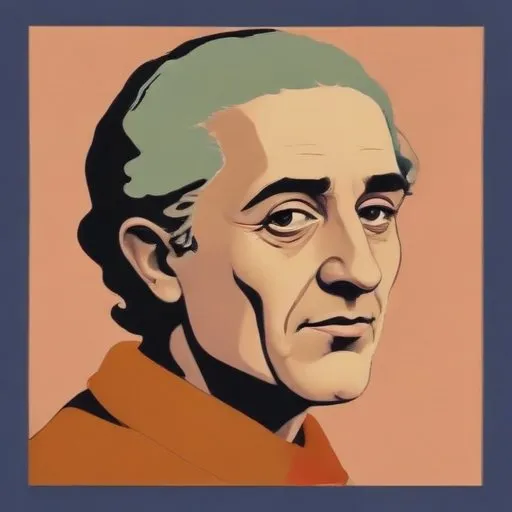
A 20th-century artist who explored the intersection of poetry and visual art, creating dreamlike, symbolic paintings that reflected his poetic imagination.
Primo Conti, an Italian futurist artist, was a trailblazer in the art world, known for his bold and innovative works that blended Futurism, Art Nouveau, Fauvism, Expressionism, and Orphism. Born in Florence on October 16, 1900, Conti's precocious talent in music, poetry, and painting was evident from a young age, setting the stage for a lifetime of creative exploration.
In 1913, Conti's encounter with the Futurists marked a turning point in his artistic journey. His fascination with the latest innovations led him to develop a unique style that was both futuristic and deeply rooted in traditional techniques. It was not until 1917, after meeting Giacomo Balla and Filippo Tommaso Marinetti, that Conti fully immersed himself in the Futurist movement.
Between 1917 and 1919, Conti's work underwent a metamorphosis, reflecting his exploration of metaphysical themes. This period saw the creation of some of his most iconic works, characterized by vibrant colors, abstract forms, and a sense of dynamism. His literary works, including the book Imbottigliature, further solidified his position as a leading figure in the Futurist movement.
The 1920s were a complex and transformative period for Conti. He delved into Mannerism, Exoticism, and Pittura Metafisica, producing works that were both deeply personal and intellectually rigorous. This decade also saw Conti's involvement in the theatrical and literary world, culminating in the founding of the prestigious Viareggio Prize in 1929.
The 1930s brought challenges and contradictions for Conti. His enforced adhesion to Fascism and subsequent refusal to join Margherita Sarfatti's Novecento Italiano group reflected his inner turmoil. Despite these difficulties, Conti continued to produce works that celebrated the beauty of life, often incorporating elements of mythology and fantasy.
By the 1940s, Conti had returned to his Futurist roots, predating the official rediscovery of the movement by two decades. His later years were marked by a renewed sense of purpose, as he continued to innovate and experiment, leaving behind a legacy that continues to inspire artists and thinkers today.
Conti's work embodies the Futurist ideals of innovation, experimentation, and rebellion against traditional norms. Through his art, he sought to capture the essence of modernity, reflecting the fragmented and dynamic nature of contemporary life.
Primo Conti's work continues to inspire artists, designers, and thinkers today, offering a unique perspective on the intersection of technology, aesthetics, and human experience. His legacy serves as a testament to the power of innovation and creativity in shaping our understanding of the world around us.
Born in 1882
A pioneering figure in Futurism, creating dynamic, abstracted depictions of modern life and technology, blending sculpture and painting to capture the essence of speed and energy.
Born in 1883
A pioneering Futurist painter and writer, known for vibrant, dynamic works that captured the energy of modern life and the chaos of war.
Born in 1888
A pioneer of Surrealist art, creating dreamlike, eerie, and thought-provoking scenes that blend reality and fantasy, influencing generations of artists and filmmakers.
Born in 1884
An Italian artist famous for elongated, emotive portraits and nudes that blended primitivism with cubism, capturing the essence of his subjects with expressive simplicity.
Born in 1888
An Egyptian-Italian soldier, journalist, and poet who explored the human condition through surreal and symbolic verse, influencing 20th-century modernist poetry. His work is a testament to the power of language in capturing the essence of war and existence.
Born in 1896
A renowned Italian poet and translator, celebrated for his unique and expressive style that explores the human condition, earning him the Nobel Prize in Literature.
Born in 1901
An Italian writer who crafted powerful, symbolic poetry and novels that explored the human condition, earning him the Nobel Prize in Literature in 1959.
Born in 1855
A renowned Italian poet and classical scholar, he's celebrated for his lyrical and symbolic poetry, as well as his groundbreaking work in classical philology.
