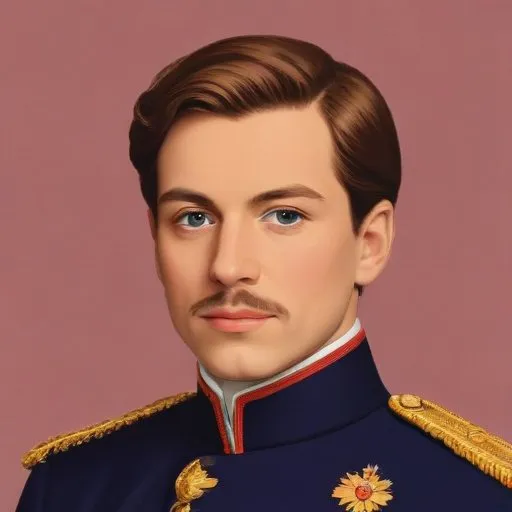
Prince Maximilian of Baden: The Last Chancellor of the German Empire
A Brief but Impactful Tenure
Prince Maximilian of Baden, also known as Max von Baden, is renowned for his brief but significant tenure as the last Chancellor of the German Empire and Minister-President of Prussia in October and November 1918. During this tumultuous period, he played a crucial role in seeking peace on Germany's behalf at the end of World War I, based on U.S. President
Woodrow Wilson's Fourteen Points, and paved the way for the transformation of the government into a parliamentary system.
Early Life and Education
Born on July 10, 1867, in Baden-Baden, Prince Maximilian was a member of the House of Baden. His father, Prince Wilhelm Max, was the third son of Grand Duke Leopold, and his mother, Princess Maria Maximilianovna of Leuchtenberg, was a granddaughter of
Eugène de Beauharnais. Prince Maximilian received a humanistic education at a Gymnasium secondary school and later studied law and cameralism at the Leipzig University.
A Career of Public Service
Prince Maximilian's career in public service began in the military, where he rose to the rank of general. He later entered politics and served as the Chancellor of the German Empire and Minister-President of Prussia from October to November 1918. During this period, he took steps to transform the government into a parliamentary system, which ultimately led to the abdication of Emperor Wilhelm II and the establishment of the Weimar Republic.
Historical Context and Legacy
Prince Maximilian's tenure as Chancellor took place during a time of great upheaval in Germany, with the country facing defeat in World War I and struggling to maintain social and political order. Despite the challenges, Prince Maximilian worked tirelessly to ensure a peaceful transition of power and paved the way for the emergence of the Weimar Republic. His legacy is remembered as a beacon of hope and a symbol of Germany's commitment to democracy during a tumultuous period in its history.
Personal Life and Relationships
Prince Maximilian married Princess Marie Louise of Hanover in 1900, although rumors suggest that he was homosexual. Despite this, he remained devoted to his wife and carried out his royal duties with dignity and grace.
Inspirational Quotes
While there are no direct quotes from Prince Maximilian of Baden, his actions and decisions during his brief tenure as Chancellor speak to his commitment to peace, democracy, and the well-being of the German people.
Key Life Events and Milestones
- July 10, 1867: Born in Baden-Baden, Germany
- 1900: Married Princess Marie Louise of Hanover
- October 1918: Appointed Chancellor of the German Empire and Minister-President of Prussia
- November 1918: Resigned as Chancellor and paved the way for the establishment of the Weimar Republic
- November 6, 1929: Died in Baden-Baden, Germany
Charitable Work and Social Contributions
While Prince Maximilian's tenure as Chancellor was marked by significant challenges, he remained committed to the welfare of the German people and worked to ensure a peaceful transition of power. His efforts have had a lasting impact on German history and continue to inspire generations to this day.
FAQ
What was Prince Maximilian of Badens role in German politics?
Prince Maximilian served as the Chancellor of Germany from 1918 to 1919 and played a key role in the countrys transition from monarchy to republic.
What was Prince Maximilian of Badens relationship like with Kaiser Wilhelm II?
Prince Maximilian was a close advisor to Kaiser Wilhelm II, but he ultimately became disillusioned with the Kaisers policies and helped to negotiate his abdication.
What were Prince Maximilian of Badens views on democracy?
Prince Maximilian was a supporter of democratic principles and played a key role in the creation of the Weimar Republic.
How did Prince Maximilian of Badens experiences shape his political views?
Prince Maximilians experiences during World War I and its aftermath influenced his views on the need for democratic reform and international cooperation.
What was Prince Maximilian of Badens legacy in German history?
Prince Maximilians legacy lies in his role as a key figure in Germanys transition to democracy and his efforts to promote international cooperation.