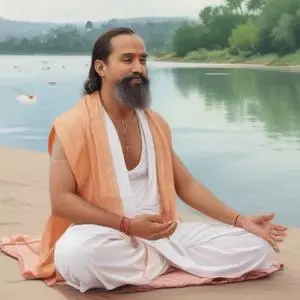
Ramakrishna Paramahamsa

Ramakrishna Paramahamsa

Ramakrishna Paramahamsa was born on February 18th, 1836

Full Name: Ramakrishna Paramahamsa
Birthplace: Kamarpukur, Bengal Presidency, British India
Zodiac Sign: Pisces
Profession: Mystic and yogi
Guru: Totapuri
Disciple: Swami Vivekananda
Death Date: August 15, 1886
Philosophy: Advaita Vedanta

A 19th-century Indian spiritual leader who preached the unity of all religions and achieved a state of spiritual enlightenment through intense meditation and devotion. He is revered for his ecstatic experiences and visions of the divine.

Written by: Emily Carter Emily Carter
Ramakrishna Paramahamsa is revered as one of the most influential spiritual leaders of 19th century India, known for his profound teachings on Advaita Vedanta and his ability to synthesize various religious traditions. His life and message have inspired countless individuals across the globe, including the likes of Swami Vivekananda, who went on to become a world-renowned spiritual leader in his own right. Born on February 18, 1836, in Kamarpukur, a small village in Bengal, Ramakrishna was the fourth of five children to Khudiram Chattopadhyay and Chandramani Devi. From a young age, Ramakrishna was drawn to spirituality, and his quest for self-realization took him to various holy men and women across India. He was particularly influenced by the teachings of Totapuri, a revered monk who initiated him into Advaita Vedanta. Ramakrishna's teachings emphasize the importance of spiritual discipline, self-control, and devotion. He believed that the ultimate goal of human life is to realize one's true nature, which is divine. He advocated for the acceptance of all religions, stating that "all faiths are paths to the same goal." His philosophy is encapsulated in the phrase "Jiva is Shiva" or "the individual self is none other than the Universal Self."
  • 1836: Born in Kamarpukur, Bengal
  • 1855: Became a priest at the Dakshineswar Kali Temple
  • 1861: Met Totapuri, who initiated him into Advaita Vedanta
  • 1872: Married Sarada Devi, who became his spiritual partner
  • 1886: Passed away on August 16, at the age of 50
Ramakrishna's teachings have had a profound impact on modern Indian society, inspiring a generation of spiritual leaders, including Swami Vivekananda, who popularized his message globally. His emphasis on the importance of spiritual discipline, self-control, and devotion has influenced various social and cultural movements in India. Ramakrishna's teachings were primarily oral, and his conversations with his disciples were later compiled by Swami Vivekananda into a book called "The Gospel of Sri Ramakrishna." This book is considered a spiritual classic and has been translated into numerous languages.
  • "The wound is the place where the light enters you."
  • "God is in all men, but all men are not in God; that is the difference."
  • "The goal of life is to realize God and to see Him in all beings."
Ramakrishna's life and teachings took place during a time of great social and cultural change in India. The Indian Renaissance, which began in the 19th century, saw a resurgence of interest in Indian philosophy and culture. Ramakrishna's message of spiritual inclusivity and his emphasis on the importance of self-realization resonated with many Indians who were seeking a deeper connection with their cultural heritage. Ramakrishna's teachings share similarities with those of other Indian saints and sages, such as Sri Aurobindo and Swami Dayananda Saraswati. However, his unique approach to spirituality, which emphasized the importance of direct experience and devotion, set him apart from his contemporaries. Ramakrishna's relationship with his wife, Sarada Devi, is a testament to the importance of spiritual partnership. She was not only his life partner but also his spiritual companion, and together they exemplified the ideal of spiritual harmony in marriage. Ramakrishna's teachings have inspired numerous books, films, and artworks. The Indian film "Laga Chunari Mein Daag" (2007) features a song dedicated to Ramakrishna, highlighting his influence on popular culture in India. Ramakrishna was not concerned with material recognition or awards during his lifetime. However, his legacy has been recognized through various institutions and organizations, including the Ramakrishna Math and Mission, which was established by Swami Vivekananda in 1897. Ramakrishna's teachings have inspired numerous educational institutions in India and abroad. The Ramakrishna Mission, which has over 200 centers around the world, offers educational programs and services that aim to promote spiritual growth and self-realization.
  • Ramakrishna was a talented singer and musician, and music played a significant role in his spiritual practices.
  • He was known for his love of cats and often kept a cat with him during his meditations.
Ramakrishna's life and teachings continue to inspire individuals from all walks of life. His message of spiritual inclusivity, self-realization, and devotion serves as a beacon of hope for those seeking a deeper connection with their own spiritual nature.
Timeline
1836
Birth in India
Ramakrishna Paramahamsa was born in India and would go on to become a prominent mystic and yogi.
1855
Spiritual Quest
Ramakrishna began his spiritual quest, eventually becoming a devotee of the goddess Kali.
1863
Spiritual Realization
Ramakrishna experienced spiritual realization, achieving a state of higher consciousness.
1880
Teachings and Disciples
Ramakrishna began teaching his spiritual principles to a group of disciples, including Swami Vivekananda.
1886
Death
Ramakrishna Paramahamsa passed away at the age of 50.
Ramakrishna Paramahamsa

Ramakrishna Paramahamsa Quiz

What is the central message of Ramakrishna Paramahamsa's teachings?

Score: 0/5
FAQ
What were the core teachings of Ramakrishna Paramahamsa?
Ramakrishna Paramahamsas teachings emphasized the importance of devotion, self-realization, and service to humanity, encouraging his followers to cultivate a deep sense of spirituality and compassion, and to strive for unity and understanding among all religions and people.
What role did Ramakrishna Paramahamsa play in Indian spirituality?
Ramakrishna Paramahamsa was a key figure in Indian spirituality, influencing a wide range of thinkers and spiritual leaders, including Swami Vivekananda, who went on to found the Ramakrishna Mission, a global organization dedicated to promoting spiritual growth, education, and social service.
How did Ramakrishna Paramahamsas teachings influence Hinduism?
Ramakrishna Paramahamsas teachings helped to revitalize Hinduism and promote a more inclusive and universal understanding of spirituality, emphasizing the importance of personal experience and direct communication with the divine, rather than relying solely on scriptural authority.
What was Ramakrishna Paramahamsas relationship with his wife, Sarada Devi?
Ramakrishna Paramahamsa and his wife, Sarada Devi, shared a deeply spiritual and loving relationship, with Sarada Devi serving as a devoted disciple and companion, and later becoming a revered spiritual leader in her own right, known as the Holy Mother.
What impact did Ramakrishna Paramahamsa have on modern Indian thought?
Ramakrishna Paramahamsas ideas and teachings had a profound impact on modern Indian thought, influencing the development of Indian nationalism, the Indian Renaissance, and the growth of Hindu reform movements, shaping the course of Indian history and culture in the 19th and 20th centuries.

Related People:

Sarada Devi

Born in 1853

A spiritual leader and wife of Ramakrishna, known for her teachings on spirituality, self-realization, and women's empowerment. Her wisdom and compassion inspired many, especially women, to seek spiritual growth.

Born in 1917

The 5th Prime Minister of Vietnam, serving from 1955 to 1957, known for his role in the country's early years of independence and his efforts to rebuild and stabilize the nation.

Swami Vivekananda

Born in 1863

A key figure in introducing Indian philosophies to the Western world, he's known for his inspiring lectures and writings on spirituality, self-realization, and the unity of all religions.

Sri Aurobindo

Born in 1872

An Indian spiritual leader who developed a philosophy of integral yoga, aiming to unite spiritual growth with worldly life, and wrote extensively on spirituality, philosophy, and poetry.

Chinmayananda Saraswati

Born in 1916

A renowned Indian spiritual guru and educator who popularized the teachings of Vedanta, a philosophy that emphasizes self-realization and spiritual growth, through his writings, lectures, and institutions.

Ramana Maharshi

Born in 1879

A revered Indian sage who advocated for self-inquiry and non-dualism, guiding seekers towards spiritual liberation through direct experience of the ultimate reality.