


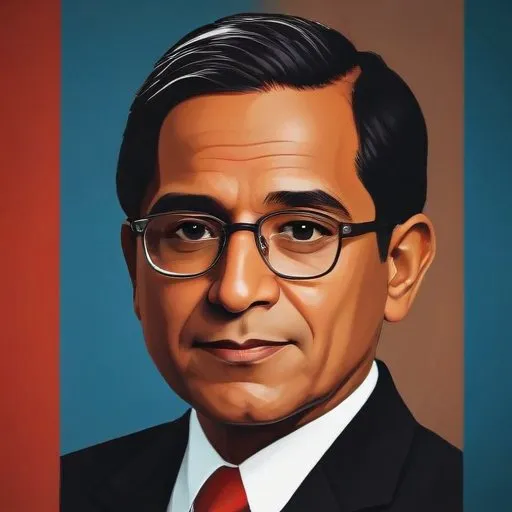
A renowned economist and academic who wrote bestselling books on economic theory, predicting crashes and advocating for a more equitable society.
Ravi Batra, a renowned Indian-American economist, is best known for his uncanny ability to predict economic downturns and crises. His book, "The Great Depression of 1990," which reached No. 1 on The New York Times Best Seller list in 1987, is a testament to his prophetic insights.
Batra's academic journey began in 1963 when he earned his B.A. degree from Punjab University. He then went on to pursue his M.A. degree from Delhi School of Economics in 1965 and later received his Ph.D. in economics from Southern Illinois University in 1969.
His academic career spans over four decades, with stints at the University of Western Ontario and Southern Methodist University, where he became a full professor of economics by the age of 30.
Batra's work is deeply influenced by the philosophy of his mentor, Prabhat Ranjan Sarkar, who had a profound impact on his thoughts and ideas. Sarkar's philosophy, which emphasizes the importance of spiritual growth and material welfare, is reflected in Batra's economic theories.
Batra's work is characterized by his innovative approach to economics. He proposed the Progressive Utilization Theory (PROUT), which aims to ensure material welfare and individual growth. PROUT is based on the idea that financial capitalism breeds inequality and corruption, leading to economic crises.
Batra has authored six best-selling books, two of which appeared on The New York Times Best Seller list. His books have been widely acclaimed for their accessibility and insight into complex economic issues.
He has been a frequent guest on CBS, NBC, CNN, ABC, and CNBC, and has been profiled in The New York Times, Time, and Newsweek.
Batra's work is underpinned by his belief in the importance of spiritual growth and material welfare. He argues that financial capitalism is inherently flawed and that a more equitable distribution system is necessary to ensure individual growth and development.
Through his work, Batra aims to promote a more just and equitable society, where individuals can develop their full potential.
Batra's ideas and predictions have had a significant impact on modern society. His book, "The Great Depression of 1990," predicted the economic downturn of the early 1990s, and his subsequent works have continued to influence economic thought and policy.
His work has inspired a new generation of economists and thinkers, who are committed to creating a more just and equitable society.
Ravi Batra's legacy is one of innovative thinking and prophetic insight. His work continues to inspire and influence economic thought, and his ideas remain as relevant today as they were when he first proposed them.
As a pioneer in the field of economics, Batra's contributions will be remembered for generations to come.
Born in 1912
A Nobel Prize-winning economist who championed free market capitalism and limited government intervention, known for his advocacy of laissez-faire economics and influential writings on monetary policy.
Born in 1883
A pioneering economist who revolutionized modern economic theory with his groundbreaking ideas on government intervention and fiscal policy, shaping global economic policies.
Born in 1915
A renowned economist and academic who made significant contributions to the field of economics, particularly in the areas of macroeconomics and international trade. He was awarded the Nobel Prize in Economics in 1970.
Born in 1920
Developed econometric models that accurately predicted economic trends and fluctuations, earning him the Nobel Prize in Economics in 1980.
Born in 1924
A Nobel Prize-winning economist who developed a growth model that showed technological progress is the primary driver of economic growth, and is known for his work on the theory of economic growth.
83 Years Old
A Nobel Prize-winning economist and academic who has made significant contributions to the field of economics, particularly in the areas of information economics and globalization.
93 Years Old
A renowned economist and philosopher who has made significant contributions to welfare economics, social choice theory, and development economics, and is known for his work on poverty, famine, and human development.
95 Years Old
A pioneer in applying economic theory to social issues, he's most known for his work on human capital, crime and punishment, and the economics of the family.
