


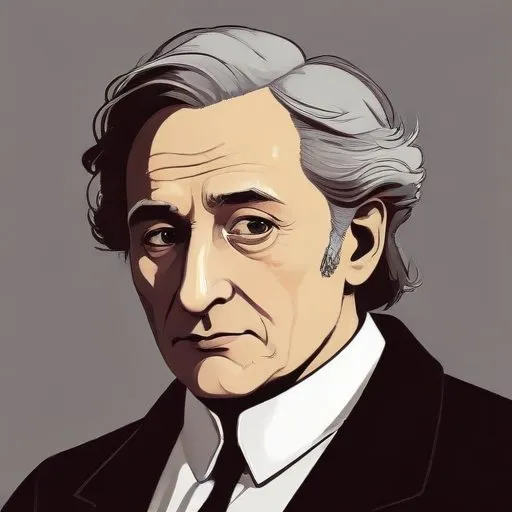
A Russian composer and academic, known for his contributions to the development of Soviet music, particularly in the realm of classical and opera, earning him numerous accolades.
Renowned for his masterful blend of Russian folk melodies and classical music, Reinhold Glire was a Russian and Soviet composer of German and Polish descent who left an indelible mark on the world of music. With a career spanning over five decades, Glire was hailed as a People's Artist of the RSFSR in 1935 and the USSR in 1938, solidifying his position as one of the most celebrated composers of his time.
Born on December 30, 1874, in Kiev, Russian Empire (now Kyiv, Ukraine), Glire was the second son of Ernst Moritz Glier, a wind instrument maker from Saxony, and Józefa Josephine Korczak, a Polish woman from Warsaw. His original name, Reinhold Ernest Glier, was later changed to Glire around 1900, sparking the legend of his French or Belgian descent.
Glire's love affair with music began at the Kiev school of music in 1891, where he was taught violin by Otakar Ševčík. He later enrolled in the Moscow Conservatory, where he studied counterpoint with Sergei Taneyev, composition with Mikhail Ippolitov-Ivanov, and violin with Jan Hřímal.
Glire's talents were evident from the start. He graduated from the Moscow Conservatory in 1900, having composed a one-act opera, "Earth and Heaven," after Lord Byron, and received a gold medal in composition. The following year, he accepted a teaching post at the Moscow Gnesin School of Music, where he mentored notable composers such as Nikolai Myaskovsky and the eleven-year-old Sergei Prokofiev.
Glire's conducting skills were honed under the tutelage of Oskar Fried in Berlin from 1905 to 1908. It was during this period that he met Serge Koussevitzky, who would later conduct the premiere of Glire's Symphony No. 2, Op. 25, in Berlin.
Glire's contributions to Russian music were immense. He was instrumental in shaping the country's classical music landscape, blending folk traditions with Western classical music. His compositions, including symphonies, operas, and chamber music, continue to captivate audiences worldwide.
Today, Glire's music continues to inspire generations of musicians and composers, cementing his place as one of the most celebrated figures in Russian music history.
Born in 1873
A renowned Russian musician who composed iconic symphonies and piano concertos, and was also a skilled pianist and conductor, leaving a lasting legacy in classical music.
Born in 1882
A Russian master of music, renowned for revolutionizing classical music with bold, avant-garde compositions that blended traditional and modern elements. His iconic works, such as "The Rite of Spring," continue to inspire and influence artists across genres.
Born in 1906
A renowned Russian pianist and composer, known for blending classical music with dark humor and satire, creating iconic symphonies and film scores that still resonate today.
Born in 1891
A Russian musical genius who composed iconic works like "Peter and the Wolf" and "Romeo and Juliet," blending classical and modern styles.
Born in 1804
A Russian composer who is often considered the father of Russian classical music, known for his operas and orchestral works that blended Russian folk melodies with Western classical music traditions.
Born in 1839
A Russian master of evocative and dramatic music, famous for his vivid orchestral works, including the iconic "Night on Bald Mountain" and "Pictures at an Exhibition".
Born in 1844
A Russian master of orchestration, known for his vibrant and exotic compositions, such as "Scheherazade" and "Flight of the Bumblebee", that evoke fantastical worlds and mythical creatures.
Born in 1829
A renowned Russian musician of the Romantic era, celebrated for his virtuosic piano performances and compositions that blended Russian folk elements with Western classical music traditions.
