


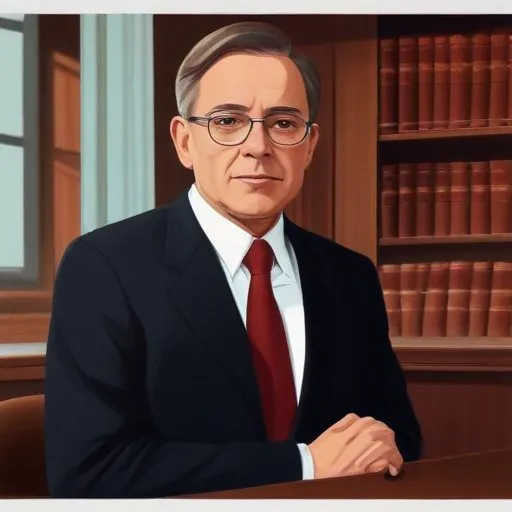
First African American to graduate from Harvard College, he broke racial barriers as a lawyer, academic, and diplomat, serving as a US consul in Vladivostok, Russia.
Richard Theodore Greener, a trailblazing African American scholar, made history as Harvard College's first Black graduate in 1870, and went on to excel in multiple fields, including elocution, philosophy, law, and classics.
Greener's impressive résumé boasts an array of groundbreaking achievements. Within three years of graduating from Harvard, he completed law school at the University of South Carolina, becoming the institution's first Black professor. This remarkable feat was followed by his appointment as associate editor of the New National Era, a newspaper owned and edited by the renowned Frederick Douglass.
In 1875, Greener made history again by becoming the first African American elected to the American Philological Association, the primary academic society for classical studies in North America. His academic prowess didn't stop there; in 1876, he was admitted to practice in the Supreme Court of South Carolina, and in the following year, he was admitted to the Bar of the District of Columbia.
In 1898, Greener broke new ground as America's first Black diplomat to a white country, serving in Vladivostok, Russia. He later served as an American representative during the Russo-Japanese War, before leaving the diplomatic service in 1905.
Greener's remarkable contributions were recognized and celebrated during his lifetime. In 1902, the Chinese government honored him for his service to the Boxer War and his assistance to Shansi famine sufferers. He was also awarded honorary Doctorates of Law by Liberias Monrovia College in 1882 and Howard University in 1907.
Today, Greener's legacy lives on through the annual scholarships awarded in his name by Phillips Academy and the University of South Carolina. In 2018, Phillips Academy further honored Greener by naming a central quadrangle after him, and the University of South Carolina unveiled a statue in his honor.
Richard Greener was born in Philadelphia, Pennsylvania, in 1844. He moved with his family to Boston in 1853, where he faced the harsh reality of racial segregation in education. However, this did not deter him from pursuing his passion for learning. Under the guidance of his father, Richard Wesley, Greener went on to excel in his studies, laying the foundation for his remarkable achievements.
Greener's life and work embodied the principles of perseverance, resilience, and dedication to education. His contributions to the fields of elocution, philosophy, law, and classics continue to inspire generations of scholars and students.
Born in 1856
A pioneering figure in African-American education, he founded the Tuskegee Institute and advocated for racial uplift through self-improvement and economic empowerment. His autobiography, "Up from Slavery," remains a classic of American literature.
Born in 1868
A pioneering figure in the struggle for racial equality, advocating for civil rights and social justice through groundbreaking research and powerful writings.
Born in 1862
A pioneering African American journalist and anti-lynching crusader who exposed the horrors of racial violence in the South through her writing and activism.
Born in 1875
Pioneering educator and civil rights activist who founded a school for African American students in Florida and advised several US presidents on racial issues.
Born in 1908
A trailblazing lawyer and civil rights champion who broke racial barriers in the US justice system, serving as the first African American on the Supreme Court. He fought tirelessly for equality and justice, leaving a lasting impact on American history.
Born in 1904
A pioneering diplomat and Nobel laureate who brokered peace in the Middle East and advocated for civil rights, leaving a lasting impact on international relations and social justice.
Born in 1902
A renowned poet, novelist, and playwright who powerfully voiced the experiences and struggles of African Americans during the Harlem Renaissance, using jazz and blues rhythms to convey the spirit of his people.
Born in 1898
A renowned singer, actor, and activist who used his talents to promote social justice and equality, particularly for African Americans, through powerful performances and outspoken advocacy.
