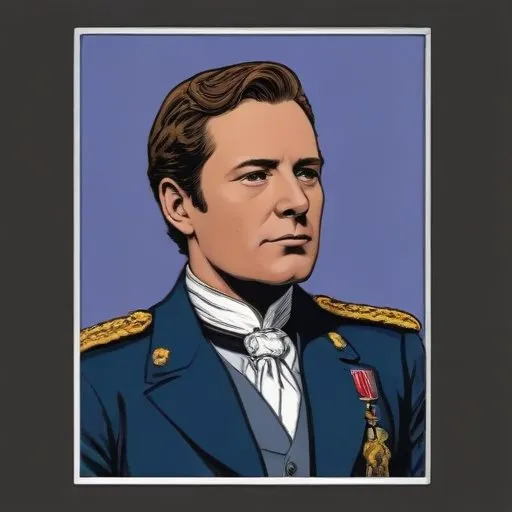
Robert FitzRoy: The Visionary Who Charted the Seas and Skies
A Pioneer in Meteorology and Navigation
Robert FitzRoy was a British naval officer and scientist who etched his name in history as the captain of HMS Beagle during
Charles Darwin's famous voyage. He is also renowned for his groundbreaking work in meteorology, coining the term "forecast" and establishing the Met Office, a pioneering institution that revolutionized weather prediction.
Early Life and Career
Born on July 5, 1805, at Ampton Hall, Suffolk, England, FitzRoy was born into a lineage of public servants and aristocrats. His family's rich heritage and tradition of excellence instilled in him a sense of duty and ambition. At the tender age of four, FitzRoy began living with his family at Wakefield Lodge, their Palladian mansion in Northamptonshire.
Royal Naval College and Early Voyages
In February 1818, FitzRoy enrolled in the Royal Naval College, Portsmouth, where he began his naval education. The following year, he embarked as a voluntary student aboard the frigate HMS Owen Glendower, which sailed to South America in 1820. During this voyage, he was promoted to midshipman, demonstrating his aptitude for the sea. FitzRoy's subsequent service on HMS Hind further honed his skills as a navigator and surveyor.
The HMS Beagle Voyage and Charles Darwin
FitzRoy's most notable achievement came when he captained the HMS Beagle on its second expedition to Tierra del Fuego and the Southern Cone. It was during this voyage that he invited a young Charles Darwin to join him as the ship's naturalist. The five-year journey (1831-1836) proved to be a pioneering expedition in the fields of natural history, geology, and anthropology. FitzRoy's meticulous observations and navigational skills ensured the success of the expedition, which laid the foundation for Darwin's On the Origin of Species.
Meteorological Contributions and the Met Office
In 1854, FitzRoy established the Met Office, a groundbreaking institution that enabled the collection and dissemination of meteorological data. He coined the term "forecast" and developed systems to provide weather information to sailors and fishermen, significantly reducing the risk of weather-related accidents at sea.
Governor of New Zealand
From 1843 to 1845, FitzRoy served as the Governor of New Zealand, where he worked tirelessly to protect the Māori from illegal land sales claimed by British settlers. His efforts to uphold justice and fairness in the face of colonial pressures demonstrated his commitment to public service.
Personal Milestones and Legacy
- 1860: FitzRoy was elected as a Fellow of the Royal Society (FRS) in recognition of his contributions to science.
- 1865: He passed away on April 30th, leaving behind a legacy of pioneering work in meteorology and navigation.
Quotes and Memorable Sayings
"May it please God to prosper our endeavours, and to give us wisdom to use our acquirements aright."
FitzRoy's words eloquently capture the essence of his unwavering dedication to scientific inquiry and public service.
Influence on Modern Society
FitzRoy's pioneering work in meteorology and navigation has had a profound impact on modern society. His establishment of the Met Office paved the way for modern weather forecasting, while his navigational skills and surveying expertise enabled the exploration and mapping of the world's oceans. His legacy continues to inspire scientists, sailors, and environmentalists alike.
FAQ
What was Robert FitzRoys occupation?
Robert FitzRoy was an English captain, surveyor, and meteorologist, best known for his command of the HMS Beagle during Charles Darwins famous voyage around the world.
What was Robert FitzRoys role on the HMS Beagle?
Robert FitzRoy was the captain of the HMS Beagle during its second survey voyage, which lasted from 1831 to 1836. During this voyage, he supervised the ships surveying activities and commanded the crew, while Charles Darwin served as the ships naturalist.
What was Robert FitzRoys contribution to meteorology?
Robert FitzRoy made significant contributions to meteorology, including the development of the first weather forecasting system and the introduction of the term forecast to describe predictions of future weather conditions.
What were Robert FitzRoys accomplishments as Governor of New Zealand?
As the second Governor of New Zealand, Robert FitzRoy worked to implement policies that protected the rights of the indigenous Māori people and promoted the development of the colony. He also supported the establishment of a constitution for the colony and encouraged the development of trade and commerce.
How is Robert FitzRoy remembered today?
Robert FitzRoy is remembered today as a pioneering captain, surveyor, and meteorologist who played a significant role in the development of modern weather forecasting. His legacy continues to inspire sailors, scientists, and historians to this day.