


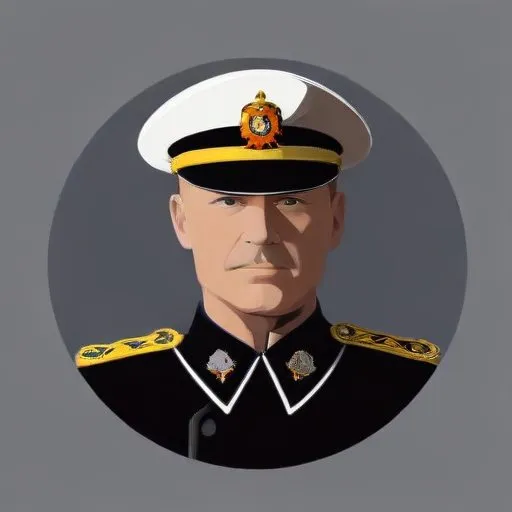
Despite the objections of his school director, Misch's grandfather took him out of school after eight years to learn a trade. He became an apprentice with the firm of Schmöller & Model in Hoyerswerda, where he trained as a painter. In 1935, he attended the Masters School for Fine Arts in Cologne, but returned to Hoyerswerda after six months to continue his training.
Misch met Gerda, his future wife, in July 1938, and they married on New Year's Eve, 1942. They had a daughter, Brigitta Jacob-Engelken, who later supported Jewish causes after the end of World War II.
As the Soviet Army closed in on Berlin, Misch remained loyal to Hitler, even as many other high-ranking officials abandoned the Führerbunker. He was present during Hitler's final hours, and claimed to have seen the dictator shoot himself on April 30, 1945.
Misch's experiences in the Führerbunker made him a unique historical figure, and he was widely reported in the media as the last surviving former occupant of the bunker when he died on September 5, 2013, at the age of 96.
"I was not a fanatical Nazi, but I was a soldier who did my duty."
Misch's loyalty to Hitler and the Nazi regime has been the subject of controversy, but his unique perspective on the inner workings of the Führerbunker and the final days of World War II remains an important historical resource.
Born in 1889
The dictator of Nazi Germany, responsible for the genocide of six million Jews and millions of other people during World War II, and infamous for his extreme nationalist and anti-Semitic ideology.
Born in 1897
A mastermind of Nazi propaganda, he crafted a persuasive narrative that fueled the Third Reich's rise to power, leaving a lasting impact on the world.
Born in 1893
A high-ranking Nazi official, he was a decorated World War I fighter pilot and later became a prominent politician, serving as Minister President of Prussia. He's infamous for his role in the Nazi regime and war crimes trials.
Born in 1900
Leading the SS and Gestapo, he oversaw the Nazi regime's brutal security apparatus and implemented the "Final Solution," orchestrating the genocide of six million Jews during World War II.
Born in 1912
The longtime companion and eventually wife of the Nazi leader, known for her devotion to him and her ultimate fate of dying alongside him in the final days of World War II. She kept a private life, but her relationship with Hitler remains a subject of fascination and scrutiny.
Born in 1900
A powerful and secretive figure in the Nazi Party, known for controlling access to Hitler and overseeing the party's administrative and financial machinery. He vanished after Hitler's death, sparking decades of speculation about his fate.
Born in 1893
A German diplomat who served as the Nazi regime's Foreign Minister, orchestrating key alliances and treaties that led to World War II. He was a close associate of Adolf Hitler and played a crucial role in shaping Nazi foreign policy.
Born in 1891
A German naval commander who led the U-boat fleet during World War II and briefly served as President of Germany after Hitler's death, known for his role in the war and its aftermath.
